
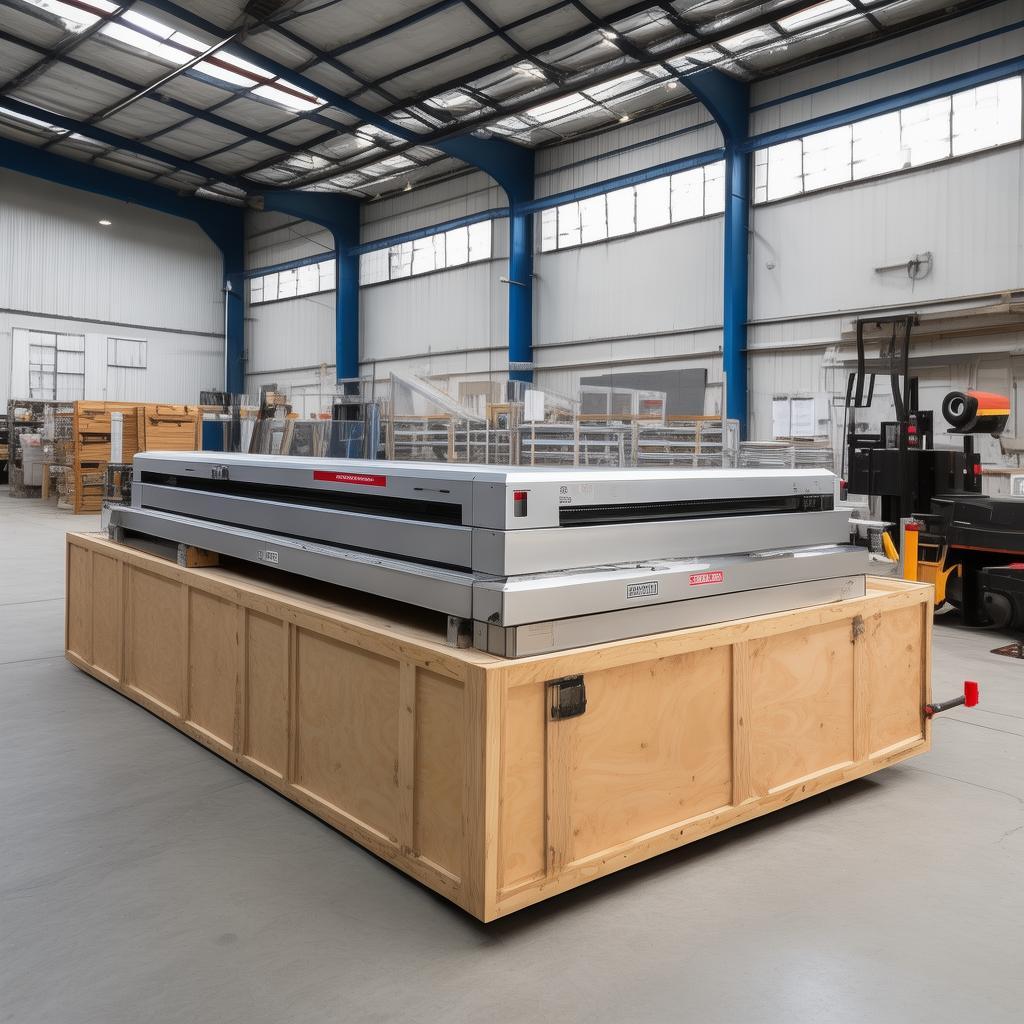
CNC laser cutting machine for textiles
Product Overview
A CNC laser cutting machine for textiles is an industrial cutting system designed for precision cutting and high-quality edge finishing of fabric, nonwoven, and textile composites. It uses CNC-controlled motion to deliver repeatable patterns from CAD/CAM files—supporting garment manufacturing, upholstery, technical textiles, and industrial fabric processing. For production teams, the core value is consistent cut geometry, reduced manual finishing, and faster turnaround from sample to bulk—without compromising alignment and registration across multiple material layers.
Key Features
- CAD-to-cut automation for reliable pattern registration, enabling repeat runs with minimal operator intervention.
- Clean, controlled cutting edges that help reduce fraying and post-processing time for apparel and technical fabric applications.
- CNC precision motion to maintain dimensional accuracy across complex contours, curves, and nested layouts.
- Efficient material utilization through optimized nesting and repeatable cut paths—supporting cost-per-part reduction.
- Operational flexibility for small-batch sampling, grading, and production—helpful for seasonal product lines.
- Stable, production-ready workflow that supports throughput in garment factories, cutting rooms, and textile subcontracting.
- Process consistency to reduce rework caused by manual variations, supporting tighter QA standards.
Technical Specifications
| Parameter | Specification |
|---|---|
| Laser cutting type | CNC laser cutting system for textile applications |
| Applicable materials | Fabrics, nonwovens, technical textiles, textile composites (material-dependent) |
| Control method | CNC motion control with CAD/CAM file workflow |
| Cutting workflow | Pattern import, nesting/placement, cut execution, repeatable production runs |
| Table / working area | Textile cutting configuration sized to your production needs (quote-based) |
| Data interfaces | Industry-standard CAD/CAM and pattern file import (model/configuration dependent) |
| Machine options | Material handling and production tooling options available (based on application) |
Application Scenarios
- Garment pattern cutting for precise outlines and repeated sizes across production runs.
- Technical textile fabrication such as insulation liners and composite fabric components requiring repeatability.
- Upholstery and interior trims with consistent shapes for cushions, panels, and decorative elements.
- Nonwoven & industrial fabric parts where reduced handling and clean cut edges improve downstream assembly.
- Subcontract cutting services supporting multi-customer workflows with CAD-based production traceability.
Advantages
Compared with generic desktop laser cutters or one-size-fits-all cutting devices, this textile-focused CNC laser platform is built around production realities: pattern repeatability, stable cutting workflow, and reduced reliance on highly skilled manual trimming. The result is a more predictable manufacturing process—particularly when you run nested layouts, handle frequent design changes, or need consistent quality across shifts.
Why Choose Us
We support textile cutting customers with procurement-ready service and an application-oriented approach:
- Application guidance to help you select the right configuration for your fabric types and production targets.
- International delivery support suitable for distributors and overseas manufacturing teams.
- Documentation and commissioning assistance to reduce ramp-up time after installation.
- After-sales responsiveness with practical troubleshooting for production continuity.
FAQ
Q1: What textiles can this CNC laser cutting machine for textiles process?
A: It is intended for fabrics, nonwovens, and technical textile materials. Exact suitability depends on fiber composition, thickness, and desired edge quality—our team can help confirm your specific material set.
Q2: Do I need CAD/CAM to run production?
A: The workflow is CAD/CAM-based for pattern import, nesting/placement, and repeatable cutting. If you already have garment patterns or grading files, we can advise on the best conversion/input approach for smooth operation.
Q3: How does laser cutting affect fabric edge quality compared with manual cutting?
A: CNC-controlled cutting helps deliver consistent contour accuracy and controlled edge finishing. That typically reduces fraying and lowers downstream trimming and rework when properly matched to your material.
Q4: Is it suitable for both sampling and bulk production?
A: Yes. This kind of CNC laser cutting setup is commonly used for short runs, prototypes, and repeated production orders because patterns can be reused and optimized for layout and throughput.
Q5: What information do you need for a quotation of a textile laser cutter configuration?
A: Share your fabric types, thickness range, part dimensions, target output (pieces/hour or batch size), and any constraints on the working area. We’ll recommend a configuration that fits your process.
If you’re evaluating a CNC laser cutting machine for textiles for your cutting room or subcontract workflow, send your material samples and target part requirements—we’ll respond with a practical configuration and a quotation tailored to your production needs.