laser cutting for industrial frames
Product Overview
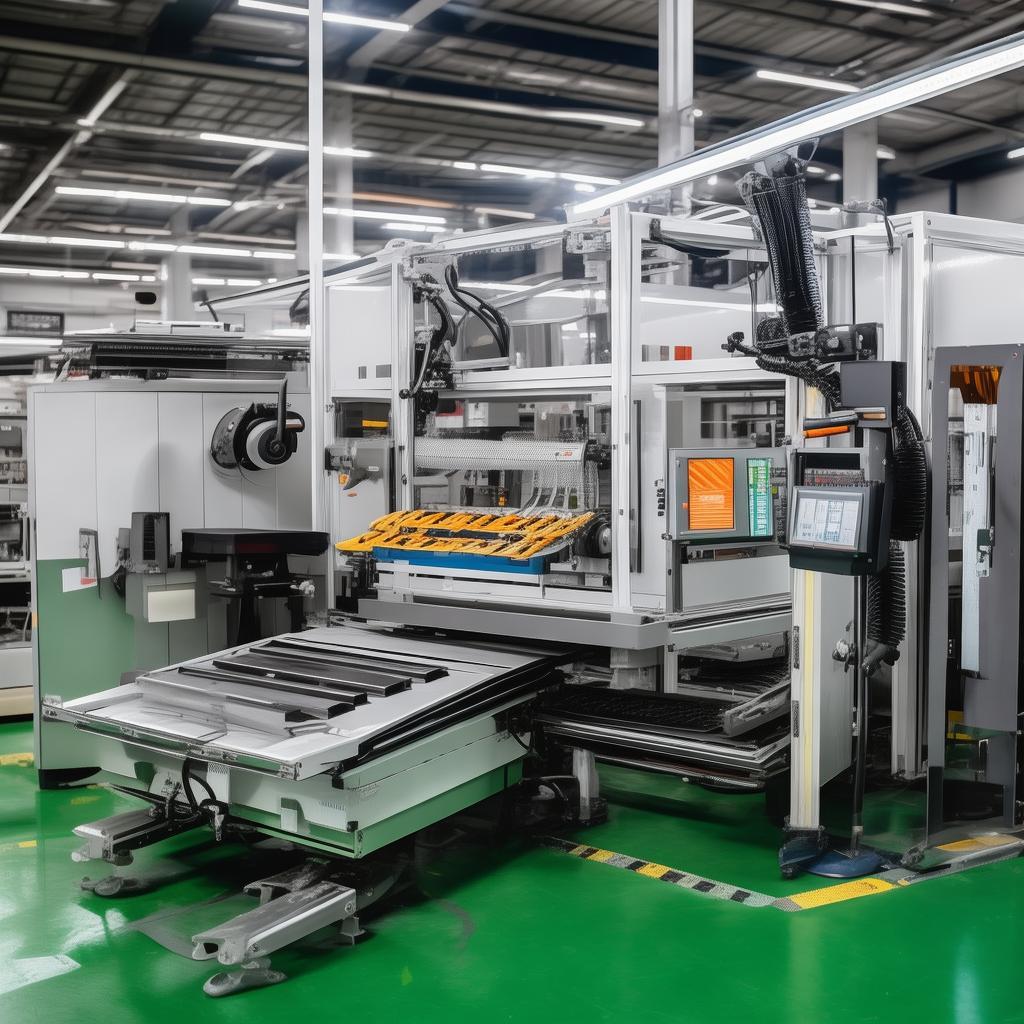
Laser cutting for industrial frames is a precision metal fabrication process used to produce engineered frame components with clean edges, consistent geometry, and repeatable fit across production runs. In industrial manufacturing—where structures, enclosures, machine bases, and support frames must meet both dimensional and quality requirements—laser cutting enables tight tolerances, efficient material utilization, and rapid iteration from CAD to production. For procurement and engineering teams, the value is clear: dependable parts that slot into downstream assembly with less rework and fewer process bottlenecks.
Key Features
- Dimensional consistency for assembly: produce frame components with stable profiles that improve alignment in welding, fastening, and final assembly.
- High-accuracy cut quality: deliver smooth, well-defined edges that reduce deburring needs and help maintain finish-ready surfaces.
- Design flexibility: efficiently cut complex holes, slots, and brackets from engineering drawings—without the cost and lead time of traditional tooling.
- Material optimization: support nesting strategies to improve yield and lower part cost per unit for frame series and modular systems.
- Repeatable production throughput: maintain a consistent production workflow suitable for both prototype-to-series transitions and ongoing orders.
- Scalable process planning: accommodate varying batch sizes with stable documentation and cutting paths aligned to production schedules.
- Quality-focused manufacturing workflow: verify critical dimensions and part geometry so frame assemblies meet customer and internal requirements.
Technical Specifications
| Parameter | Specification |
|---|---|
| Process type | Precision laser cutting for sheet and plate components used in industrial frame fabrication |
| Part geometry coverage | Profiles, cutouts, slots, and engineered hole patterns from customer CAD/CAM files |
| Typical workflow inputs | DXF/DWG/CAD models, BOM mapping, and drawing-based tolerance requirements |
| Inspection approach | Dimensional checks on critical features aligned to frame assembly requirements |
| Production support | Prototype-to-series repeatability with documented setups for consistent results |
| Packaging & handling | Careful handling for fabricated frame parts to support downstream welding/finishing |
Application Scenarios
- Industrial machine bases and frames: cut mounting plates and structural profiles that align with final drivetrain and tooling layouts.
- Enclosures and guard frames: produce consistent cut patterns for panels, vents, and fastener locations to reduce assembly time.
- Modular shelving and support structures: deliver repeatable holes and slots for scalable builds across warehouses and service areas.
- Transportation and utility frames: form bracketry and reinforcement components where clean edges support coating and long-term durability.
Advantages
Choosing laser-based cutting for frame components helps outperform generic approaches because it emphasizes precision, flexibility, and production practicality—three factors that directly affect cost, quality, and delivery.
- Lower downstream rework: cleaner, more consistent profiles support welding and fastening alignment, reducing the need for last-minute adjustments.
- Faster design iteration: update CAD and re-cut parts without investing in new tooling—ideal when frame designs evolve.
- Better part-to-part repeatability: maintain uniformity across batches so modular assemblies “fit as planned.”
- Improved material efficiency: optimized cutting layouts can reduce scrap and help stabilize your unit economics.
- Support for engineering-driven requirements: align cutting routes and inspection focus with critical frame features and tolerance intent.
Why Choose Us
We provide end-to-end support for industrial frame fabrication projects, centered on dependable manufacturing communication and quality-first delivery. Whether you’re sourcing a single prototype set or scaling to multi-batch releases, our team focuses on clear documentation, stable setups, and inspection aligned to your assembly needs.
- Structured quoting based on drawings, material requirements, and production quantity.
- Process planning that prioritizes repeatability for frame systems and modular designs.
- Practical feedback to help reduce assembly issues before production ramps.
- International shipping readiness and careful packaging for fabricated components.
If you need laser cutting for industrial frames as part of a broader supply chain, we’ll coordinate your part requirements so your production line stays on schedule.
FAQ
1) What files do you need to start laser cutting for frame components?
We typically use DXF/DWG or CAD/CAM model files provided by your engineering team, along with any drawing callouts for critical dimensions, tolerances, and labeling requirements.
2) Can you support prototypes and then scale to production?
Yes—our workflow is designed for stable setups and repeatability so you can move from concept verification to series manufacturing with consistent fit.
3) How do you handle tolerances and fit for welded or bolted frame assemblies?
We focus inspection on critical features tied to assembly—such as mounting hole locations, reference edges, and profile geometry—so downstream work requires less correction.
4) Do you offer guidance on design-for-cutting to improve yield?
We can provide practical recommendations on part layout, feature placement, and nesting considerations to help optimize material utilization and assembly accuracy.
5) Is laser cutting suitable for complex frame brackets and internal cutouts?
Yes—when your design includes intricate hole patterns, slots, or cutouts, laser-based cutting is often the most efficient route compared with tooling-heavy methods.
6) What’s the typical lead time for an order?
Lead time depends on part complexity, quantity, and the accuracy of supplied drawings. Share your timeframe and drawings and we’ll confirm feasibility and scheduling.
Ready to source precision-cut frame parts? Send your drawings, material details, and quantity targets and we’ll reply with a clear quotation plan for laser cutting for industrial frames—from prototype planning through production scheduling.