
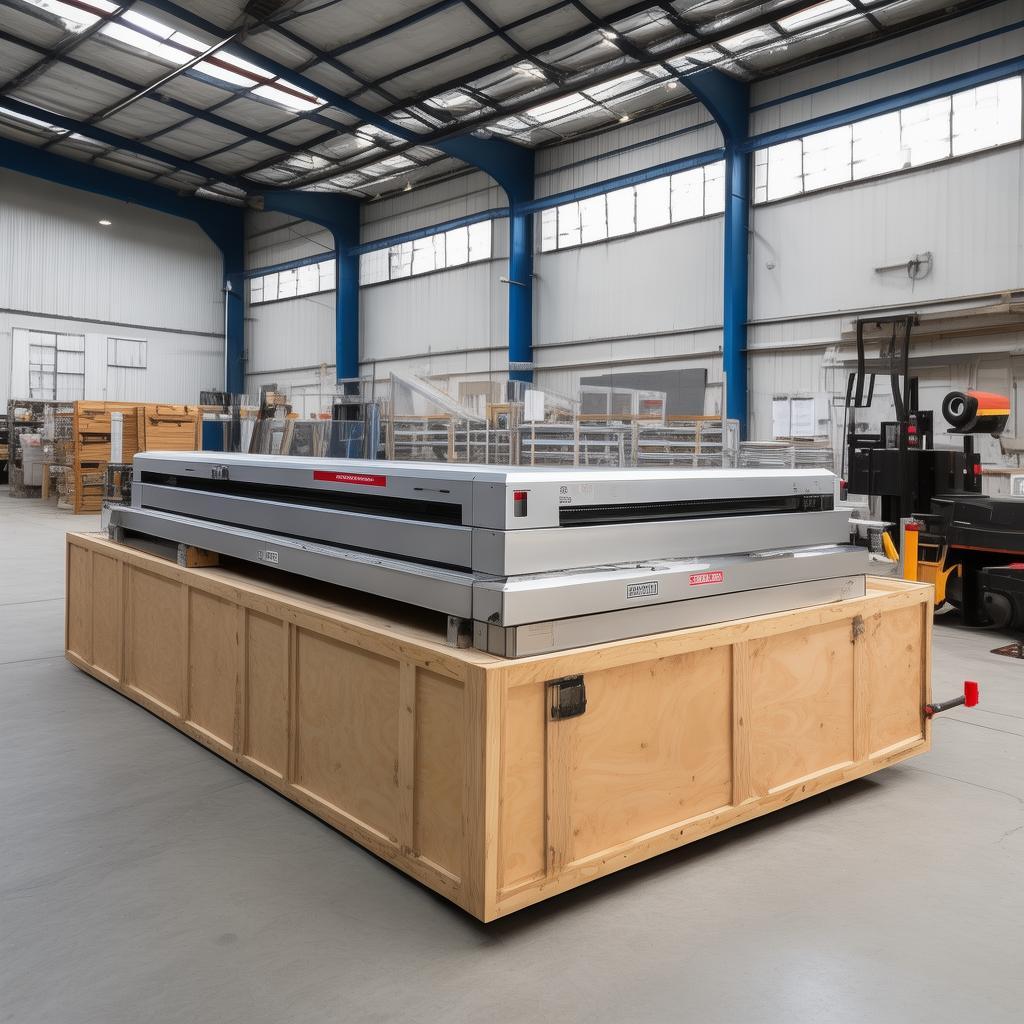
laser cutting repeatability
Product Overview
Built for precision manufacturing in metal fabrication, electronics housings, and industrial component production, our laser cutting repeatability solution helps maintain consistent cut quality across production runs. When your parts must meet tight dimensional tolerances—batch after batch—laser cutting repeatability becomes a practical requirement, not a lab metric. This system is engineered to stabilize process conditions, reduce variation, and support reliable nesting and throughput planning, so your downstream operations (bending, welding, assembly, and inspection) stay predictable.
Whether you run medium-volume fabrication or high-mix production, the goal is the same: consistent edge geometry, stable kerf behavior, and dependable part-to-part alignment. That is what procurement teams and engineering leads expect when specifying a laser cutting process for repeatable results.
Key Features
- Process stability for production continuity: Designed to hold machining behavior steady so your operators spend less time compensating and troubleshooting.
- Consistent cut quality across batches: Supports uniform edge finish and dependable dimensional outcomes for parts that must interchange on the line.
- Lower rework and scrap risk: Helps reduce tolerance drift and variation-related failures, improving yield and schedule reliability.
- Repeat-focused setup guidance: Helps standardize job preparation practices to protect accuracy during job changes and shift transitions.
- Integration-ready for fabrication workflows: Supports typical ERP/MES-driven production planning and common inspection routines.
- Documentation to support procurement decisions: Clear parameter mapping and operational notes to align engineering, quality, and shop-floor teams.
- Performance that scales with your throughput: Maintains consistent behavior even as nesting strategy and batch size vary.
Technical Specifications
| Parameter | Specification |
|---|---|
| Primary objective | Maintain consistent part-to-part dimensional behavior and edge quality for reliable mass production |
| Process behavior focus | Kerf consistency, stable geometry, repeatable cut contours under production conditions |
| Recommended production use | Batch manufacturing, multi-shift operations, and high-mix component production |
| Measurement & validation | Supports standard dimensional inspection workflows and incoming/outgoing quality checks |
| Job programming approach | Repeat-driven parameter mapping and standardized setup practices for stable outcomes |
| Typical output | Uniform parts sized for predictable downstream forming, assembly, and fitting |
Note: Actual measurable performance depends on laser source configuration, material grade, thickness, assist gas, optics condition, and shop parameters. We can help you define validation criteria for your specific application.
Application Scenarios
- Automotive and supplier brackets: Keeps hole positions and outer contours consistent across long production schedules to minimize fixture changes.
- Appliance and electronics enclosures: Stabilizes edge geometry so parts assemble cleanly with reduced rework during cosmetic and functional testing.
- Industrial racks and structural components: Reduces tolerance drift to support predictable welding fit-up and faster line throughput.
- Contract fabrication with multi-material jobs: Helps protect dimensional outcomes when switching materials or thicknesses between orders.
- Precision assemblies requiring interchangeability: Improves consistency when parts must swap without hand-fit or selective sorting.
Advantages
Compared with generic “set-and-forget” laser process approaches, this repeat-oriented solution is focused on maintaining stable outcomes over time—especially when production ramps, shift changes occur, or part mix increases. Instead of relying on operator-by-operator judgment or reactive compensation, the system emphasizes consistent process behavior and standardized preparation.
- More dependable batch-to-batch results: Helps reduce dimensional variation that can propagate into downstream assembly.
- Lower cost of quality: Reduces scrap and rework caused by tolerance drift, improving overall manufacturing economics.
- Easier quality assurance planning: Supports repeatable inspection routines and clearer acceptance criteria.
- Better predictability for procurement and scheduling: With consistent manufacturing behavior, delivery commitments become more realistic.
If you’re evaluating laser cutting repeatability requirements for a product launch or ongoing production, this approach is designed to support the practical reality of serial manufacturing.
Why Choose Us
We partner with industrial buyers, integrators, and manufacturers who need reliable outcomes—not just a one-time demonstration. Our teams focus on aligning the process with your quality standards, production cadence, and validation expectations.
- Clear, buyer-friendly documentation: Parameter notes and setup guidance to reduce ambiguity between engineering and the shop floor.
- Collaboration with your quality workflow: We align validation to how you inspect, accept, and release production parts.
- Support for changeovers and scaling: Practical guidance for handling new batches, nesting updates, and material variations.
- Responsible supply and communication: Straightforward engagement so timelines and responsibilities are transparent.
If you require a formal evaluation plan for your tolerance targets, we can help define how to verify laser cutting repeatability in your environment.
FAQ
Q1: What does “laser cutting repeatability” mean for my production?
It refers to how consistently parts produced at different times (and across batches) maintain dimensional behavior and edge quality—so your drawings, fixtures, and inspection criteria remain valid throughout the run.
Q2: Will this improve fit-up for downstream operations?
Yes. By reducing variation in cut geometry, assemblies typically require less hand-fit, fewer rework steps, and more predictable welding or forming results.
Q3: How do you validate repeat performance for a specific part number?
We define measurable acceptance criteria, agree on inspection points, and document a standardized job setup so your team can compare batch results against your tolerance requirements.
Q4: Does part material and thickness change the expected results?
Material grade, thickness, assist gas, and optics condition all influence the cutting outcome. We focus on repeat-driven parameter mapping so the process stays consistent even when conditions change.
Q5: What information do you need from us to start?
Your drawing tolerances, material type and thickness, target quantity and schedule, and any existing inspection data. With that, we can plan how to demonstrate reliable repeat behavior.
Want to confirm whether your next job can hit your tolerance targets reliably? Send your part details and production constraints for a quotation request, and we’ll propose a validation and implementation approach tailored to your environment and quality requirements.