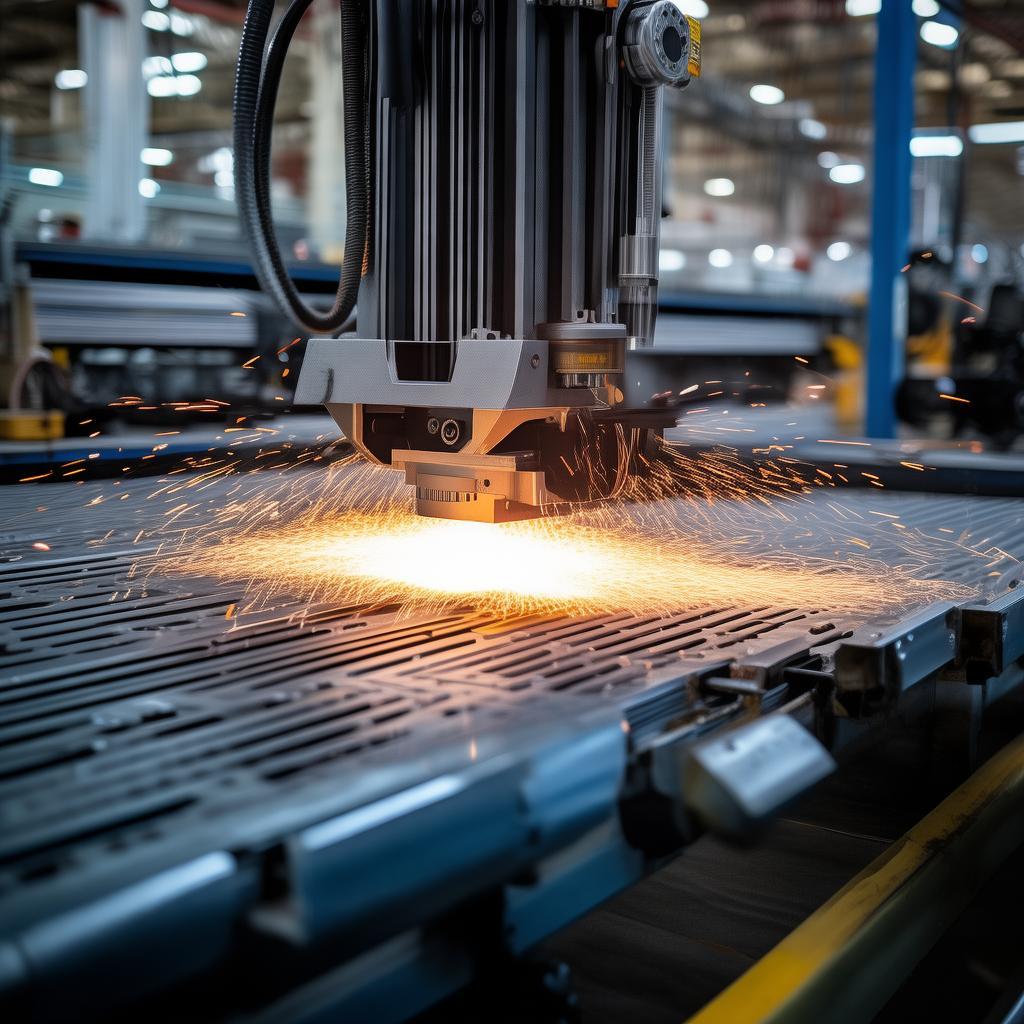
simultaneous cutting and engraving laser machine
Product Overview
Built for industrial makers of metal and non-metal components, our simultaneous cutting and engraving laser machine is engineered to help manufacturers reduce cycle time while achieving sharp marking and clean edge quality in one setup. Instead of switching between engraving and cutting workflows, this system executes both processes in parallel—supporting faster production, more consistent layouts, and streamlined finishing for batches and customized runs. Ideal for fabrication shops, OEM suppliers, and contract manufacturers that need dependable throughput without sacrificing detail, the simultaneous cutting and engraving laser machine supports high-mix manufacturing where every minute and alignment tolerance matters.
Whether your priority is efficient signage and label production, precision parts identification, or decorative functional elements on the same workpiece, the laser path coordination delivers a single-pass workflow that helps lower handling and improve repeatability.
Key Features
- One-pass production logic: Combine marking/engraving and cutting into a unified workflow to reduce machine stop-start time and improve job throughput.
- Consistent alignment: Engrave and cut from the same coordinate system, helping maintain exact placement for logos, serial numbers, and functional markings on finished parts.
- Clean edge finishing potential: Laser cutting quality helps deliver smoother edges and less secondary finishing work, especially for structured parts and industrial components.
- Flexible for mixed materials: Suitable for common industrial engraving and cutting applications across signage, labeling, and component marking workflows.
- Productivity-focused control: Designed for batch scheduling and repeatability so production planning can stay stable across varying job sizes.
- Lower handling and rework: By minimizing repositioning, you reduce the risk of misalignment, scrap, and time-consuming rework.
- Scalable for production shops: A practical choice for manufacturers and integrators seeking a stable platform for high-mix laser processing.
Technical Specifications
| Parameter | Specification |
|---|---|
| Processing concept | Simultaneous engraving/marking and laser cutting in coordinated workflow |
| Control & workflow | Industrial laser control system supporting production sequencing and repeat jobs |
| Motion system | Stable drive platform optimized for marking detail and cut accuracy |
| Target positioning & alignment | Same coordinate system used for engraving/marking and cutting to reduce mismatch |
| Typical outputs | Finished parts with integrated markings (logos, IDs, patterns, functional engraving) |
| Integration readiness | Designed for common industrial production environments and distributor deployments |
| Safety & operational considerations | Industrial safety practices and enclosure/airflow provisions aligned with laser processing needs |
Note: Exact parameters (laser power, working area, wavelength, and cutting speed) vary by configuration. Share your target materials and required part sizes for a tailored spec sheet.
Application Scenarios
- Industrial nameplates and equipment labeling: Cut accurate label shapes while engraving serial numbers and brand marks from the same layout.
- OEM parts with integrated identification: Produce components with functional markings (IDs, warnings, QR text) without separate handling steps.
- Promotional and decorative metal items: Deliver consistent graphics and clean edges on the same product run.
- Batch production for signage and displays: Maintain placement accuracy for multi-element designs while improving cycle time through concurrent processing.
Advantages
Choosing this platform is about performance in the real production environment—where downtime, rework, and handling costs often dominate more than single-job output speed. The simultaneous cutting and engraving laser machine approach reduces the need for secondary alignment and separate setup cycles, helping improve yield and repeatability when jobs change frequently.
- Compared to sequential workflows: Less repositioning and fewer opportunities for mismatch between engraving and cut features.
- Compared to generic single-mode machines: Integrated marking and cutting reduce bottlenecks and help standardize output for mixed customer requirements.
- Compared to manual finishing-heavy processes: Laser-based output can lower downstream labor and help stabilize product consistency.
- Better for high-mix production: Same setup logic supports faster turnaround when product designs vary by batch.
Why Choose Us
We support international trade and manufacturing buyers with practical procurement-minded service. You can count on clear communication, a configuration approach based on your material requirements, and responsive technical guidance during installation planning and commissioning.
- Experienced support for distributors and job-shop deployments, focused on stable production outcomes.
- Process-oriented recommendations to help you choose the right setup for engraving detail and cutting accuracy on your workloads.
- Documentation and training support designed to shorten ramp-up time for operators and engineering teams.
- After-sales communication that prioritizes downtime reduction and timely troubleshooting guidance.
FAQ
Q1: What makes a simultaneous cutting and engraving setup different from running two machines back-to-back?
A1: By engraving and cutting from the same coordinate system and within one coordinated job flow, you reduce repositioning, improve placement consistency, and shorten total cycle time for multi-feature parts.
Q2: What types of materials can this laser handle?
A2: It’s typically selected for common engraving/marking and laser cutting material categories used in industrial labeling, signage, and component manufacturing. Share your material list (and thickness) so we can recommend the right configuration.
Q3: Will the engraved details affect the cutting quality, or vice versa?
A3: In a coordinated workflow, the control logic plans engraving/marking and cutting features together. Proper parameter matching helps maintain detail quality while achieving clean cuts on the same job.
Q4: How do I integrate this machine into existing production?
A4: We help you map current job files/workflow steps to the new process. Your operators can follow a single workflow that replaces separate engraving and cutting stages.
Q5: Is this suitable for small batches and frequent design changes?
A5: Yes. The simultaneous cutting and engraving laser machine approach is especially valuable when designs vary, because it reduces setup and handling time between changes.
If you’re evaluating equipment to improve throughput and placement accuracy for marked and cut parts, request a quotation or engineering consultation. Send your target materials, part dimensions, and sample drawings so we can propose the most suitable configuration for your application.