
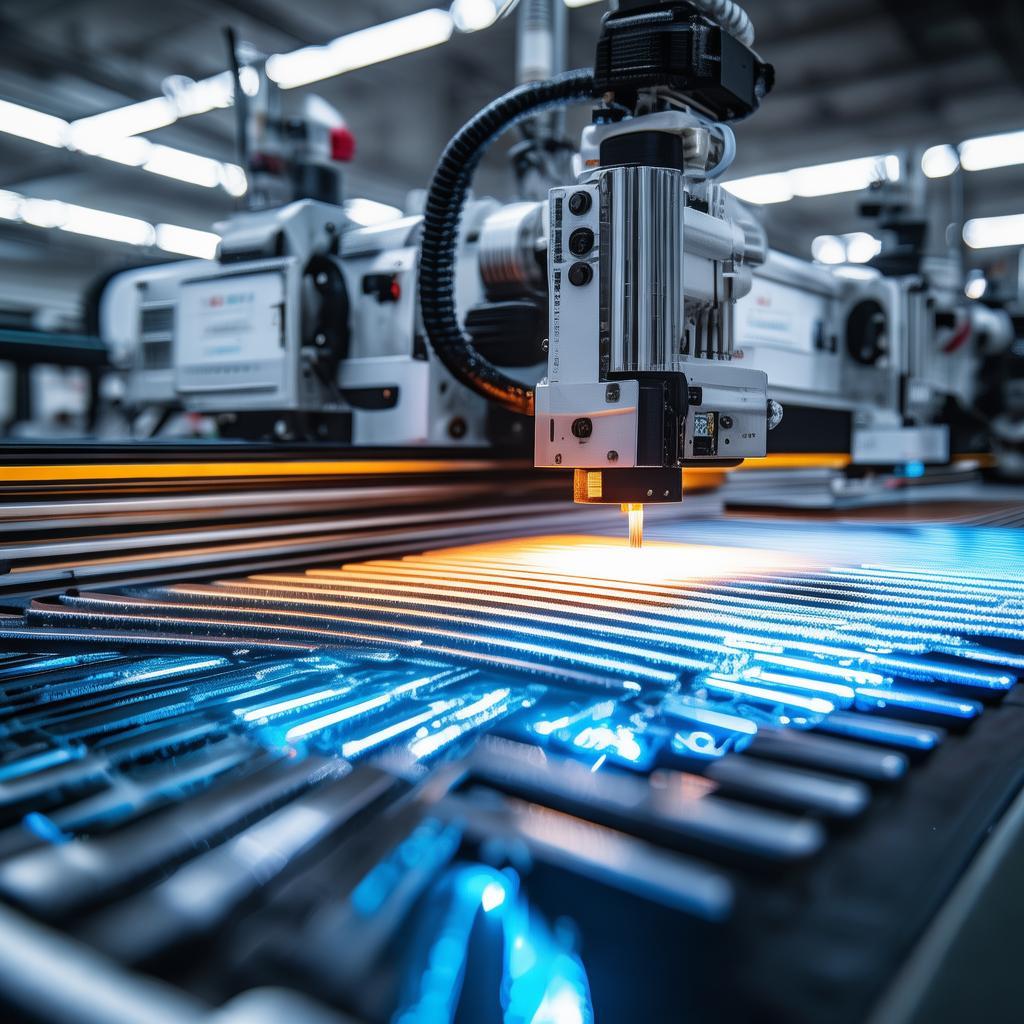
bar feeder compatible CNC lathe
Product Overview: Bar Feeder Compatible CNC Lathe for Automated, High-Throughput Turning
Built for the precision turning industry, this bar feeder compatible CNC lathe is designed to extend unattended production by integrating with bar feeding systems. It enables consistent, repeatable machining of cylindrical parts while maintaining accuracy across production runs—ideal for job shops and manufacturers supplying components for automotive, industrial equipment, and general engineering. By streamlining raw bar loading into your CNC workflow, the machine supports stable throughput, reduced handling, and smoother downstream assembly scheduling.
If your process demands automation-friendly loading, reliable cycle behavior, and shop-floor efficiency, a bar feeder compatible CNC lathe helps you move from manual batch production to controlled, repeatable output.
Key Features
- Automation-ready operation: Engineered to work smoothly with bar feeding setups so your CNC turning can run longer with fewer operator interventions.
- Stable machining for consistent parts: Designed for repeatable cutting conditions, helping reduce variation between the first and later pieces in a batch.
- Efficient material handling: Supports a more linear workflow from raw bar to finished components, reducing manual staging and rework risk.
- Process-friendly programming and setup: Structured workflow supports practical part changeovers—helpful for mixed production schedules common in contract manufacturing.
- Designed for production environments: Balances rigidity and operational control to support daily shop-floor demands rather than occasional, low-volume use.
- Production cost visibility: By reducing labor touchpoints and improving run stability, it supports clearer cost per part and better scheduling discipline.
- Expandable turning capability: Suitable for a range of turning applications when paired with appropriate tooling and process plans.
Technical Specifications
| Parameter | Specification |
|---|---|
| Primary Function | CNC turning with bar feeding integration for automated production |
| Bar Feeding Compatibility | Compatible with external bar feeder systems (controller/tooling dependent) |
| Typical Applications | Automotive components, shafts, sleeves, spacers, bushings, general turning parts |
| Control Concept | CNC workflow designed to support automated cycles and part-to-part repeatability |
| Tooling Integration | Configured for production tooling setups appropriate to your part profiles |
| Changeover Approach | Support for practical setup and workflow-based production changeovers |
| Operating Mode | Automated running with bar feeder (and manual support as required) |
Application Scenarios
- Shaft and sleeve production: Run repeated cylindrical geometries with stable feeding for consistent machining across the shift.
- Automotive part batches: Support predictable throughput for components that benefit from reduced loading time and repeatable cycles.
- Contract manufacturing: Balance automation with process planning to manage mixed orders and faster changeovers using a bar-feed workflow.
- Industrial fastener-related parts: Produce small-to-medium turned components with reliable handling from raw bar to finished output.
- Multi-shift utilization: Keep work moving longer using a bar feeder compatible CNC lathe approach that reduces operator touchpoints.
Advantages
Choosing this machine as your bar-feeding turning platform can outperform generic “lathe only” solutions because it’s built around automation reality: consistent cycles, practical integration with bar feeding systems, and a workflow that supports production discipline.
- Better fit for automated workflows: Reduces friction when coupling CNC turning with an external bar feeder.
- Lower variance risk: Helps maintain stable outcomes across successive parts, supporting tighter downstream assembly planning.
- Improved labor efficiency: Less manual staging means your operators can focus on monitoring, setup, and quality control instead of repetitive loading.
- Cost-per-part improvement potential: Automation-friendly operation can reduce idle time and handling overhead—especially in production runs.
- Scales with your volume: Whether you’re moving from semi-manual to fully automated, this bar feeder compatible CNC lathe foundation supports that transition.
Why Choose Us
We support manufacturers and trading partners with a procurement-focused approach: clear communication, reliable documentation, and responsive pre-sale guidance so your automation investment performs as intended.
- Quotation and specification alignment based on your bar-feeding setup and part requirements.
- Practical integration support to help minimize commissioning delays for automated turning lines.
- International supply experience for global buyers seeking dependable sourcing partners.
- After-sales responsiveness focused on maintaining production continuity.
FAQ
Q1: Is this lathe truly suitable for a bar feeder setup?
Yes. It’s intended for production turning with bar feeder integration—confirming compatibility with your specific bar feeder model and controller interface is part of our pre-quote alignment.
Q2: Will it help reduce cycle interruptions during unattended runs?
The system is designed around stable automated cycle behavior to support longer production runs; proper part setup, tooling selection, and bar feeder settings are key to minimizing stoppages.
Q3: What part types are best for this CNC turning approach?
Cylindrical components such as shafts, sleeves, spacers, bushings, and similar turned parts typically benefit most from automated bar handling and repeatable machining.
Q4: Can we use it for mixed production (different parts/lengths)?
Yes, many buyers use this type of bar feeder compatible CNC lathe in environments that require manageable changeovers—your tooling plan and part programming approach will determine how quickly you can switch.
Q5: What information do you need to confirm compatibility for our line?
We typically review your bar material specs, part dimensions, target tolerances, and the bar feeder model/interface requirements so the integrated setup is production-ready.
If you’re evaluating an automated turning line and want a practical, production-focused path to integrating bar feeding, request a quotation or share your part drawings and bar feeder details. We’ll help you determine the right configuration for your application and line requirements.