
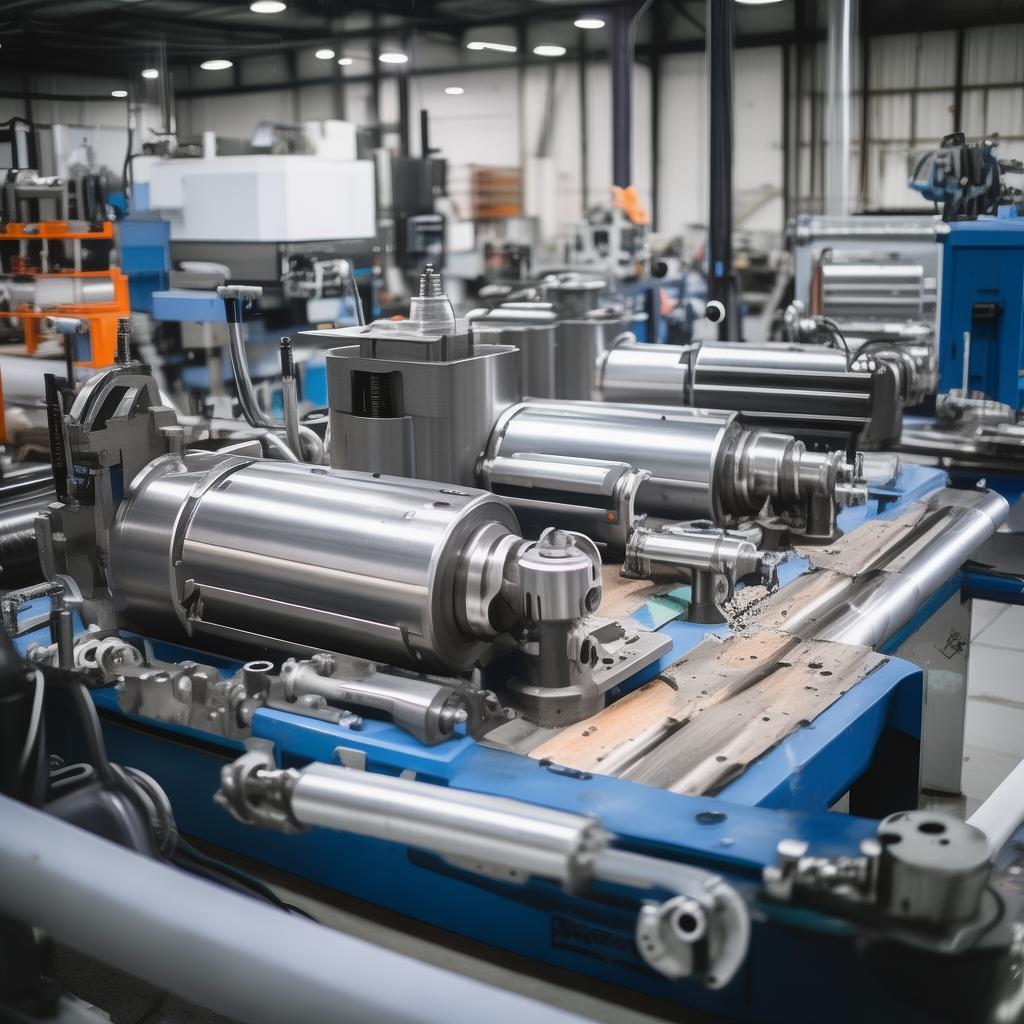
CNC lathe machine
Product Overview
A CNC lathe machine is a high-precision turning solution used across industrial manufacturing to produce shafts, bushings, sleeves, and other rotational parts with repeatable accuracy. In a typical metalworking and machine-building environment, this computer-controlled lathe supports automated machining of cylindrical components, reducing setup time while improving part consistency from batch to batch. For procurement teams and engineering buyers, the value is simple: faster production runs, stable quality control, and easier scale-up for new or revised products—without relying solely on manual operation.
Key Features
- Stable machining for repeatable output: Turning operations remain consistent across production cycles, helping you meet tolerance requirements and reduce rework.
- Faster setups and smoother changeovers: CNC control streamlines programming and part handling, supporting shorter lead times for recurring components.
- Efficient production of rotational geometries: Suitable for a wide range of diameters, lengths, and feature types commonly found in automotive, industrial machinery, and general fabrication.
- Operator-focused usability: Clear control and workflow reduce training burden, helping operators switch between jobs with confidence.
- Toolpath-based accuracy: Computer-guided movements improve surface quality and dimensional control compared with manual turning.
- Production-ready design for shop-floor use: Built for everyday industrial operation, supporting reliable throughput in manufacturing environments.
- Cost-effective for batch and job-shop work: Helps reduce scrap and optimize utilization when producing small to mid-size runs as well as repeat orders.
Technical Specifications
| Parameter | Specification |
|---|---|
| Control type | CNC system (model/configuration varies by offer) |
| Max turning diameter (typical) | Depends on machine class; confirm in quotation |
| Max turning length (typical) | Depends on machine class; confirm in quotation |
| Spindle speed range (typical) | Configurable; confirm for material and tooling plan |
| Number of axes | Multi-axis turning configuration (varies by version) |
| Turret / tool station type | Electric or hydraulic turret options (as quoted) |
| Repeatability / positioning (typical) | Based on configuration; verify with supplier data |
| Workholding options | Chucks and centers depend on your part requirements |
| Cooling / lubrication | Mist or flood coolant systems (as quoted) |
| Power supply | Region-specific electrical requirements |
Application Scenarios
- Automotive and drivetrain components: Turning shafts and housings with consistent geometry for reliable assembly.
- Industrial machinery fabrication: Producing bushings, spacers, and connector parts that require controlled surface finish.
- General job shop production: Running repeat orders with stable tolerances while minimizing manual setup effort.
- Aftermarket and repair work: Re-machining cylindrical parts with faster turnaround using programmable tooling paths.
- Metalworking for mixed materials: Supporting production planning for steel and other common workpieces using suitable cutting tools.
Advantages
Compared with generic manual lathes or entry-level turning solutions, this CNC turning system prioritizes production control and quality repeatability. The CNC lathe machine (and its programmable turning workflow) enables repeat machining across multi-part batches, helps reduce operator-dependent variation, and shortens the cycle from engineering change to shop-floor execution.
- More consistent dimensional outcomes by replacing manual positioning with computer-guided toolpaths.
- Better throughput for recurring parts through faster changeovers and repeatable programs.
- Improved workflow for engineering teams because programs can be documented and reused across production runs.
- Lower total handling variability, supporting tighter inspection outcomes and fewer scrap events.
Why Choose Us
We supply industrial turning equipment with a focus on fit-for-purpose configuration and dependable procurement support for international buyers. Your purchasing decision is protected through transparent communication, responsive quotation handling, and practical guidance on tooling and part setup for your manufacturing targets.
- Supply support from quotation to delivery scheduling, coordinated for cross-border requirements.
- Configuration assistance to align the lathe platform with your part geometry, material, and production volume.
- Documentation provided for evaluation and internal approval processes (availability confirmed per order).
- Practical after-sales coordination options, including onboarding support for safe, effective start-up.
FAQ
1) What types of parts can a CNC lathe machine make?
Typically, cylindrical components such as shafts, bushings, sleeves, couplings, and similar rotational geometries—especially where repeatable dimensions are critical.
2) Do I need special programming or CAD/CAM integration?
The turning workflow is usually established through CNC programming practices; many buyers also use CAM output. We can discuss the best approach for your existing engineering process during quotation.
3) How do I choose the right configuration for my production?
Selection depends on part dimensions, material type, required tolerances, and production volume. Share drawings and target outputs, and we will recommend a suitable setup for your turning tasks.
4) What maintenance is required for long-term stability?
Routine maintenance typically includes coolant management, regular checks of lubrication points, and scheduled inspection of wear components. We can provide maintenance guidance aligned with the specific configuration supplied.
5) Can you support shipping and installation for international customers?
Yes—our procurement support covers delivery coordination for cross-border purchasing. Installation and start-up support options depend on the order package and destination requirements.
6) How does this CNC turning solution compare to a manual lathe?
A CNC lathe machine reduces operator variability, improves repeatability, and shortens changeover time—making it more cost-effective for consistent production runs and tolerance-driven work.
If you’re evaluating a CNC turning line for your production plan, send your part drawings, materials, and monthly volume. We’ll reply with a practical configuration proposal and a quotation package tailored to your requirements.