
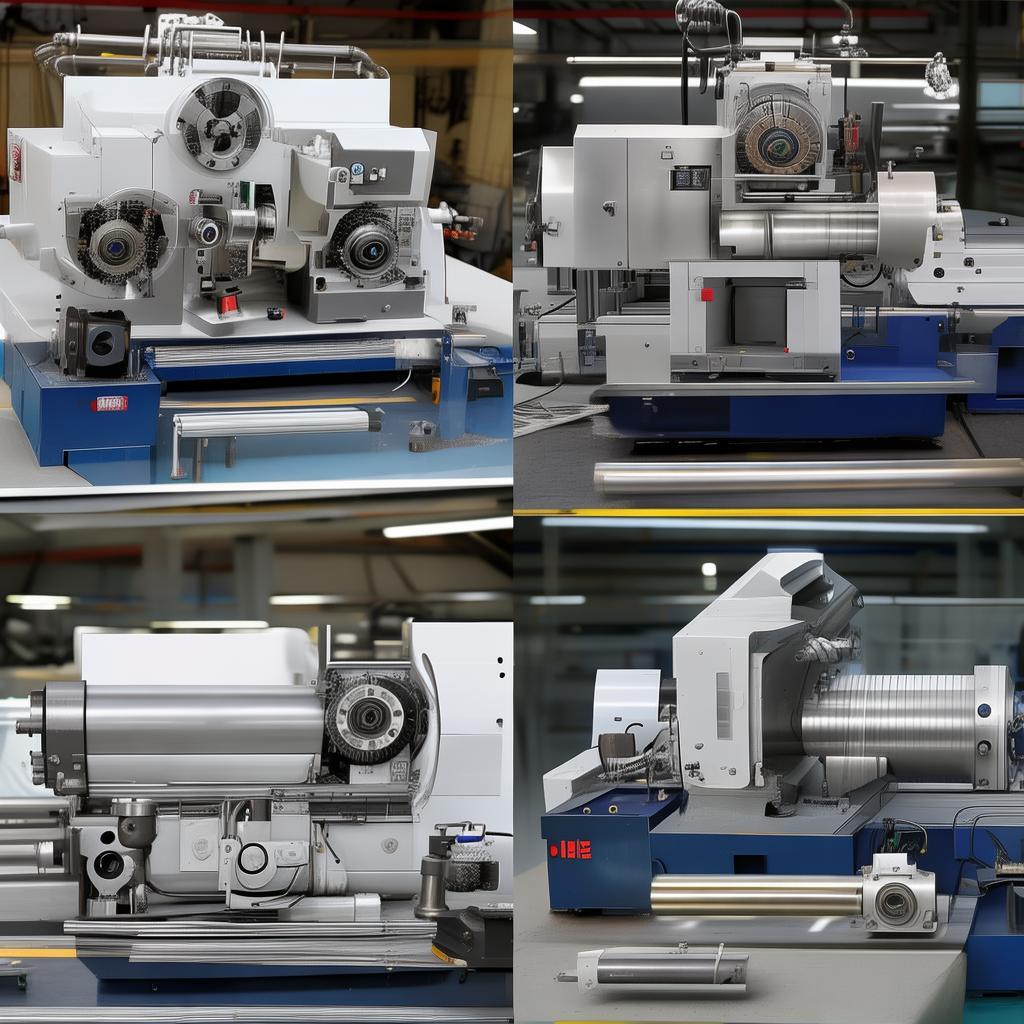
CNC lathes
Product Overview
CNC lathes are precision machine tools used in manufacturing to machine cylindrical parts with repeatable accuracy, efficient production cycles, and consistent surface quality. In a typical metalworking and industrial automation environment, they handle everything from shafts and bushings to threaded components and custom turned geometries—supporting both job-shop flexibility and high-volume output. This lathe platform is designed for programmable turning operations, enabling manufacturers and subcontractors to reduce setup time, standardize machining processes, and improve traceability across production runs.
Key Features
- Stable cutting for dependable results: Rigid structure and controlled motion help maintain dimensional integrity during continuous machining.
- Programmable turning for faster changeovers: Standardized CNC programs reduce manual intervention when switching part styles.
- Process consistency across batches: Repeatable toolpaths support uniform diameters, profiles, and surface finish from first part to last.
- Built for production workflows: Designed for practical shop use—setups, offsets, and operation sequencing that fit everyday manufacturing.
- Tooling-friendly machining: Support for common turning operations makes it suitable for mixed portfolios of turned components.
- Operator clarity and safety: Usability-focused controls and workflow-oriented features help reduce setup errors and improve compliance.
- Scalable for integration: A foundation for automation and workflow expansion as your production requirements grow.
Technical Specifications
Specifications can be tailored to your part size, material mix, and production volume. Below is a typical configuration framework.
| Parameter | Specification |
|---|---|
| Model Type | CNC turning center (lathe) for programmable turning |
| Max Swing (over bed) | Tailored to part requirements (consult for exact range) |
| Max Turning Length | Tailored to production needs (consult for exact range) |
| Spindle Configuration | High-speed motorized spindle; suitable for steel and aluminum turning |
| Number of Axes | Multi-axis CNC turning setup for turning and threading operations |
| Turret / Tool Station | Turret-based turning tool handling (configuration varies) |
| Workholding Options | Chucks, collets, and custom adapters depending on part geometry |
| Cooling & Chip Handling | Cutting fluid system and chip management for continuous operation |
| Electrical / Interface | Industrial-grade control interface for CNC program execution |
Application Scenarios
- Shaft and bushing production: Machine consistent diameters and shoulders for rotating components.
- Threaded hardware runs: Cut threads with controlled tool motion to support assembly-ready parts.
- Repair and remanufacturing: Turn mixed batches where repeatable setups reduce time on the floor.
- Automotive and industrial subassemblies: Produce complex turned profiles with repeatable quality from part to part.
Advantages
Compared with generic manual lathes or basic turnkey offerings, this CNC turning platform prioritizes production reliability and workflow efficiency. When procurement teams seek predictable outcomes—such as stable surface finish, reduced rework, and faster job changeovers—the operational benefits compound over time.
- Lower variability: CNC control supports repeatable machining paths for consistent output quality.
- Reduced setup effort: Program-based workflows help shorten changeovers and standardize repeat jobs.
- Better tooling utilization: Supports common turning operations that reduce the need for multiple specialized machines.
- Scalable manufacturing: Helps your shop evolve from prototype runs to structured production schedules.
If you are evaluating CNC lathes versus semi-automatic alternatives, this solution is built to support long-term utilization—making it easier to maintain throughput as product mix changes.
Why Choose Us
We support international manufacturers with a procurement-focused approach—from configuration guidance to deployment planning. Our goal is to help you select the right turning capability for your parts and production targets.
- Specification alignment: We confirm workholding, part envelope, material mix, and process needs before finalizing your order.
- Operational readiness: Support for commissioning planning and shop-floor integration to reduce ramp-up risk.
- Responsive communication: Clear answers on configuration options, lead-time expectations, and documentation needs.
- Service-minded mindset: We prioritize practical guidance for maintenance planning and long-term uptime.
Share your part drawings and target materials, and we’ll recommend the most suitable CNC lathe setup without overbuying capacity you don’t need.
FAQ
1) What kinds of parts are best suited for this turning machine?
It’s well suited for cylindrical components such as shafts, bushings, rings, and threaded hardware—especially where repeatability and consistent finish matter.
2) Can the configuration be adjusted for my part sizes and production volume?
Yes. Work envelope, tooling approach, and support components are typically tailored based on your maximum diameter/length requirements and planned throughput.
3) How does CNC turning reduce scrap and rework compared with manual machining?
CNC programs enforce consistent toolpaths and machining parameters. That repeatability helps reduce dimensional drift, inconsistent finishing passes, and setup-related variation.
4) What support do I need to start production?
You’ll typically need part drawings, material specifications, and targets for tolerances and surface finish. From there, we help align tooling/workholding and commissioning planning.
5) Are these suitable for both prototypes and batch production?
Yes. Programmable workflows make it practical to run low-volume jobs with efficient setup, while still supporting stable production batches when demand ramps.
6) What should I provide to get an accurate recommendation for CNC lathes?
Share your part envelope (max diameter/length), typical materials, target tolerances, annual volume, and any critical features (threads, shoulders, grooves). We’ll map these to the best turning configuration.
Ready to evaluate this CNC turning solution for your next production program? Send your drawings, material list, and throughput targets for a tailored configuration and quotation request.