
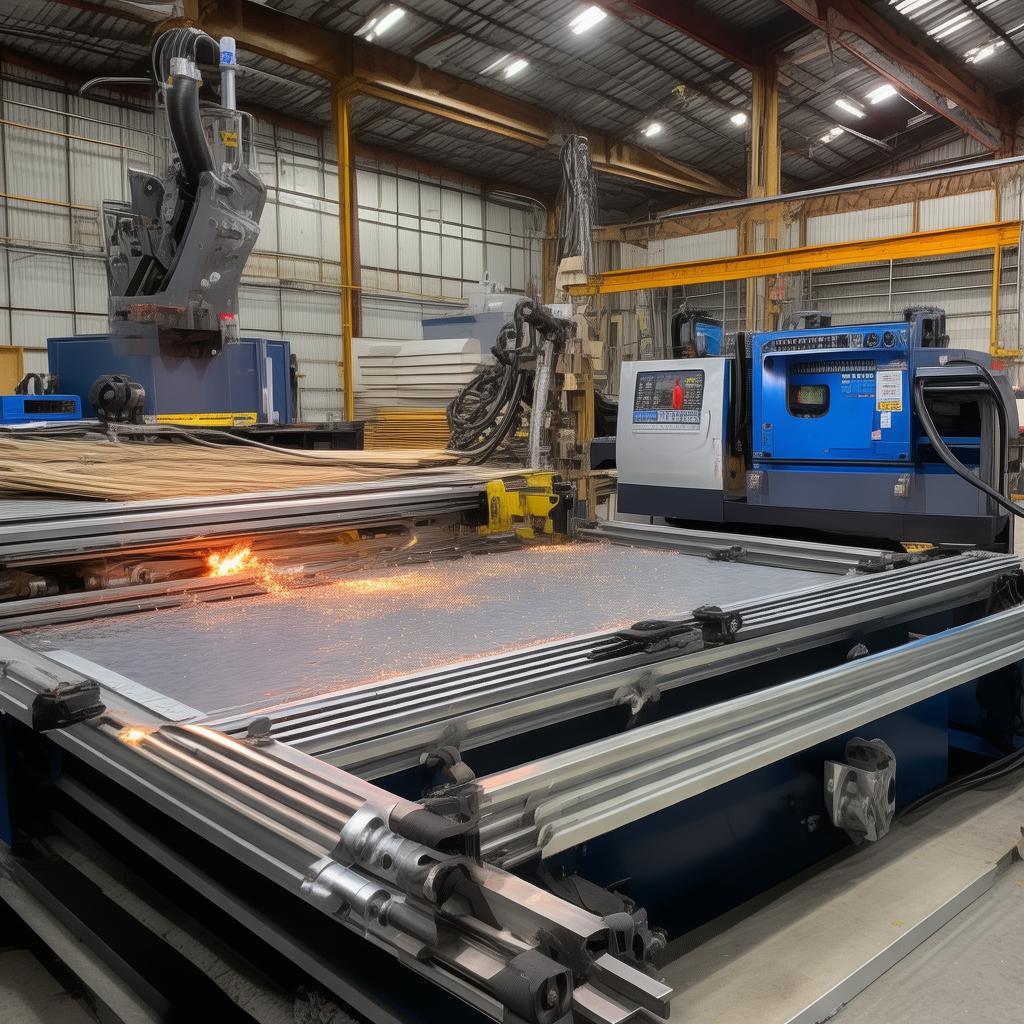
driven tool CNC lathe
Product Overview
A driven tool CNC lathe is a precision computer numerical control turning machine designed for high-stiffness, stable, and repeatable machining of cylindrical parts. It is widely used in the metalworking and general industrial manufacturing sector—especially where medium to high production volumes demand consistent dimensional control, efficient cycle times, and robust surface finishes. By combining CNC control with a driven tooling concept, this type of lathe supports reliable turning, profiling, and controlled finishing operations for components such as shafts, sleeves, and precision fittings.
Whether you are a job shop scaling output or a production line supplier standardizing quality, a driven-tool turning system helps reduce variability between setups and supports repeatable results across batches.
Key Features
- Stable cutting behavior for controlled chips and consistent machining, helping you protect tolerances during longer production runs.
- Repeatable CNC positioning that supports reliable profiles and repeat production without relying on frequent manual requalification.
- Efficient cycle planning for turning and finishing sequences, supporting shorter part times and smoother throughput.
- Tool-driven stability which can improve control for certain turning geometries where rigid engagement matters.
- Process flexibility for mixed part families—useful when you manufacture multiple diameters, lengths, and surface requirements.
- Production-friendly operation designed for repeatable setups, batch machining, and predictable quality checks.
Technical Specifications
Note: Exact configuration (spindle/axis travel, tooling system, and control options) depends on the specific machine build. Below is a representative spec layout for procurement planning.
| Parameter | Specification |
|---|---|
| Machine type | CNC turning lathe with driven tool capability |
| Primary functions | Turning, profiling, and controlled finishing cycles |
| Control system | CNC capable of programmed machining cycles (model-dependent) |
| Axes | Typically X/Z turning axes (configuration-dependent) |
| Workholding | Chucking/collet options (selected by part requirements) |
| Tooling system | Driven tool setup for stable engagement (options vary) |
| Cooling and lubrication | Flood or mist cooling (selected by process) |
| Safety and protections | Standard machine safeguarding and interlocks (model-dependent) |
Application Scenarios
- Shafts and precision cylindrical parts: CNC turning with stable tool engagement for repeatable profiles.
- Bushings, sleeves, and spacers: Efficient batch machining where dimensional consistency and surface quality matter.
- Hydraulic and mechanical fittings: Controlled finishing passes to support functional fit requirements.
- High-mix production: Programmed setups reduce manual intervention when part designs change frequently.
Advantages
Compared with generic manual or less-optimized turning solutions, a driven tool CNC lathe configuration is typically selected to improve machining stability, repeatability, and production efficiency. Instead of relying primarily on operator skill and frequent touch-ups, the CNC process helps lock in part geometry across shifts and batches.
- Improved process repeatability for consistent output quality across long production runs.
- Better support for controlled turning and finishing sequences, helping reduce rework.
- More efficient throughput planning through programmed cycles and repeatable setups.
- Greater manufacturing reliability for parts that require stable engagement and predictable dimensional results.
Why Choose Us
We supply industrial turning machines for international manufacturers and distributors with a focus on practical integration into your production workflow. Our approach emphasizes clear configuration, dependable support, and transparent communication—so you can procure with confidence.
- Procurement support to match machine configuration to your parts, materials, and target processes.
- Documentation and guidance for installation planning, operator readiness, and production ramp-up.
- Responsive communication for quotation, lead-time clarity, and machine configuration questions.
- Serviceability-minded recommendations to help you maintain uptime in production environments.
FAQ
1) What kinds of parts are best suited to a driven tool CNC lathe?
It is commonly used for precision cylindrical components—such as shafts, bushings, and fitting-type parts—where stable turning behavior and repeatability across batches are important.
2) How do we choose the right configuration for our production?
Share your part drawings, material types, quantities, target tolerance ranges, and current cycle steps. We will help map those needs to the CNC turning setup, tooling approach, and workholding options.
3) Can this machine replace multiple turning operations in one setup?
Often, yes. With correct tooling and programmed cycles, turning and profiling/finishing steps can be consolidated to reduce handling and improve consistency.
4) What should we consider for tooling and process planning?
Workpiece material, hardness, surface finish requirements, and the geometry you need to produce. We can advise on a practical tooling strategy aligned to your production priorities.
5) Is the driven-tool turning approach suitable for high-mix, low-volume work?
Yes, especially when you value repeatable program-based machining. The CNC workflow helps standardize quality even when part designs change between runs.
6) What information do you need to provide an accurate quotation?
Part dimensions and tolerances, material and quantities, required operations, preferred automation level, available utilities, and your target delivery timeframe.
If you’re evaluating a driven tool CNC lathe for your production line, send us your part drawings and operating requirements. We’ll respond with a tailored machine configuration and a quotation aligned to your machining goals.