
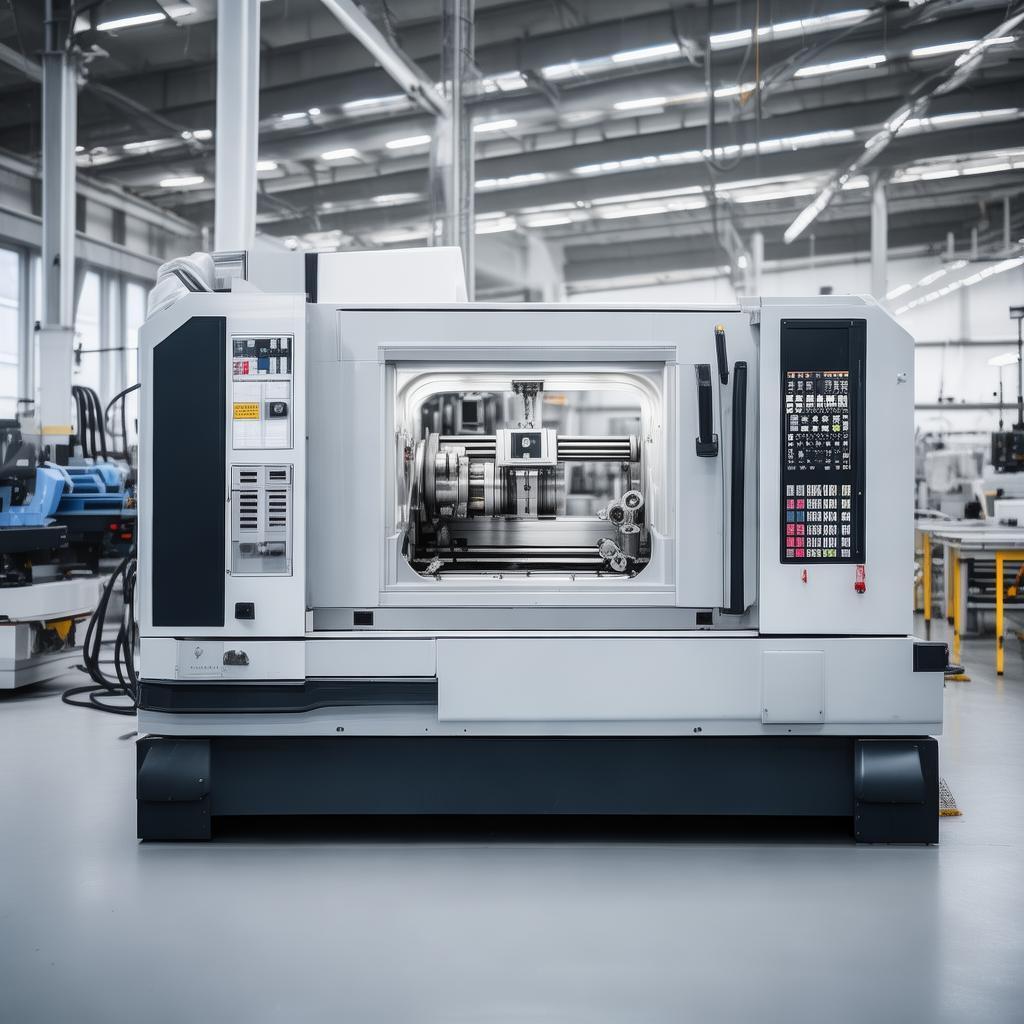
high precision CNC turning
Product Overview
High precision CNC turning is a subtractive manufacturing process used to produce rotational parts with tight dimensional control and excellent surface finish. In the precision metalworking and advanced manufacturing supply chain—especially for medical devices, automotive components, aerospace subsystems, hydraulics/pneumatics, and industrial instrumentation—turning centers and engineered tooling help OEMs and Tier suppliers achieve repeatable geometry for shafts, bushings, sleeves, and precision bores. When you need consistent tolerances across production runs, high precision CNC turning supports stable, measurable quality from prototype through volume manufacturing.
Key Features
- Tolerance-focused machining: Designed for parts that require controlled diameters, concentricity, and bore accuracy.
- Stable surface quality: Turning strategies and process control help deliver smooth, functional finishes for mating and sealing surfaces.
- Process repeatability: Supports consistent results across batches, reducing rework and inspection overhead.
- Material versatility: Suitable for common engineering alloys and difficult-to-machine materials where dimensional integrity matters.
- Efficient production planning: Toolpath optimization and setup discipline help streamline machining time and delivery schedules.
- Inspection-ready output: Production documentation and measurement-oriented workflows align with industrial quality requirements.
- Scalable support: Works for development quantities as well as ongoing supply for production programs.
Technical Specifications
| Parameter | Specification |
|---|---|
| Typical part types | Shafts, bushings, sleeves, collars, precision bores, custom turned components |
| Dimensional control approach | Tolerance-centric setup and measurement workflow aligned to drawings |
| Surface finishing capability | Process-selected turning finishes for functional interfaces and fit requirements |
| Material compatibility | Common engineering steels, stainless grades, and other production alloys (dependent on application) |
| Quality documentation | Inspection support and traceable manufacturing records per project requirements |
| Production readiness | Prototype-to-volume manufacturing support using repeatable CNC turning processes |
Application Scenarios
- Automotive driveline and steering: Machined shafts and precision sleeves for smooth motion and reliable fit.
- Hydraulic and pneumatic components: Turning of sealing and guiding surfaces to reduce leakage and wear.
- Medical device subassemblies: Consistent bores and concentric features supporting controlled performance.
- Industrial instrumentation: Repeatable turned parts for assemblies where stable geometry impacts calibration.
- Aerospace-adjacent subsystems: High repeatability turning strategies for functional interfaces and assembly tolerance stacking.
Advantages
Choosing a precision turning capability—rather than general-purpose machining—helps procurement teams reduce risk in fit, function, and assembly yield. With a tolerance-first approach, high precision CNC turning is optimized for parts that must meet inspection criteria consistently, not just “machined” outputs.
- Lower total cost of quality: Better dimensional control reduces scrap, rework, and incoming inspection time.
- Improved assembly performance: Surface and bore consistency supports reliable coupling, sealing, and motion.
- Repeatable production outcomes: Optimized setups and controlled workflows support steady results over multiple lots.
- Better engineering collaboration: Feasibility feedback and process recommendations help prevent late-stage design changes.
Why Choose Us
We support international buyers with production-ready machining practices designed for dependable delivery and inspection confidence. Our team focuses on engineering clarity, documentation discipline, and consistent shop-floor execution—so precision turning results align with your drawings and assembly requirements.
- Clear communication from quote through production planning
- Measurement- and documentation-oriented process review
- Scalable capacity for prototypes and ongoing programs
- Quality-focused approach to minimize variability between batches
If you’re evaluating high precision CNC turning for a new product or supplier consolidation, send your drawings and tolerances—we’ll help confirm manufacturability and the most practical machining plan.
FAQ
1) What information do you need to quote high precision turned parts?
Please share the drawing (PDF/STEP), material, required tolerances, target surface finish, quantity, and any critical inspection requirements. If available, include assembly notes and critical interface dimensions.
2) Can you machine complex turned geometries and precision bores?
Yes—our approach to turning is optimized for controlled diameters, concentric features, and functional surfaces. We’ll review tool access, tolerances, and inspection points to ensure the part is achievable.
3) How do you handle tolerance control and consistency between production lots?
We plan setups around the drawing’s critical dimensions and use a measurement-oriented workflow to verify outcomes. This supports repeatability for ongoing supply programs.
4) What are typical lead-time drivers for precision CNC turning?
Lead time depends on geometry complexity, material readiness, required finishing steps, and the inspection documentation level. For new parts, time is also influenced by process planning and feasibility checks.
5) Do you support prototype-to-production transitions?
Yes. We can support precision CNC turning for development quantities and then align the process for scale-up to meet your delivery and quality expectations.
Ready to move forward? Share your drawings and tolerance requirements, and we’ll provide a practical plan for manufacturing high precision CNC turning with the documentation and consistency your buyers expect. Request a quotation today.