
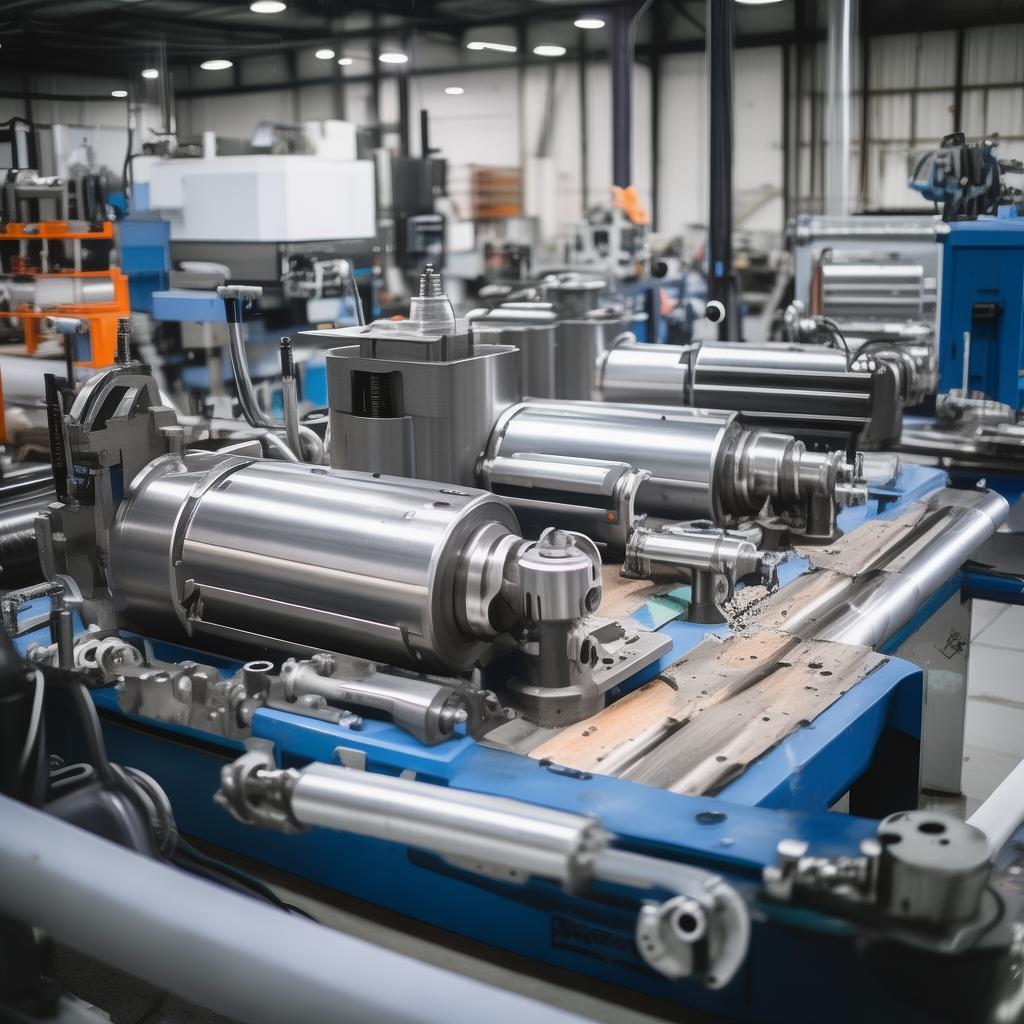
high rigidity turning center
Product Overview - High Rigidity Turning Solutions for Demanding Machining
A high rigidity turning center is built for precision turning operations where stiffness directly impacts cutting stability, surface finish, and dimensional control. In manufacturing industries such as automotive component production, industrial hydraulics, and general metalworking, procurement teams rely on rigid lathe platforms to maintain performance under continuous load and to reduce rework caused by vibration or thermal drift. With a purpose-designed foundation and machining-oriented architecture, this turning center supports stable machining of shafts, rings, sleeves, and similar rotational parts—ideal for production lines and job shops seeking consistent, repeatable results.
Key Features
- Rigidity-first design helps suppress chatter and vibration, supporting smoother cuts and more consistent surface quality.
- Stable turning under load enables confident machining of long workpieces and heavier passes where generic systems can lose precision.
- Precision alignment and repeatability support tight tolerances across batches—useful for high-mix production and repeat orders.
- Process flexibility accommodates different turning profiles and part geometries common in automotive, machinery, and energy supply chains.
- Efficient workflow reduces non-cutting time through practical tooling access and operational layout for day-to-day manufacturing.
- Operator-ready usability helps technicians and programmers maintain predictable setups, minimizing training friction.
- Manufacturing-grade reliability supports stable production schedules and dependable maintenance planning.
Technical Specifications
| Parameter | Specification |
|---|---|
| Machine Type | CNC turning center (rigidity-oriented layout) |
| Application Focus | Precision turning of shafts, sleeves, and rotational components |
| Spindle / Drive | Machining-oriented spindle system (configuration may vary by model) |
| Construction Approach | Rigid bed and structural design for cutting stability |
| Tooling / Turret | Tooling configuration options (selected to match production requirements) |
| Workholding | Lathe chuck and standard turning workholding arrangements (model dependent) |
| Control System | Industrial CNC control for turning cycles and programming |
| Coolant & Lubrication | Cutting coolant and lubrication provisions for production use |
Note: Exact model options (spindle speed range, axis travel, turret type, and work envelope) should be confirmed based on your part family and production targets.
Application Scenarios
- Automotive shaft and hub machining where stable turning supports consistent surface finish across batches.
- Hydraulic cylinder sleeves and rings, benefiting from stiffness that reduces chatter during longer cuts.
- Industrial gear component pre-machining that requires repeatable geometry for downstream grinding.
- Job shops producing medium-volume rotational parts, where the turning center helps maintain quality despite mix changes.
Advantages
Compared with generic CNC lathes that may be optimized for light-duty work, a rigidity-focused platform is designed to keep cutting dynamics under control—especially when programs demand deeper passes, interrupted cuts, or longer tool engagement. A high rigidity turning center approach is particularly valuable when your success criteria include stable tolerances, repeatable surface quality, and reduced scrap risk due to vibration.
- Better machining stability for higher-efficiency material removal strategies.
- More predictable part outcomes, improving yield and reducing rework cycles.
- Improved confidence when machining slender or long rotational geometries.
- A more production-oriented foundation that supports consistent day-to-day performance.
Why Choose Us
We support international buyers with a procurement-focused supply process: clear configuration guidance, documented machine documentation, and responsiveness during installation planning and acceptance. Our approach emphasizes long-term operational value for manufacturers and integrators selecting a rigidity-enhanced turning center for sustained production use.
- Transparent communication on options, accessories, and configuration matching.
- Order support designed for cross-border procurement and project coordination.
- Practical guidance for commissioning, operator readiness, and tooling setup.
- Service-oriented mindset to help minimize downtime after delivery.
FAQ
Q1: What parts are best suited for a high rigidity turning center?
Shafts, sleeves, rings, and other rotational components where stiffness helps maintain surface finish and dimensional stability—especially for long or slender workpieces.
Q2: How do I select the right configuration (turret/tooling, workholding, and options)?
Share your part drawings, material, typical dimensions, and target tolerance/surface requirements. We’ll recommend a setup that balances rigidity, tooling access, and cycle efficiency for your production profile.
Q3: Is this machine suitable for both production and job-shop usage?
Yes. The rigidity-focused architecture supports stable machining across repeat orders, while practical setup workflows help manage higher part mix in job-shop environments.
Q4: What should I evaluate to ensure the machine meets my tolerance goals?
Consider workholding strategy, tooling plan, expected cutting engagement, and target surface/tolerance requirements. A rigidity-first turning center approach improves machining stability, but correct process planning is essential for best results.
Q5: Can you support international buyers with delivery and documentation?
We handle procurement-oriented coordination and provide relevant machine documentation for shipping, installation planning, and acceptance processes.
If you’re evaluating a high rigidity turning center for your next production upgrade, send us your part list, materials, and target tolerances. We’ll review your application and provide a quotation and configuration recommendation aligned with your machining goals.