
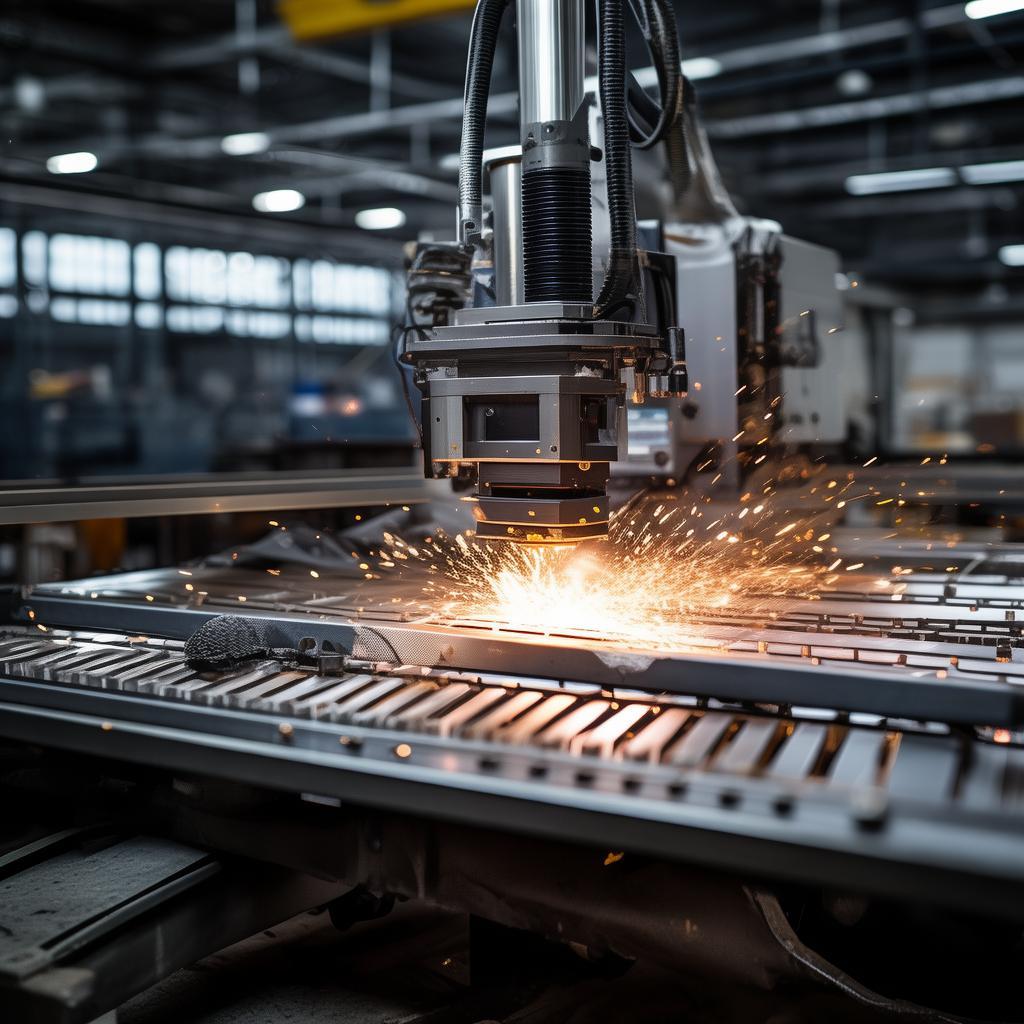
industrial machining turning center
Product Overview
An industrial machining turning center is a CNC lathe system designed for precision turning operations on cylindrical and rotational parts. In manufacturing for the metalworking and industrial components supply chain—such as automotive, machinery, hydraulics, and general engineering—it delivers stable cutting performance, repeatable tolerances, and efficient production of shaft-like workpieces. From roughing to finish turning and threading, this equipment helps factories reduce cycle times, improve surface quality, and streamline process planning for a wide range of turnable parts.
Key Features
- Consistent precision for repeatable parts: Built for stable machining routines that support dependable dimensional control across production runs.
- Flexible turning for mixed product portfolios: Suitable for batch work where setups and part types change frequently, helping you maintain throughput without retooling every time.
- Higher productivity from optimized material removal: Machining-focused design supports efficient roughing-to-finish workflows, reducing handoffs and rework.
- Process-friendly tooling integration: Supports common turning tasks like profiling, facing, boring, and threading using appropriate tooling configurations.
- Operator confidence and easier day-to-day use: Clear CNC operation supports reliable setup verification, job reproducibility, and simpler training for shop-floor teams.
- Designed for shop reliability: Stable spindle and workholding practices help reduce unexpected downtime, which is critical for tight delivery schedules.
- Efficient part handling and workflow: Helps reduce non-cutting time by supporting practical clamping and turning sequences for typical cylindrical components.
Technical Specifications
| Parameter | Specification |
|---|---|
| Machine type | CNC turning center for industrial machining applications |
| Main operations | Turning, facing, profiling, threading, and optional secondary machining depending on tooling setup |
| Control system | CNC platform suitable for multi-axis turning programs (exact model available on request) |
| Spindle interface | Industrial-grade spindle with appropriate chuck/collet interface (configuration varies by workholding) |
| Workholding | Chuck/collet compatible with typical turning workflows (final selection based on part geometry) |
| Tooling approach | Turret/tooling configuration designed for efficient turning operations (tooling options available) |
| Cooling and lubrication | Integrated coolant/lubrication provisions for continuous machining cycles |
| Power and integration | Available for international supply with installation support; electrical requirements confirmed per destination |
| Options | Depending on part mix: enhanced workholding, live tooling, automation interfaces, and accuracy verification support |
Note: Exact parameter values (e.g., spindle speed range, max swing, travel distances, and control model) should be confirmed based on the configuration you select. Share your part drawings and target production quantities for a precise specification sheet for your industrial machining turning center.
Application Scenarios
- Shaft and hub production: Efficient turning of stepped shafts, couplings, and bearing seats with repeatable geometry.
- Hydraulic and pneumatic components: Machining of cylindrical bodies, spools, and threaded ports where surface finish and dimensional stability matter.
- General engineering batches: Batch turning of mixed diameters and profiles to keep changeover downtime controlled.
- Threaded assemblies: Reliable cutting and inspection workflows for external/internal threads on rotational parts.
Advantages
Compared with generic lathes or one-size-fits-all CNC platforms, this turning center approach focuses on practical manufacturing outcomes: stable machining cycles, predictable part quality, and tooling/process flexibility for real production. If your team needs dependable output for shaft-based parts and rotational components, the industrial machining turning center format helps you standardize programming practices, reduce rework risk, and improve repeatability across shifts.
You also avoid common procurement pain points—mismatched workholding, unclear tooling assumptions, and non-aligned integration—by selecting a configuration tailored to your workpiece geometry and production targets.
Why Choose Us
- Procurement support that starts before purchase: We help translate your drawings and process requirements into an appropriate turning center configuration.
- International supply readiness: Packaging, documentation, and logistics planning designed for cross-border manufacturing procurement.
- Practical commissioning guidance: We coordinate installation needs and operator training expectations so your shop can reach productive machining faster.
- Responsible service planning: Support pathways for troubleshooting, maintenance planning, and parts guidance to protect uptime.
- Transparent documentation: You receive clear technical information and configuration notes so engineers and distributors can align internally.
FAQ
Q: What kinds of parts are best suited for a turning center?
A: Cylindrical and rotational components—such as shafts, hubs, spacers, and threaded parts—are ideal. If your parts have mixed profiles, the right tooling setup improves efficiency.
Q: Can we use this industrial machining turning center for both prototyping and production batches?
A: Yes. The CNC turning workflow supports job-based programs and consistent re-runs, which helps when you alternate between small batches and steady production.
Q: How do I choose the correct configuration (workholding and tooling)?
A: Share your maximum workpiece diameter/length, material type, target tolerances, and the operations you need (e.g., threading, profiling). We’ll recommend a practical tooling and clamping approach.
Q: What information should I provide for a quotation?
A: Provide part drawings (or representative samples), annual/monthly quantities, required accuracy, and any existing process constraints (available tooling, coolant preferences, and machine integration needs).
Q: Do you support installation and training?
A: We can coordinate commissioning support and operator guidance. Exact scope depends on destination and selected options for your turning center system.
Ready to standardize your turning workflow for reliable output? Send us your part drawings and target production requirements, and we’ll prepare a tailored quotation for your turning center solution—built to match your machining priorities.