
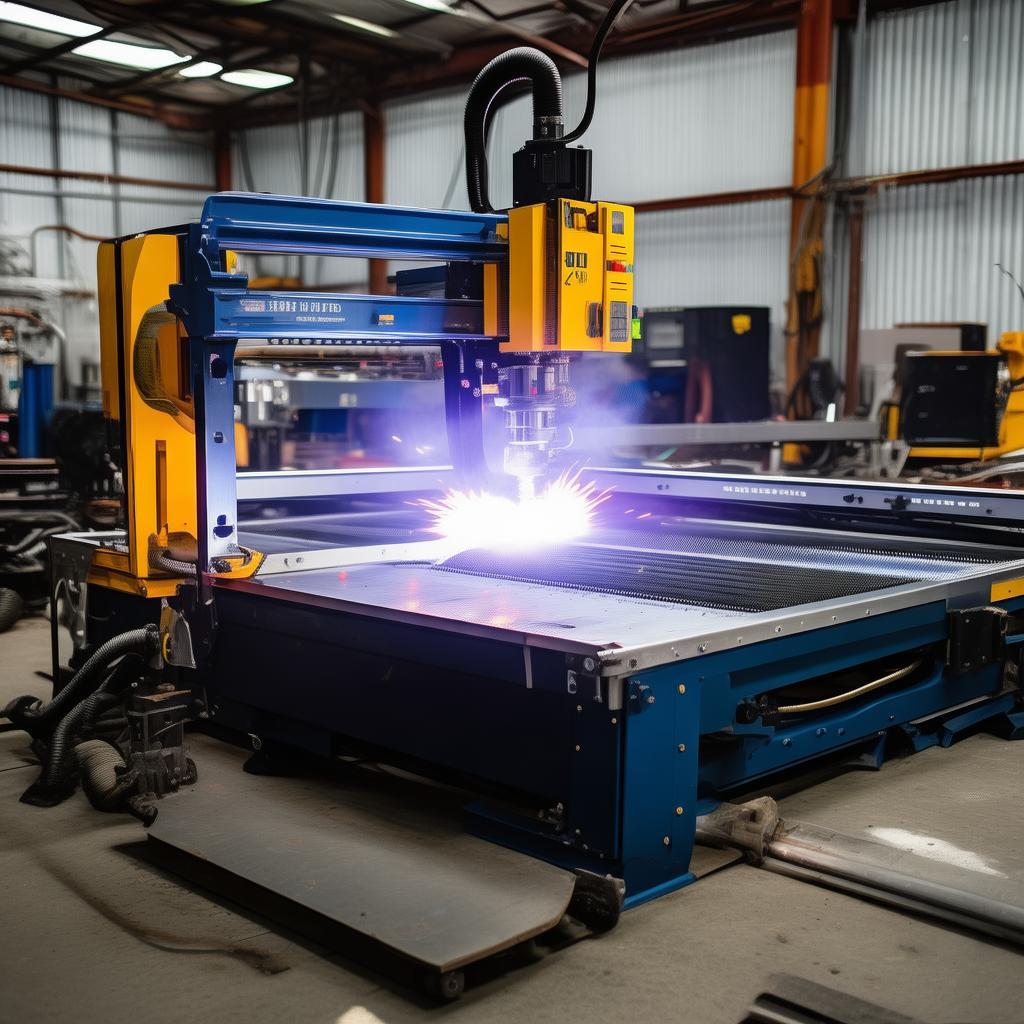
precision CNC lathes
Product Overview
Precision CNC lathes are computer-controlled turning machines used to produce cylindrical and rotational components with tight dimensional control, excellent surface finish, and repeatable quality. In the metalworking and manufacturing industry, these lathes are a core production asset for shafts, bushings, couplings, turned parts, and other engineered items where tolerances and consistency matter. For procurement teams and production engineers, the value is straightforward: stable machining, predictable throughput, and reduced scrap through reliable control of feed, speed, and tool paths.
Key Features
- Stable turning for repeatable tolerances — rigid construction and precise motion help maintain geometry across production runs.
- High-quality surface finish — consistent tool engagement and controlled cutting parameters support clean finishes and reduced secondary operations.
- Productivity-minded control — CNC-driven automation supports efficient cycle times, helping you scale output without sacrificing accuracy.
- Tool-path flexibility for varied parts — configurable programming workflows support both small-batch complexity and larger-volume repeat production.
- Operator-friendly setup — practical interfaces and repeatable setup routines reduce training time and minimize changeover errors.
- Reliable workholding integration — designed to work effectively with standard chucks and fixtures to improve stability for different stock sizes.
- Lower cost per part through reduced scrap — stable motion and consistent machining support yield improvements over generic manual turning solutions.
Technical Specifications
Note: Specifications can be configured to your production needs. The table below shows a typical specification structure you can use to compare options.
| Parameter | Specification |
|---|---|
| Max workpiece length | Configurable by machine size |
| Max workpiece diameter | Configurable by machine size |
| Spindle speed range | VFD-controlled for stable cutting |
| Spindle nose mounting | Standard interface; supports tooling integration |
| Tooling system | Turret / multi-station configuration (model-dependent) |
| Axes configuration | Typical X/Z with optional sub-operations (model-dependent) |
| Repeatability focus | Engineered for consistent production output |
| CNC control | Modern CNC platform with turning-centric features |
| Chip management | Integrated chip handling options available |
| Power requirements | Based on selected configuration and region |
Application Scenarios
- Automotive and drivetrain components: consistent turning for shafts, spacers, and precision housings that require stable geometry.
- Hydraulics and pneumatic fittings: controlled surface finish and dimensional repeatability for sealing and performance.
- Industrial fasteners and sleeves: efficient production of cylindrical parts with repeatable OD/ID profiles.
- General machining job shops: flexible programming for mixed materials and varied batch sizes using one turning platform.
- Electromechanical and motion systems: turning of precision rings and components where finish and concentricity drive downstream assembly.
Advantages
Compared with generic lathes or simplified turning setups, a production-grade CNC turning solution offers tangible operational benefits:
- Process consistency: CNC control reduces variation between operators and shifts, improving measurement outcomes over time.
- Fewer secondary operations: dependable surface finish and controlled stock removal can shorten downstream machining and fitting.
- Faster changeover planning: tool and program repeatability supports quicker setups when you move between part numbers.
- Better cost predictability: stable machining helps protect yield and reduces scrap—especially important when tolerances are tight.
- Scalable production: the same turning platform can support both prototypes and steady-volume manufacturing with appropriate tooling and programming.
Why Choose Us
Selecting the right supplier is as important as the machine itself. We focus on dependable trade support and practical manufacturing outcomes, including:
- Procurement-ready communication: clear documentation and responsive support for spec confirmation and ordering.
- Application-focused configuration: help aligning machine size, tooling approach, and turning requirements to your parts.
- International trade logistics support: guidance for packaging, shipment coordination, and installation planning.
- After-sales partnership mindset: support pathways for training, troubleshooting, and ongoing maintenance planning.
If you share your part drawings and target tolerances, we can recommend the most suitable CNC turning configuration for your production scope.
FAQ
Q: What materials can precision CNC lathes handle?
A: Turning platforms are typically used across common manufacturing materials such as steels, alloy steels, stainless grades, aluminum, and engineered plastics—material capability also depends on tooling selection, cutting parameters, and workholding.
Q: Are these suitable for small-batch or prototype runs?
A: Yes. CNC programming and repeatable setup routines support job-shop workflows, while the automation benefits help maintain consistent results between prototype iterations and production follow-ups.
Q: How do I choose the right machine size?
A: Start with maximum workpiece diameter and length, target spindle speed needs, and the tooling layout required for your operation plan (OD/ID turning, facing, threading, and any secondary features).
Q: What should we provide to get an accurate quotation?
A: Share part drawings (or CAD), material and grade, target tolerances, surface finish expectations, quantities, and your current process steps so we can align the configuration to your production outcomes.
Q: How does a CNC lathe reduce scrap compared to manual turning?
A: CNC turning improves repeatability by controlling feed/speed/tool paths precisely, reducing operator-driven variation and helping keep parts within tolerance across large runs—especially when conditions are well-defined.
If you’re evaluating precision CNC lathes for an upcoming production program, send your part requirements and we’ll respond with a suitable configuration and a procurement-ready quotation.