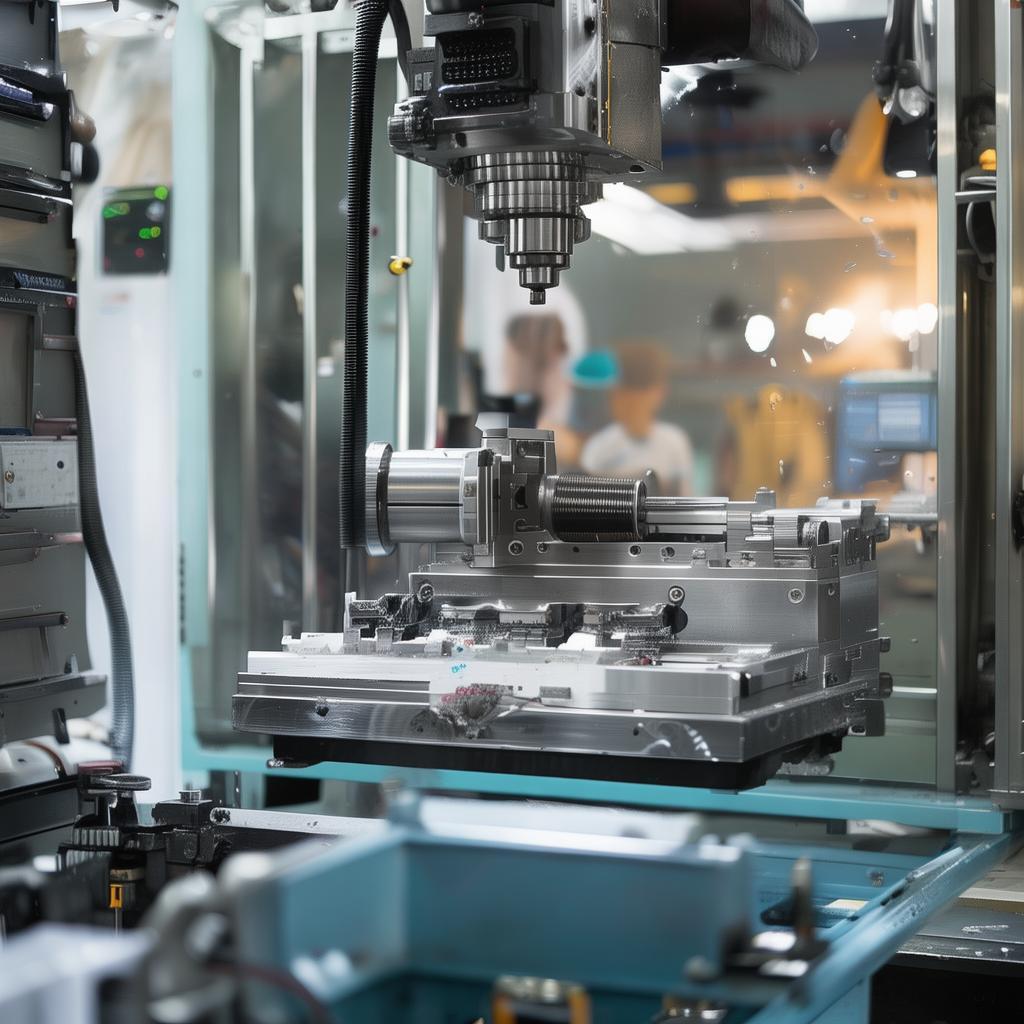
tooling options CNC lathe
Product Overview
A tooling options CNC lathe is a modular set of cutting and work-holding configurations designed to expand what a CNC turning center can produce—from precision shafts and bushings to production runs that demand repeatability. This tooling package is widely used in industrial manufacturing for high-mix, high-volume part families where setup flexibility, process stability, and tool life directly impact throughput and cost per part. By selecting the right insert tooling, holders, and interface choices for your workpiece geometry, you can standardize operations across jobs while maintaining consistent surface finish and dimensional control.
Key Features
- Faster job changeovers with modular tooling interfaces that reduce manual adjustment and minimize downtime.
- Process stability through rigid, predictable cutting setups that help protect accuracy during continuous production.
- Better surface quality by aligning cutting geometry and holder configuration to your material and target finish.
- Right-sized performance using an organized range of tooling options for roughing, semi-finishing, and finishing passes.
- Reduced tooling friction for procurement and production teams—standard interfaces and documented compatibility simplify sourcing and planning.
- Lower scrap risk with application-aligned configurations that support repeatable results across batches.
Technical Specifications
Specifications below outline the configurable structure typically included in a tooling options CNC lathe solution. Exact parameters are confirmed based on your machine interface, part geometry, and material requirements.
| Parameter | Specification |
|---|---|
| Machine interface compatibility | Turn/mount interface confirmed per CNC model and turret/tooling system |
| Tooling configuration | Modular holders, insert types, and work-holding compatible arrangements |
| Cutting operation coverage | Roughing / semi-finishing / finishing pass support (configurable) |
| Workpiece material range | Common turning alloys and steels; selection adapted to hardness and chip behavior |
| Application flexibility | Support for stepped shafts, bores, OD profiles, and finishing geometries (configurable) |
| Quality and documentation | Compatibility checks and recommended setup guidance based on your process targets |
| Ordering approach | Portfolio-based sourcing with option sets tailored to your part family and volumes |
Application Scenarios
- High-mix shaft production: configure tooling for consistent profiling across varying diameters and radii.
- Bushing and sleeve turning: optimize boring/OD operations using suitable holder and insert geometry to improve finish and concentricity.
- Surface-critical finishing: apply finishing-focused tooling selections to meet tight roughness targets without rework.
- Production run cost reduction: standardize the cutting setup and tool availability to lower downtime and expedite procurement.
Advantages
Compared with generic, one-size-fits-most tooling kits, this tooling options approach prioritizes fit-to-machine and fit-to-part-process. Instead of forcing a single setup across multiple part geometries, you get an organized range of cutter/holder/work-holding configurations—helping you:
- Maintain better stability across roughing to finishing steps, reducing the likelihood of dimensional drift.
- Improve consistency in surface finish by aligning insert geometry and holder rigidity to your requirements.
- Simplify maintenance and inventory planning with clear configuration logic and compatibility-oriented sourcing.
- Support predictable manufacturing planning for distributors and production managers managing multiple SKUs.
Why Choose Us
We work with manufacturers and trading partners to deliver tooling configurations that match your CNC lathe setup and production goals. Our team focuses on practical compatibility checks, clear recommendations for interface selection, and responsive communication during evaluation and rollout. Whether you need a first pilot set or expanded tooling coverage for new part families, we aim to reduce friction across engineering, procurement, and the shop floor.
Note: Specific certifications, test reports, or measured performance outcomes are provided only when shared by you or documented by the supplier in the project scope.
FAQ
1) Will these tooling options work with my CNC lathe turret or tool interface?
Compatibility is confirmed based on your machine model and the tooling interface. Share your turret/tooling system details and your part drawings so we can recommend the correct holder and setup.
2) How do I choose between roughing and finishing configurations?
We match operation type to your material, targeted surface quality, and pass strategy. For critical dimensions, we also consider how you currently hold and reference the part.
3) Can this be used for multiple part families on the same machine?
Yes—this tooling approach is designed for scalable coverage, enabling a consistent process framework across different diameters, profiles, and bore/OD combinations.
4) What information should I send to get a quotation quickly?
Provide your CNC lathe model/interface, material type, key part dimensions, target surface finish, annual volume, and any constraints (cycle time, tolerances, or current issues).
5) Do you support distributor and trading partner replenishment planning?
Yes. We can help you map tooling configurations to a part family so your inventory planning stays organized and your customers receive consistent recommendations.
If you’re evaluating a tooling options CNC lathe configuration for a new program or upgrading performance on existing jobs, share your part drawings and machine details. We’ll respond with a tailored tooling plan and a clear quotation for the required sets and replenishment path.