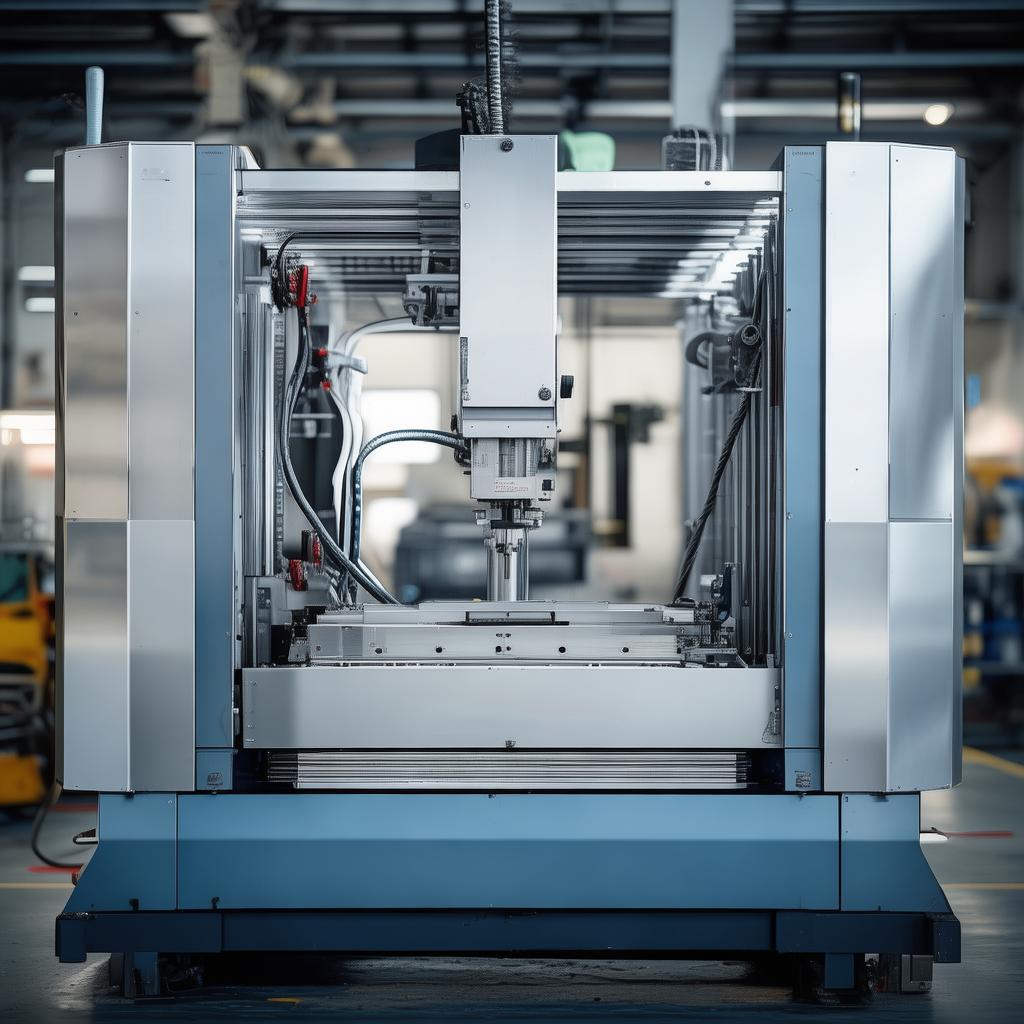
ATC CNC machining center
Product Overview
An ATC CNC machining center is a multi-axis machining platform designed for automated milling and drilling with an integrated tool changer—so parts can be produced with minimal manual intervention. In the metal fabrication and precision manufacturing industry, this type of CNC system is commonly used to machine components for industrial equipment, molds/dies, and custom metal parts where repeatability, throughput, and process consistency directly impact profitability. With automatic tool selection and stable cutting performance, an ATC-equipped center helps your shop reduce setup time, increase unattended run time, and maintain consistent quality across batches.
Key Features
- Automated multi-tool machining: Quickly switch between operations (milling, drilling, tapping) without stopping the job for manual tool changes.
- Higher throughput for batch production: Optimized workflows help shorten non-cutting time and improve overall parts-per-shift output.
- Consistent dimensional results: Rigid cutting performance and repeatable tool handling support stable machining across multiple workpieces.
- Reduced setup burden: Pre-defined tool paths and automatic tool management streamline changeovers for new part numbers.
- Integration-friendly for production lines: Suitable for blending into cell-based manufacturing, supporting standard workholding and part verification routines.
- Operator-friendly programming approach: Designed for CNC operators and process engineers to model machining sequences efficiently.
- Improved utilization with unattended runs: Enables longer machining cycles and steadier production planning when paired with proper workholding and part handling.
Technical Specifications
| Parameter | Specification |
|---|---|
| Machine Type | ATC vertical/machining center configuration (integrated automatic tool changing) |
| Primary Processes | Milling, drilling, boring; support for tapping depending on tooling and spindle option |
| Tool Management | Automatic tool changer for programmed multi-operation cycles |
| Control Interface | CNC control designed for production-ready part programs and tool management |
| Workholding Compatibility | Compatible with standard vises, clamps, custom fixtures, and automation-ready setups |
| Cooling / Chip Handling (Option-Dependent) | Flood or mist coolant and chip management options depending on configuration |
| Typical Production Use | Medium-to-high mix, batch machining for metal parts and precision components |
Note: Exact dimensions, spindle power/speed, tool magazine capacity, and travel ranges depend on the configured model. Share your part sizes and annual volume for a matched specification proposal.
Application Scenarios
- Industrial equipment parts: Machine housings and brackets where multiple operations must be completed in a single program.
- Precision metal fabrication: Produce repeatable features for assemblies with tight tolerances and consistent surface finishes.
- Molds and tooling support: Perform milling and drilling sequences efficiently to reduce turnaround time for tool maintenance and revisions.
- Contract machining / job shops: Handle mixed part numbers with reduced changeover effort and better scheduling reliability.
Advantages
Choosing an ATC-capable machining center offers clear advantages over basic 3-axis mills or manual-tool setups. First, automatic tool changing reduces idle time and makes it easier to run complex parts without frequent operator interventions. Second, the controlled sequencing of operations improves repeatability, which is crucial for batch work in metal fabrication and precision component production. Third, the integrated workflow typically supports stronger process planning—your team can standardize tooling lists, routing steps, and inspection points across future orders.
If you’re evaluating a standard CNC mill for multi-operation work, a CNC machining center with tool changer capability is usually the better fit for customers who value throughput, consistent outcomes, and production scalability.
Why Choose Us
We support international buyers and manufacturers with a practical procurement approach—matching equipment configuration to real production needs, providing clear documentation, and coordinating delivery timelines. Our team focuses on long-term value: training support, application guidance, and responsive pre-/post-sales communication so your line ramp-up stays on track.
- Procurement-friendly quotes and order clarity (lead time, packaging, shipping coordination).
- Application consultation to help select appropriate tooling, workholding, and machining strategy.
- Reliable after-sales support process designed for production uptime.
- Compatible integration guidance for modern shop-floor workflows and part handling setups.
FAQ
1) What parts are best suited for an ATC CNC machining center?
Parts that require several machining operations—such as milling plus drilling/boring in one setup—are typically the best fit for automated tool changing and efficient cycle planning.
2) How do I determine the right configuration for my production?
Share your maximum workpiece size, material types, required features, annual volumes, and target tolerances. We’ll help align spindle/tooling capacity, tool handling strategy, and setup approach to your workflow.
3) Can we run different job numbers with minimal changeover?
Yes. Tool pre-setting, standardized tool libraries, and program-based routing generally make it easier to switch between part programs—especially when paired with suitable fixtures.
4) What do we need to prepare on the shop floor?
You’ll want appropriate workholding/fixturing, coolant/chip handling provisions per material, and safe routing for loading/unloading. We can advise based on your part handling method.
5) Is this suitable for unattended production runs?
It can be, depending on your fixturing stability, tool life expectations, coolant performance, and part inspection routine. Proper setup and tooling selection are key.
Ready to evaluate an ATC CNC machining center for your next production program? Send us your part drawings, material details, and target annual volume—we’ll respond with a matched configuration and a quotation tailored to your machining goals.