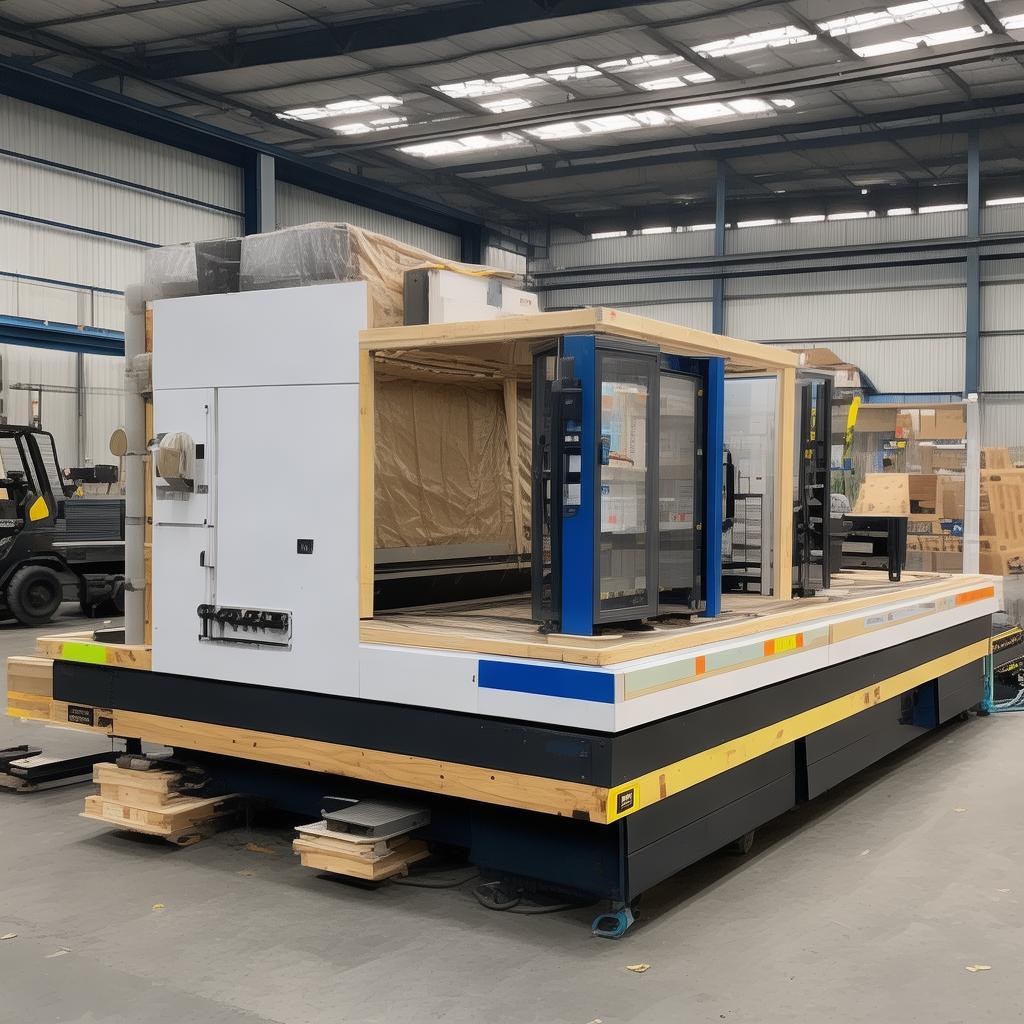
CNC machining center controller upgrade
Product Overview
A CNC machining center controller upgrade is an engineering-focused modernization solution for industrial milling, turning, and machining centers used in manufacturing plants and job shops. It replaces or enhances aging CNC control hardware and motion/software capabilities to improve reliability, simplify maintenance, and keep production aligned with current tooling and workholding requirements. For operators and maintenance teams, the upgrade reduces controller downtime and improves day-to-day usability, while for engineers it supports smoother program execution, better diagnostics, and more consistent machining outcomes across shifts.
Key Features
- Modern control platform designed to extend machine life and protect throughput against obsolescence.
- Improved diagnostics to shorten troubleshooting time with clearer fault indication and status visibility.
- More stable motion control for consistent axis performance, reducing cycle-to-cycle variability.
- Program and I/O compatibility planning to support existing workflows and minimize integration disruption.
- Maintenance-friendly design that helps technicians locate issues faster and service the system with confidence.
- Upgrade pathway support including documentation, commissioning guidance, and validation to fit your production schedule.
- Machine-level performance focus balancing control, feedback, and safety integration rather than swapping parts blindly.
Technical Specifications
Specifications vary by machine model, axes count, and existing servo/IO components. The table below reflects the typical upgrade scope for an industrial machining center control modernization.
| Parameter | Specification |
|---|---|
| Upgrade scope | Controller hardware modernization, control software configuration, and integration support |
| Axis support | Configurable for typical 3/4/5-axis machining center arrangements (final depends on machine design) |
| I/O integration | Spindle, tool changer interfaces, coolant control, and machine signals mapped to existing architecture |
| Diagnostics & monitoring | Fault codes, status signals, and commissioning checks to support faster maintenance |
| Motion control | Tuned servo/control parameterization to improve stability and repeatability |
| Operator usability | Workflow configuration for safe start-up, homing, and program handling |
| Documentation & handover | System integration notes, configuration summary, and commissioning/verification checklist |
Application Scenarios
- High-mix production lines: when controller aging causes frequent stoppages and maintenance costs rise.
- Aerospace and precision components: to improve consistency while reducing downtime during program changes.
- Metalworking job shops: to modernize the machine without rewriting every workflow from scratch.
- Planned facility upgrades: when consolidating production capacity requires minimizing unscheduled outages.
- Mixed fleet operations: for standardization across multiple machines to simplify training and spare parts control.
Advantages
Choosing a controller modernization solution is most effective when it’s engineered around your specific machine configuration—rather than applying a generic “plug-in” approach. This upgrade option provides:
- A better match to your existing servos, encoders, spindle interface, and safety wiring so commissioning is predictable.
- Integration planning that reduces downtime during changeover and avoids surprises in tool changer, coolant, and macro/IO behavior.
- Configuration support that helps preserve proven machining programs while enabling more stable motion and easier fault recovery.
- A modernization strategy that extends machine service life—often delivering a faster ROI than replacing the entire machine tool.
In procurement terms, the result is less risk, lower disruption, and a clear upgrade path that keeps your machining assets productive for longer—exactly what a CNC machining center controller upgrade should accomplish.
Why Choose Us
We support international manufacturers and distributors with upgrade-focused engineering and practical commissioning. Our process is designed to reduce integration risk and ensure the new controller works reliably in real production conditions. Key trust signals include:
- Structured pre-upgrade assessment covering machine configuration, I/O mapping needs, and commissioning constraints.
- Clear documentation and handover so your maintenance team can operate and service the system confidently.
- On-site or remote commissioning support options coordinated to align with production windows.
- A focus on compatibility verification to help minimize downtime during controller retrofit and stabilization.
If you share your machine model, control brand/version, and axis configuration, we can confirm upgrade feasibility and integration scope before you commit.
FAQ
Q1: Will this upgrade work with my existing servo drives and feedback devices?
Most retrofits can be integrated with existing drives and feedback, but compatibility depends on your encoder/feedback signals and drive interface. We validate this during the pre-upgrade assessment.
Q2: Do we need to rewrite our CNC programs after upgrading the controller?
Many customers keep existing workflows with minimal changes. Any required adjustments typically relate to IO mapping, macro behavior, or controller-specific settings—verified during configuration and commissioning.
Q3: How long will the downtime be during the controller retrofit?
Duration depends on wiring complexity, axis count, and the scope of I/O mapping. We plan a commissioning window based on your production schedule and integration requirements.
Q4: What improvements should we realistically expect?
Customers commonly see fewer controller-related stoppages, clearer diagnostic feedback, and more stable machine behavior. Exact outcomes depend on your current condition and the upgrade configuration.
Q5: Is this a full machine replacement or a modernization retrofit?
It is a modernization retrofit focused on controller hardware and system configuration—often extending the service life of the existing machining center without full replacement.
Ready to evaluate a retrofit for your fleet? Share your machine model, axis count, current controller details, and priority goals (uptime, diagnostics, or performance stability). We’ll respond with an integration plan and a quotation tailored to your production needs for your CNC machining center controller upgrade project.