
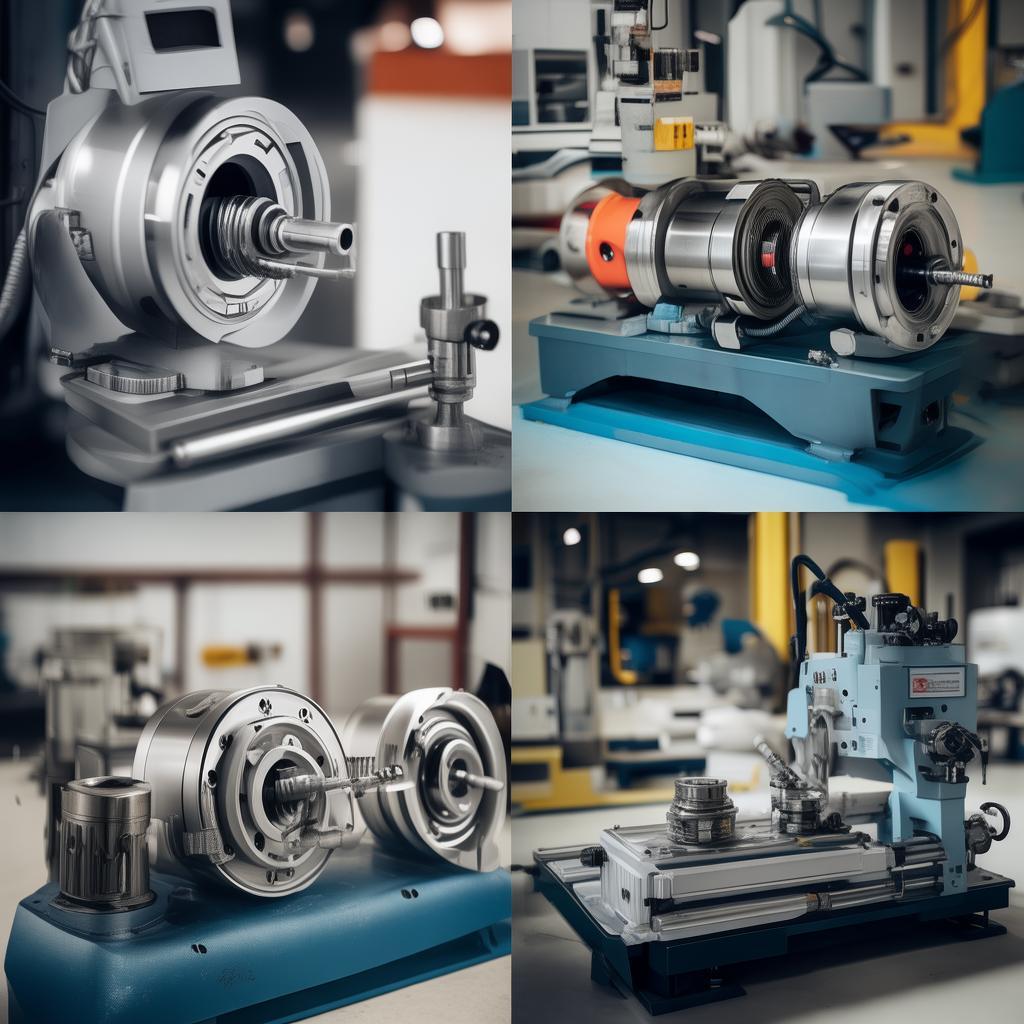
CNC machining center for EDM finishing
CNC machining center for EDM finishing — precision micro-operations for mold, die, and aerospace-quality surfaces
A CNC machining center for EDM finishing is an industrial machining platform engineered to support high-accuracy finishing steps after electrical discharge machining (EDM). In the mold & die, precision components, and aerospace supply-chain environment, production teams need more than roughing—they need stable geometry, clean surface integrity, and repeatable edge definition across multiple workholding setups. This system bridges EDM-to-finishing workflows by enabling controlled material removal, dependable positioning, and consistent finishing results on complex cavities, electrodes, and critical interfaces.
Key Features
- EDM-to-machining continuity: Streamlined finishing cycles help reduce rework and interpretation gaps between EDM outputs and final machining.
- Surface integrity focused: Stable cutting conditions support controlled stock removal and better control over edge radii and finishing marks.
- Workpiece accuracy under repeat setups: Reliable positioning and rigid process design help maintain dimensional consistency from part to part.
- Productive finishing for mixed geometries: Suitable for pockets, cavities, contours, and electrode-adjacent features where finishing paths must be repeatable.
- Higher yield through process discipline: Reduces trial-and-error by supporting repeatable program execution and predictable material removal behavior.
- Operator-friendly workflow: Practical setup routines and clear production handling reduce downtime during changeovers in job shops and tier suppliers.
- Scalable for manufacturing: Designed for day-to-day production demands where quality checks and tight delivery schedules are standard.
Technical Specifications
Note: Specifications can be customized by configuration. Below is a representative configuration table commonly used for finishing-oriented CNC systems in EDM follow-up workflows.
| Parameter | Specification |
|---|---|
| Intended process role | Finishing/micro-removal after EDM for cavities, contours, and critical interfaces |
| Spindle capability (configurable) | High-speed finishing spindle option for delicate cutting strategies |
| Control system | CNC control supporting contouring and finishing cycles for consistent toolpaths |
| Positioning accuracy (configurable) | Finishing-class accuracy suitable for tight dimensional control |
| Repeatability | Built for stable repeat execution across production runs |
| Workholding compatibility | Supports common finishing setups for molds/dies and complex EDM parts |
| Cooling and chip management | Finishing-oriented cooling strategy options to protect surface quality |
| Programming workflow | CAM-driven machining with repeatable parameters for finishing consistency |
Application Scenarios
- After EDM cavity finishing, the center performs controlled finishing passes to achieve target surface definition.
- For mold inserts and die components, it refines critical contours and edges while maintaining dimensional stability across batches.
- When producing precision electrodes and mating parts, it supports clean interfaces to improve subsequent assembly or forming results.
- In aerospace supplier workflows, it helps standardize finish steps where consistency and repeatability are quality requirements.
- For refurbishment or rework programs, it enables predictable material removal without excessive trial time.
Advantages
Generic machining centers can rough well, but they often fall short when the goal is a stable, quality-driven finishing sequence after EDM. This EDM finishing CNC platform is optimized for the realities of precision production: controlled toolpath execution, repeatable setup handling, and surface-focused machining behavior. The result is less variability between operators and fewer “unknowns” between the EDM stage and final acceptance checks.
- Cleaner handoff from EDM: Finishing steps are designed to complement EDM’s residual surface characteristics.
- Reduced scrap and rework risk: Consistent finishing strategies improve first-pass dimensional and surface outcomes.
- Better scheduling flexibility: Finishing capacity can be planned as a controlled downstream operation rather than a variable manual process.
- Manufacturing-ready finishing depth: Supports finishing operations on complex geometries where tool access and path consistency matter.
Why Choose Us
We support procurement teams with a supply approach focused on long-term manufacturing reliability—clear communication, configuration guidance, and a practical implementation mindset. Whether you’re integrating a new line or upgrading finishing capacity, our team aligns the CNC workflow to your production requirements, toolpath expectations, and quality targets.
- Process-oriented consultation: We help map your EDM follow-up workflow to an appropriate finishing configuration.
- Documentation for operators and engineers: Setup and maintenance information designed for efficient adoption.
- Support for stable ramp-up: Guidance that reduces downtime during installation, commissioning, and early production.
- Parts and service readiness: We plan for continuity in production support over the machine lifecycle.
FAQ
1) Is this CNC suitable for finishing after EDM on complex molds?
Yes. The EDM follow-up workflow is a primary use case, especially for cavities, contours, and edge-critical features where consistency and surface integrity matter.
2) How does it help reduce rework compared with manual finishing?
The controlled finishing approach supports repeatable toolpaths and process conditions, which reduces variability between shifts and decreases the likelihood of “trial-and-correct” rework cycles.
3) Can we use our existing CAM programs and finishing strategies?
In most cases, yes. We typically align configuration details and verify workflow fit so your finishing toolpaths translate cleanly to production execution.
4) What kind of materials can it support?
Common mold/die and precision materials used in EDM-to-finish processes can be supported, subject to your cutting strategy, tooling, and configuration selection.
5) Is the configuration fixed, or can it be tailored for our products?
It can be tailored. For example, spindle selection, process accessories, and integration items are commonly configured based on the finishing requirements of your parts and production volume.
6) What should we prepare to evaluate the EDM finishing process?
Share sample parts, EDM output characteristics, target tolerances/surface requirements, and your current finishing steps. That enables us to recommend a suitable approach for this CNC machining center for EDM finishing workflow.
If you’re planning an EDM follow-up upgrade or building a more reliable finishing line, tell us about your part geometry, tolerances, and current cycle flow. Request a quotation and we’ll help you select the right configuration for your EDM finishing CNC workflow, including the CNC machining center for EDM finishing setup that best matches your production goals.