
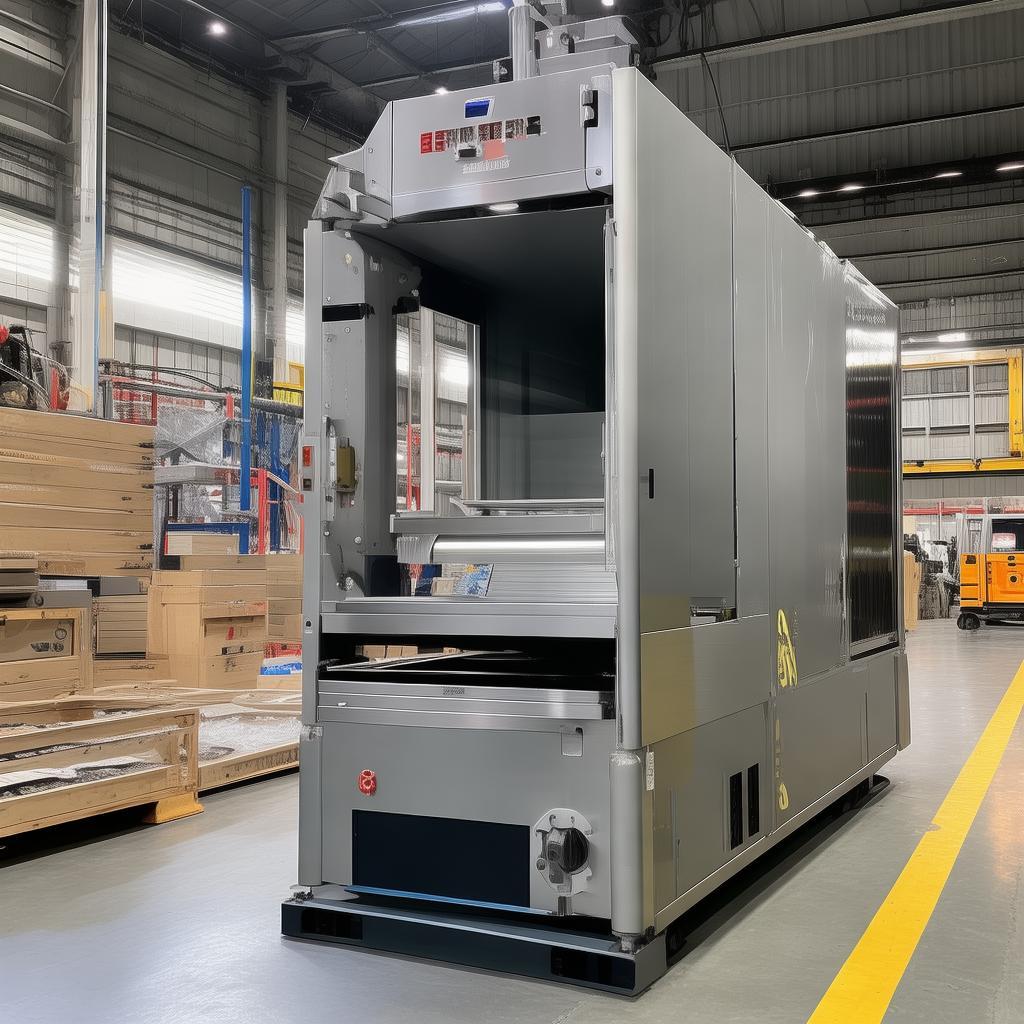
CNC machining center for manufacturing
Product Overview
A CNC machining center for manufacturing is a computer-controlled machining platform designed to produce precision parts at industrial scale—covering milling, drilling, boring, and related operations in a single automated workflow. Built for high repeatability and consistent surface quality, this type of vertical or multi-axis CNC system is widely used in machining shops and industrial OEM supply chains to manufacture components for machine tools, automotive subsystems, hydraulics, pumps, and general mechanical assemblies. By combining programmable tool paths with rigid construction and stable process control, it helps manufacturers shorten lead times, reduce rework, and scale output without sacrificing dimensional reliability.
Key Features
- Stable machining for repeatable results—rigid structural design and controlled positioning support consistent part geometry across production runs.
- Higher productivity through automation—programmed cycles reduce manual handling, helping batch machining and job-shop throughput.
- Flexible production for mixed part families—multi-step machining sequences streamline job changes for small-to-medium series and custom orders.
- Better surface finish and reduced secondary operations—controlled tool engagement and interpolation support cleaner finishing passes and tighter tolerances.
- Workholding-ready setup for shop realities—supports standard fixturing concepts so engineers can set up quickly and reliably on the floor.
- Safer, easier-to-manage production flow—tool and process management features help operators follow consistent procedures during longer runs.
- Operator and engineer-friendly programming—supports practical workflow for part programming, verification, and production monitoring.
Technical Specifications
Note: Specifications vary by configuration. Please request the exact configuration sheet for your required travel, spindle options, and control setup.
| Parameter | Specification |
|---|---|
| Machine type | Vertical CNC machining center (typical manufacturing configuration) |
| Axes | 3-axis standard; configurable for additional rotary axes |
| Work envelope | Configurable X/Y/Z travels based on part requirements |
| Spindle | Programmable industrial spindle (model depends on selected configuration) |
| ATC / tool management | Tool magazine options available for multi-operation cycles |
| Control system | CNC control tailored to production workflow and integration needs |
| Positioning accuracy | Configured per machine grade and calibration procedures |
| Repeatability | Configured per machine grade and inspection/QA acceptance |
| Cooling and lubrication | Integrated coolant delivery and lubrication options |
| Power supply | Configured to your region (voltage and frequency) |
| Interfaces and connectivity | Supporting data transfer for programming and job management (configuration-dependent) |
Application Scenarios
- Precision mechanical parts: Machining housings, brackets, and structural components with consistent dimensional control.
- Automotive and supplier machining: Producing repeatable machined features for subassemblies where process stability matters.
- Hydraulic and pump components: Performing multi-operation milling and drilling sequences for functional surfaces.
- General job-shop production: Running mixed batches efficiently using programmable workflows and standardized setups.
- Tooling and fixtures: Creating replacement fixtures and secondary machining components to keep production lines moving.
Advantages
Compared with generic CNC milling machines used as “one-size-fits-all” solutions, this CNC machining center for manufacturing option is built for production logic: repeatability for serial output, tooling flexibility for multi-step parts, and practical workflow for operators and process engineers. Instead of treating each job as a custom manual operation, the center is designed around stable machining sequences—so your planning, setup, and verification become more predictable.
- Lower cost per machined part through improved cycle efficiency and reduced rework.
- More consistent results across shifts thanks to standardized CNC programs and managed tooling.
- Better support for staged manufacturing—roughing, intermediate passes, and finishing within a single workflow.
- Easier scaling for distributors and contract manufacturers handling multiple customer part formats.
Why Choose Us
Selecting a CNC machining center is as much about long-term uptime as it is about cutting performance. We focus on procurement-ready support—clear configuration guidance, documentation for integration, and practical assistance for commissioning so your manufacturing line starts faster.
- Configuration transparency for spindle/tooling/control, based on your parts and operations.
- Responsive pre-sales technical support to validate travel, workholding, and process needs.
- Reliable after-sales coordination for onboarding, maintenance planning, and service communication.
- International supply experience designed for smooth export logistics and installation scheduling.
FAQ
Q: Which industries typically use a CNC machining center for manufacturing?
A: The most common users are machining shops and industrial OEM supply chains producing mechanical components—often for automotive, hydraulics, pumps, machine tooling, and general industrial assemblies.
Q: How do I choose the right travel and spindle configuration?
A: We recommend starting from your largest workpiece envelope, maximum part depth, and typical tooling approach. Share your part drawings (or key dimensions) and material mix so we can align machine envelope and spindle/tooling options.
Q: Can this kind of machining center handle mixed production (small batches and custom work)?
A: Yes. With programmable CNC workflows and tool management, it supports efficient job changes and multi-operation setups—ideal for mixed part families where lead time matters.
Q: What do I need for commissioning and operator training?
A: We’ll coordinate documentation and practical onboarding steps. Generally, you’ll need your electrical/power requirements confirmed, workholding tooling defined, and an agreed production workflow (program versioning and verification method).
Q: Is this suitable if we already have CAM and production programs?
A: Usually yes. Your existing CAM output can be reviewed for post-processor compatibility and machining strategy. We can help confirm integration steps so your manufacturing line transitions smoothly.
If you’re planning to source a reliable CNC machining center for manufacturing for your production workflow, share your part dimensions, materials, and annual volume targets. We’ll respond with a tailored configuration proposal and a practical quotation for your project.