
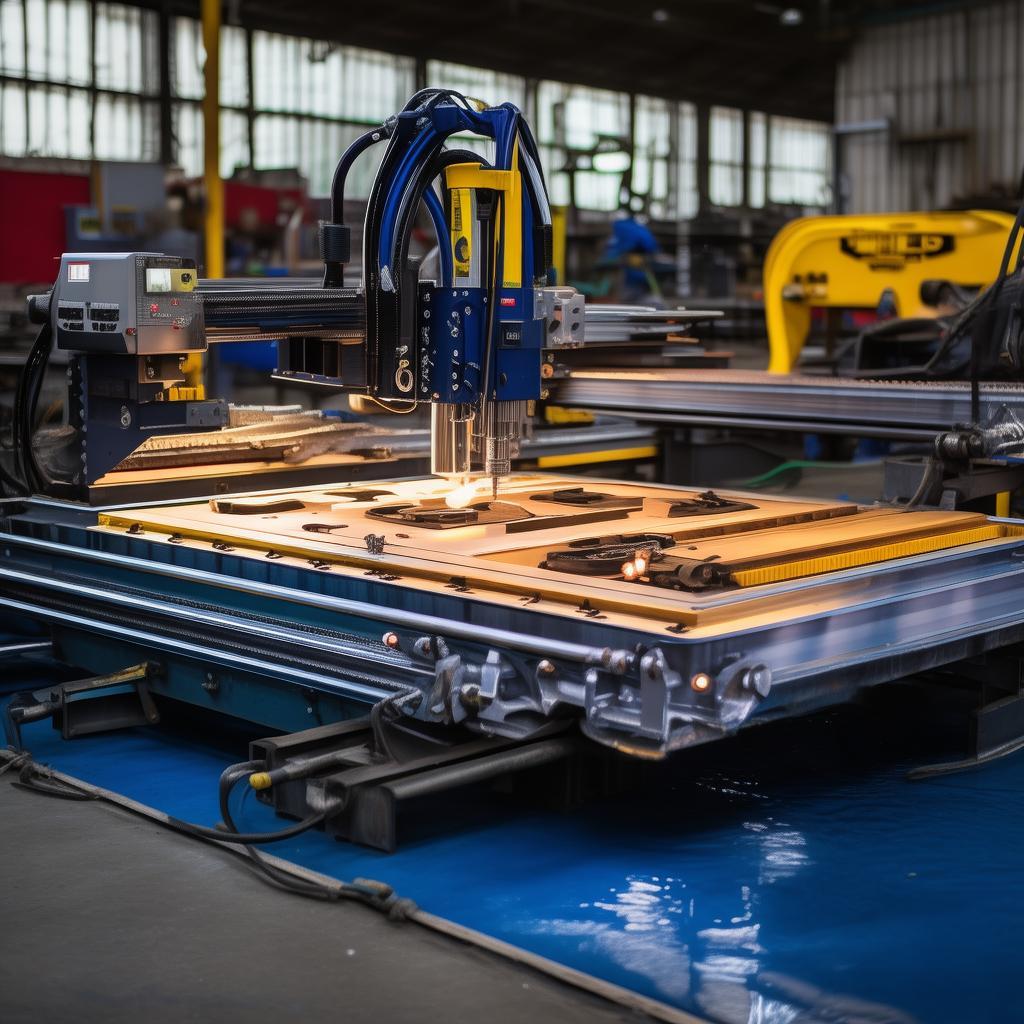
CNC machining center for metal stamping dies
Product Overview
A CNC machining center for metal stamping dies is a precision manufacturing system designed for machining and finishing high-wear tooling components used in stamping, forming, and progressive die sets. In stamping die production, the machine must deliver stable geometry, accurate pocketing and contouring, and repeatable surface quality to support long die life and consistent part dimensions. This CNC-capable machining solution supports die steel roughing, precision cavity/insert machining, and finishing operations—helping stamping shops reduce rework and shorten tool lead times.
Key Features
- Tooling accuracy for die integrity: Built to maintain tight machining tolerances across complex contours, pockets, and reference surfaces critical to stamping performance.
- Stable cutting for tough die materials: Supports consistent machining of common die steels and inserts, reducing chatter risk and improving finish uniformity.
- Efficient workflow from rough to finish: One platform approach for multi-step operations lowers setup time and helps maintain datum consistency.
- Productivity-minded spindle and motion control: Designed for reliable repeat cycles, enabling higher throughput for insert production and die repair work.
- Chip management and shop-ready usability: Practical handling features support machining environments where tooling dust, chips, and coolant control matter daily.
- Repeatable quality for multi-part programs: Helps production teams run standardized processes across batches—important for distributor fulfillment and tooling supply consistency.
- Configurable capability for tooling needs: Supports common die-shop processes such as pocketing, profiling, drilling/boring, and finishing passes using appropriate tool sets.
Technical Specifications
| Parameter | Specification |
|---|---|
| Machine type | CNC machining center for tooling and die machining |
| Primary processes | Milling, contouring, pocketing, drilling/boring (depending on configuration) |
| Typical tooling | End mills, form cutters, drills, boring tools, finishing tools |
| Control system | CNC controller optimized for multi-axis toolpaths (model/configuration varies) |
| Workholding approach | Compatible with vices, tombstones, pallets, and die fixtures (shop-dependent) |
| Applications fit | Metal stamping die components, inserts, and repair machining |
| Options & configurations | Spindle/drive, ATC capacity, probing, coolant/chip handling, and work envelope to match die requirements |
Note: Exact sizes, travel ranges, spindle ratings, and tool storage depend on the selected configuration. Share your die size and operation mix to receive the right spec sheet.
Application Scenarios
- Die cavity and insert machining: Create accurate pockets and contours for stamping tools while maintaining consistent datum references.
- Progressive die component production: Machining repeated features across multiple parts where batch consistency reduces downstream adjustment.
- Die repair and refurbishment: Resurface damaged areas and recut critical geometry to restore part quality without replacing entire tooling sets.
- Tooling for high-wear forming stages: Prepare inserts and wear surfaces designed for improved durability in demanding forming cycles.
Advantages
Compared with generic machine tools that are not optimized for die-shop workflows, a dedicated milling platform for stamping tooling helps procurement and engineering teams achieve better process control. The benefits typically include:
- Reduced setup variability: One machine for multiple die operations helps preserve reference accuracy and reduces missed datums.
- More predictable cutting behavior: Toolpath stability and practical build choices support smoother finishing passes on die materials.
- Faster quoting and planning: When your production requirements are well understood, the CNC machining center for metal stamping dies becomes a reliable base for estimating cycle time and throughput.
- Lower total cost of ownership (TCO): Efficient routing of roughing, contouring, and finishing reduces scrap, rework, and operator handling time.
Why Choose Us
We support stamping tooling manufacturers, contract machine shops, and distributors with a practical procurement approach: configuration guidance, documentation support, and after-sales assistance designed around production realities. For the CNC machining center for metal stamping dies decision, you’ll get:
- Responsive technical communication to match the machine to die size, material, and process mix.
- Transparent quotation process for options and tooling-related configurations.
- Installation and commissioning support planning to reduce production ramp-up delays.
- Service readiness guidance, including spare strategy and maintenance best practices for stable uptime.
If you have required internal standards or buyer questionnaires (SLA, service coverage, spare availability), share them and we will align the proposal accordingly.
FAQ
1) Which die operations can this CNC system handle?
It’s commonly used for milling-based tooling work such as pocketing, contouring/profiling, and related machining steps for stamping die components. Exact operations depend on tooling, fixtures, and the selected configuration.
2) How do we ensure accuracy for die reference surfaces?
Accuracy is driven by workholding, datum strategy, and stable machining conditions. We can help you map the machining plan and recommend a practical setup approach aligned with your die workflow.
3) Is this suitable for both new die production and repairs?
Yes. The same tooling-focused milling platform supports production of new components and refurbishment tasks like recutting and re-surfacing worn or damaged areas—helping reduce lead times.
4) What information do you need to quote the correct configuration?
Die material type, maximum die/workpiece dimensions, target feature sizes, expected batch volumes, and your operation mix (roughing/finishing/drilling) are key. For a CNC machining center for metal stamping dies proposal, we also confirm required workholding and chip/coolant preferences.
5) How should we evaluate this machine against a generic mill?
Compare how each option supports your die-shop workflow: stability for finishing, setup repeatability, serviceability for tooling wear tasks, and how well the configuration fits your die sizes. A stamping-die-focused CNC solution typically reduces handling variance and supports consistent output.
Ready to align a CNC platform with your die dimensions and production schedule? Share your stamping die material and the key operations you run most often, and we’ll prepare a tailored quotation and configuration recommendation for your CNC machining needs.