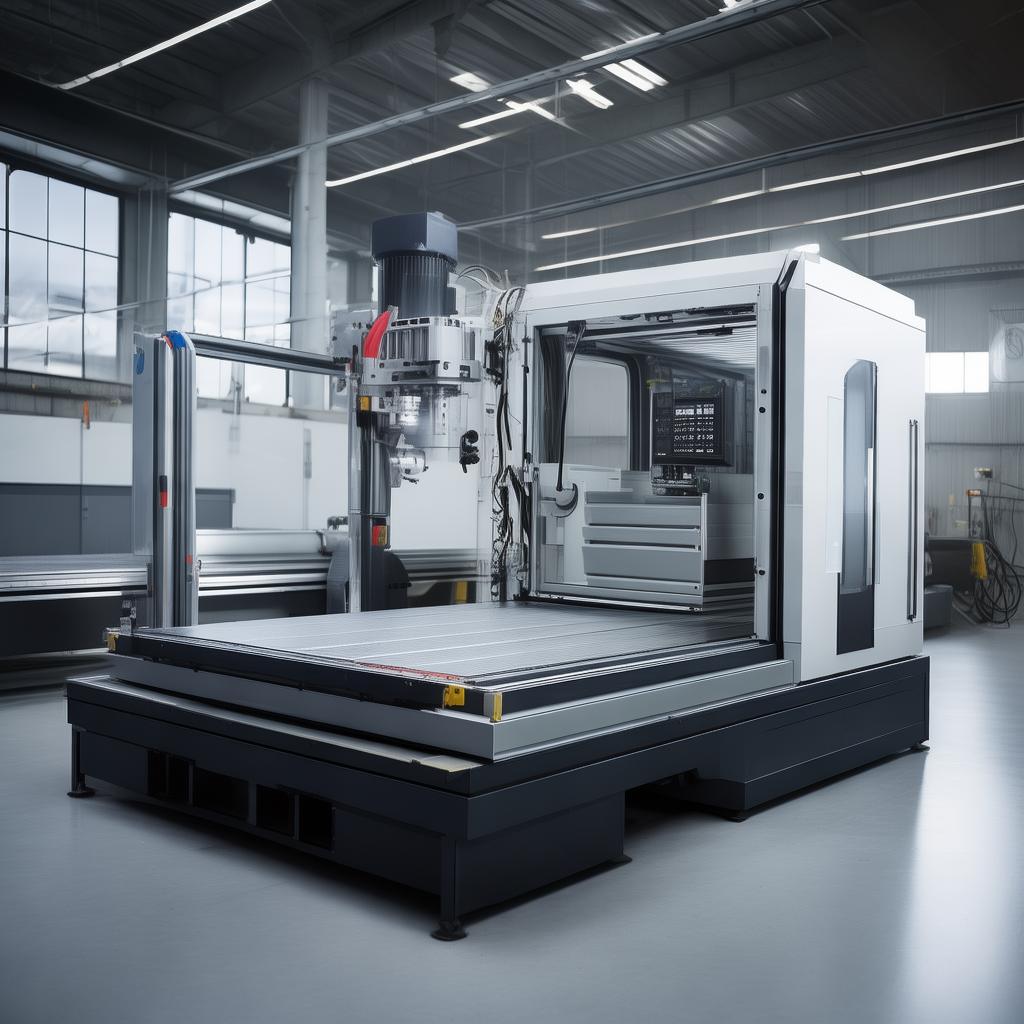
CNC machining center for metalworking
Product Overview
A CNC machining center for metalworking is a computer-controlled milling and/or machining platform designed to produce precision parts in metalworking industries. Using programmable toolpaths and repeatable cutting cycles, it automates machining operations such as facing, pocketing, drilling, tapping, and contouring—helping manufacturers improve dimensional consistency and reduce manual handling. This type of CNC equipment is commonly used in contract machining, job shops, and make-to-order production environments where mix, throughput, and traceable quality matter.
For procurement teams and manufacturing engineers, the goal is clear: stable performance across diverse workpieces, efficient setups, and safe, reliable operations that support long-term uptime.
Key Features
- Process repeatability for critical parts: consistent positioning and controlled toolpaths support tighter part-to-part conformity on machined components.
- Flexible production for mixed requirements: quick program changes and tooling strategies make it practical for batch jobs, prototypes, and short runs.
- Reduced setup time and less handling: integrated machining sequences help consolidate operations and minimize repositioning.
- Tool management for smoother workflow: a structured approach to tool changes and machining cycles supports efficient throughput.
- Stable cutting for surface quality: rigid mechanical design and controlled motion help maintain surface finish across standard metalworking applications.
- Safer shop-floor operation: machine-oriented engineering supports safer operation practices compared with manual or semi-automated setups.
- Production-minded serviceability: accessible components and maintenance-friendly architecture help keep downtime predictable.
Technical Specifications
| Parameter | Specification |
|---|---|
| Machine configuration | Vertical CNC machining center suitable for metalworking operations |
| Control interface | CNC control system with programmable machining cycles (details available on request) |
| Spindle operation | Machining-focused spindle for milling and drilling workflows |
| Workholding compatibility | Designed for common metalworking setups (vises, fixtures, modular clamping) |
| Tooling approach | Supports automated tool change strategies based on configured options |
| Typical processes | Facing, pocketing, contour milling, drilling, tapping, and secondary machining |
| Safety and guarding | Machined-enclosure and safety provisions aligned with standard shop-floor practices |
Note: Exact dimensions, spindle speed ranges, and travel values depend on the selected configuration. Share your part sizes/materials and we’ll provide the correct specification sheet.
Application Scenarios
- Contract machining for mixed batches: efficiently machine small to medium metal components with repeatable quality across orders.
- Engine and drivetrain part production: perform multi-feature milling and drilling sequences for housings, brackets, and precision mounts.
- Fabrication shops upgrading automation: consolidate previously manual operations into one controlled machining cell.
- Tooling and fixture manufacturing: produce jigs, clamps, and mold-support parts with controlled surface finish and consistent geometry.
Advantages
- Purpose-built for metalworking workflows: designed to handle common machining cycles for steels, aluminum, and similar industrial alloys.
- Better consistency than generic tooling: CNC motion control and repeatable programs help reduce variation that often comes with manual setups.
- Lower cost-per-part potential: consolidated operations and reduced labor dependency can improve utilization and throughput.
- Scales with job diversity: supports reprogramming and tooling strategies, helping you respond to changing customer specifications.
- Shop-floor readiness: more reliable automation planning for scheduling than semi-automated or ad-hoc machining methods.
Why Choose Us
We support international manufacturing buyers with procurement-oriented guidance—helping you select the right configuration, tooling approach, and rollout plan for your metalworking product mix.
- Specification clarity: we provide configuration details that align with your part dimensions, materials, and process requirements.
- Practical documentation: packaging, installation guidance, and handover materials tailored for industrial deployments.
- Responsive quotation process: fast turnaround after receiving your machining needs and target output.
- Support during ramp-up: onboarding and troubleshooting assistance to help reduce time to first production.
If you have specific certification requirements (e.g., quality management systems) or compliance constraints for your region, share them and we’ll confirm documentation availability.
FAQ
1) What makes a vertical CNC machining platform a good fit for metalworking parts?
It supports common milling and drilling sequences with stable workholding and controlled toolpaths, making it practical for complex multi-feature components.
2) Can this type of machine handle different metals like aluminum and steel?
Yes, appropriate tooling and cutting parameter planning are used to match the material’s chip formation and finishing requirements.
3) Do I need CAM programming to use a CNC machining center for metalworking?
Yes. A CAM workflow converts your CAD model into toolpaths and machining cycles; we can discuss integration needs based on your current setup.
4) How do I choose the right configuration for my production goals?
We’ll review your part dimensions, material types, annual volume, tolerances, and current tooling strategy to match the travel, tooling options, and workflow requirements.
5) What should I prepare for installation and commissioning?
Plan for electrical and utility requirements, a suitable foundation area, and a clear production schedule for initial trials so the machining center for metalworking can ramp up efficiently.
Ready to evaluate a CNC machining center for metalworking for your line? Share your part drawings, target materials, and tolerance expectations—we’ll respond with a tailored configuration recommendation and a quotation for your review.