
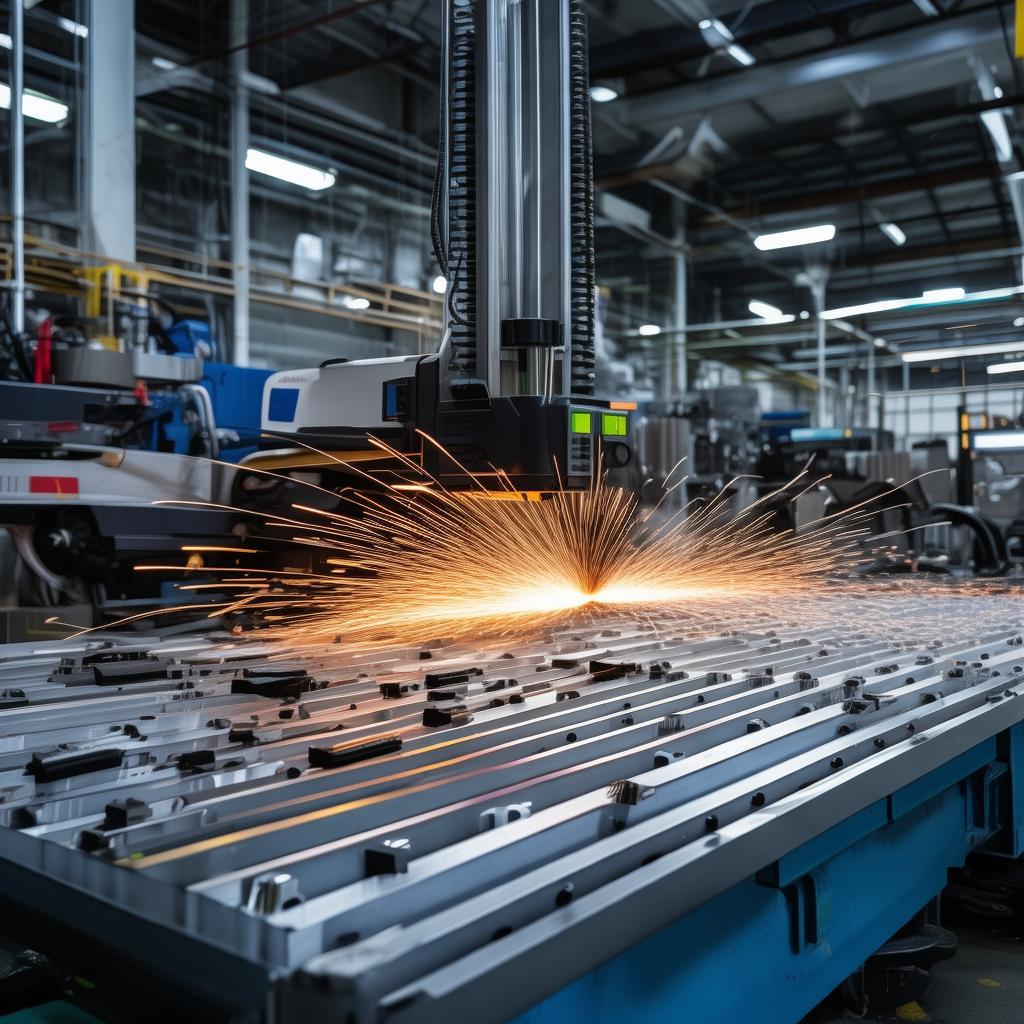
CNC machining center for prototype
Product Overview
A CNC machining center for prototype is a high-precision, multi-axis production platform designed to help engineering teams move from CAD to functional parts faster—without sacrificing dimensional integrity. Widely used in mechanical engineering and product development, it supports rapid iteration, fit-and-function validation, and early pilot builds for components such as brackets, housings, shafts, and precision tooling features. When you need consistent machining quality across design revisions, this CNC prototype machining solution streamlines setup, reduces rework, and shortens lead times for program-critical prototypes.
Key Features
- Prototype-ready accuracy: Maintains stable machining results across short runs, supporting tight tolerances for evaluation and engineering sign-off.
- Fast changeover for design iterations: Tooling and programming workflows are optimized for repeated revisions, so teams can respond to engineering feedback quickly.
- Multi-material capability mindset: Designed for common prototype materials, enabling evaluation of different material options during early development.
- Consistent machining quality: Predictable cutting performance helps reduce dimensional drift and improves surface finish for functional prototype requirements.
- Efficient workholding integration: Supports common fixturing approaches to reduce setup time and enhance repeatability between builds.
- Production-line scalability: Prototype machining that follows manufacturing logic makes it easier to transition successful designs to pilot production.
- Shop-floor usability: Designed for reliable operation by engineering and manufacturing staff, supporting documentation and controlled processes.
Technical Specifications
Note: Specifications can be configured to match your part envelope and tolerance targets. Below is a typical configuration framework used for prototype machining centers.
| Parameter | Specification |
|---|---|
| Machine type | 3-axis or 4/5-axis CNC machining center (configurable for prototype workflows) |
| Work envelope (X/Y/Z) | Configured to suit your part size and fixture strategy |
| Spindle option | High-speed spindle options available based on material and finish requirements |
| Tool capacity | Automated tool management for short-run multi-operation parts |
| Control features | Cycle support for common machining operations; programmer-friendly workflow |
| Workholding interface | Supports standard fixturing approaches; compatible with modular setups |
| Inspection readiness | Process documentation support for tolerance-focused prototypes |
Application Scenarios
- Mechanical housing prototypes: Machine complex outer geometries and mounting features for fit-and-function testing.
- Fixture and tooling components: Produce hardened or semi-finished elements used to validate assembly workflows.
- Precision shafts and brackets: Deliver consistent tolerances for motion systems and structural reinforcement prototypes.
- Electromechanical integration parts: Create cable channeling, sensor mounts, and ergonomic surfaces for early product iterations.
- Low-volume pilot runs: Bridge the gap between prototype builds and initial production batches.
Advantages
Compared with generic machine tools or “one-size-fits-all” setups, a CNC machining center for prototype is selected and configured around engineering change cycles and tolerance-critical evaluation. You benefit from a workflow that prioritizes repeatability across revisions—so your team spends more time validating designs and less time correcting variation. Tooling management and machining strategy support reduce setup friction, which is especially valuable when prototype quantities are small and timelines are tight.
- Better alignment to prototype timelines through simplified iteration and controlled processes.
- More predictable results for measurement-driven engineering sign-off.
- Easier path from prototypes to pilot production using manufacturing-style machining logic.
- Reduced rework risk by supporting stable fixturing and consistent multi-operation handling.
Why Choose Us
We support international buyers with a procurement-focused approach: clear configuration guidance, responsive communication, and documentation that helps your team plan installs, acceptance, and ongoing operations. Whether you are sourcing a complete system or upgrading capabilities for a development program, we help ensure the selected CNC prototype machining setup fits your part requirements and operational expectations.
- Buyer-oriented quoting: We align configuration scope with your part size, materials, and process priorities.
- Practical support: Assistance with use-case matching so your team can start prototyping efficiently.
- Supply reliability: Focused coordination for delivery scheduling and onboarding planning.
- Long-term partnership mindset: Built for ongoing project support as designs evolve.
FAQ
Q1: What kinds of parts are best suited for this prototype CNC platform?
Housings, brackets, precision mechanical components, and assembly-critical features—especially when you need repeatable fit-and-function results across design iterations.
Q2: How does choosing a CNC machining center for prototype help reduce development time?
It supports consistent machining outcomes between revisions, reduces setup friction for multi-operation parts, and provides a repeatable workflow for quickly moving from CAD updates to test-ready components.
Q3: Can we configure the machine for our required part envelope and tooling plan?
Yes—configuration should match your X/Y/Z envelope, material set, and operation mix. Share your part drawings and process priorities and we will align the setup accordingly.
Q4: Is this suitable for short runs or pilot batches after the initial prototype phase?
Yes. The same prototype machining workflow can support low-volume pilot runs when the production logic and fixturing strategy are planned from the start.
Q5: What information should we provide to get an accurate quotation?
Part drawings, target tolerances, material type(s), maximum dimensions, quantity and revision frequency, plus any surface finish or secondary process requirements.
If you’re evaluating a CNC machining center for prototype capability for your development pipeline, contact us with your part requirements and production expectations. We’ll help propose the right configuration and scope for a quotation that fits your program.