
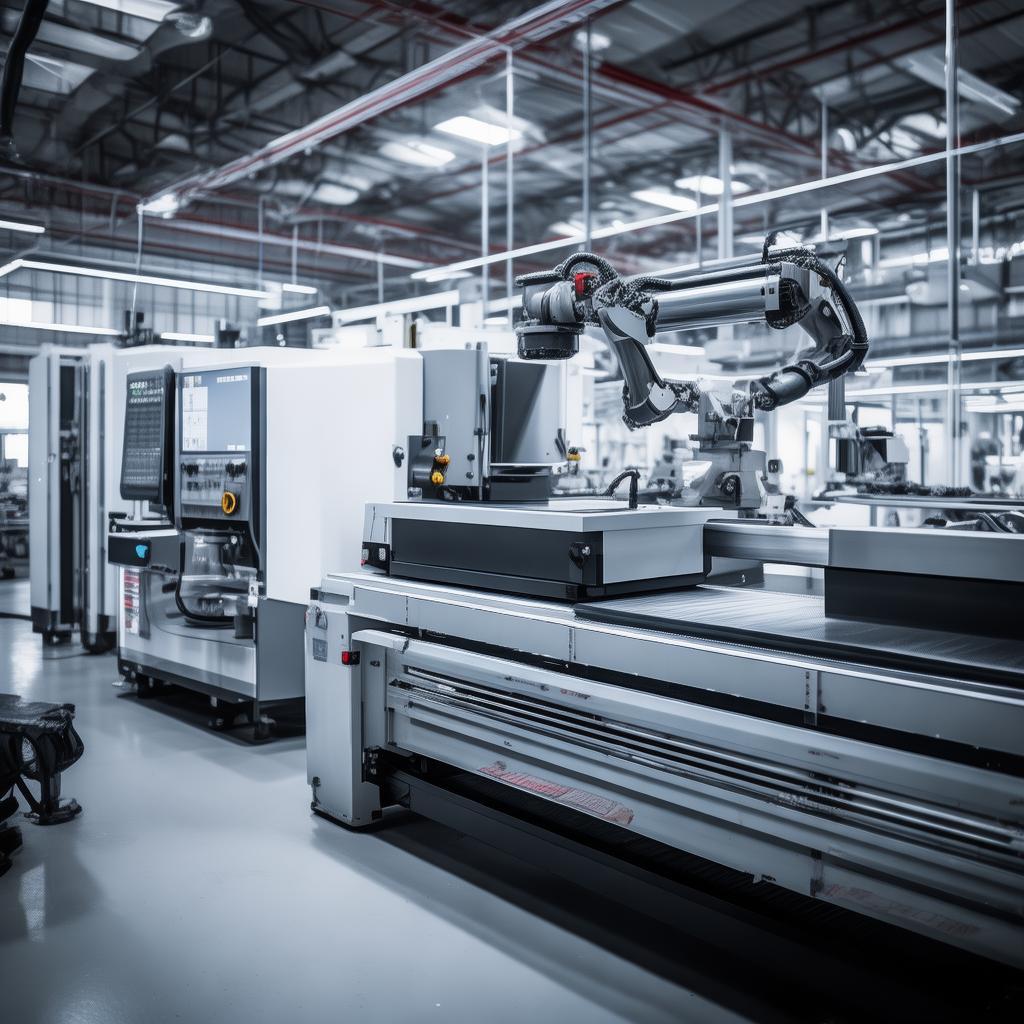
CNC machining center for titanium
Product Overview
A CNC machining center for titanium is a precision manufacturing system engineered for controlled material removal in high-demand industries where lightweight strength and corrosion resistance matter most—especially aerospace, medical device manufacturing, and high-performance industrial components. Titanium alloys are challenging to machine due to heat sensitivity, tool wear behavior, and tight dimensional requirements, so this type of machining center is designed to deliver stable cutting conditions, consistent fixturing support, and repeatable finishes. When you need reliable part accuracy across production runs, a purpose-built titanium machining platform helps reduce rework and improves throughput.
Key Features
- Stable machining performance on titanium alloys: Designed to maintain cutting stability during long operations, supporting consistent dimensions and surface quality.
- Tooling-friendly workflow: Supports practical tool access, efficient setup, and repeatable production cycles—helpful for complex geometries and multi-operation parts.
- Thermal consistency for tight tolerances: Helps minimize dimensional drift so critical features such as bores, sealing surfaces, and thin sections remain within spec.
- Efficient chip control: Promotes effective evacuation and reduces the risk of recutting chips, which can drive tool wear and surface defects in titanium work.
- Production-ready repeatability: Contributes to reliable part-to-part accuracy for batches that require consistent inspection results.
- Configurable process for diverse alloys: Practical for common titanium grades used in industrial and medical applications, enabling flexible machining strategies.
- Operator-focused usability: Clear operation logic for setup, run, monitoring, and routine maintenance—supporting steady floor performance.
Technical Specifications
Note: Specifications can be tailored to your part size, spindle/tooling strategy, and production requirements. Use this table as a baseline structure for your quotation.
| Parameter | Specification |
|---|---|
| Machine type | 3-axis or 3+2 CNC machining center configured for titanium work |
| Work envelope | Configurable to part dimensions (quote-specific) |
| Spindle capability | High-speed milling spindle suitable for titanium alloy cutting strategies |
| Tooling system | ATC-ready configuration (tool number and taper per project) |
| Guiding & rigidity | Rigid mechanical structure with vibration-resistant setup for stable cutting |
| Coolant strategy | Flood and/or mist-compatible coolant architecture to support chip control |
| Control | Industrial CNC control for repeatable multi-step machining |
| Repeatability focus | Built for consistent production runs and stable finishing on titanium features |
Application Scenarios
- Aerospace brackets and housings: Machining of complex titanium parts where repeatability and surface integrity are critical.
- Medical implants and components: Reliable machining for tight tolerances in titanium used for implantable devices.
- High-performance engine components: Production of strong, lightweight parts where stable cutting and dimensional control reduce scrap.
- Flange and sealing surfaces: Milling and finishing operations that benefit from controlled vibration and consistent thermal behavior.
Advantages
Compared with generic CNC platforms, a CNC machining center for titanium approach is selected to handle the realities of titanium machining—especially heat management, cutting stability, tool life consistency, and chip evacuation reliability. Instead of relying on trial-and-error setups, the machine configuration supports a process that’s more predictable from program to program.
- Helps reduce tool wear variability that can occur when a platform lacks the rigidity and support needed for titanium-specific cutting conditions.
- Improves consistency of critical features like bores, grooves, and thin walls—important for aerospace and medical-grade inspection outcomes.
- Supports smoother production planning because the setup is aligned with multi-step machining and repeatable cycles.
- Enhances operator confidence with a workflow designed for routine production, not only one-off prototype runs.
For teams scaling from prototype to batch manufacturing, choosing the right titanium-capable machining center can be a practical path to lower rework rates and better delivery performance.
Why Choose Us
We support international manufacturers and distributors with a procurement-first approach: transparent communication, responsive technical alignment, and documentation that helps you evaluate fit quickly. Our goal is to ensure the titanium machining configuration matches your production needs—whether you’re running aerospace structural parts or medical components requiring dependable repeatability.
- Project-based quotation support to confirm work envelope, tooling needs, and process goals.
- After-sales coordination to help reduce downtime risk during commissioning and ramp-up.
- General compliance documentation available upon request (specific certifications can be provided if applicable to your order).
FAQ
Q1: Is a CNC machining center suitable for titanium only, or can it run other metals too?
A: It’s suitable for titanium and other alloys, but the machining strategy (cutting tools, feeds/speeds, coolant/chip control, and fixturing approach) should be aligned with the material to maintain tool life and surface quality.
Q2: What should we confirm before ordering?
A: Confirm your part envelope, maximum stock size, feature complexity (e.g., bores, thin walls), annual volume, and whether you prefer a 3-axis or 3+2 workflow. These factors drive the best spindle/tooling and coolant setup for titanium machining.
Q3: Will this help reduce tool wear and surface defects common in titanium?
A: A titanium-capable configuration improves stability and chip control, which are key drivers of tool wear and surface integrity. Actual results also depend on tool selection and program strategy.
Q4: Can you support us with process setup for titanium?
A: We can coordinate on application requirements and help align your process parameters at a planning level. For detailed programming and tooling optimization, your engineering team may also use vendor-recommended tooling and machining guidance.
Q5: What if we need to machine both aerospace and medical parts with different tolerances?
A: The same titanium machining center platform can be configured and operated to support varying tolerance levels using appropriate tooling, inspection plans, and workholding strategies.
If you share your titanium alloy grade, part dimensions, and target tolerances, we can recommend a configuration that fits your production workflow. Request a quotation or an engineering consultation for your specific use case, and we’ll help you evaluate the most practical setup for your plant.