
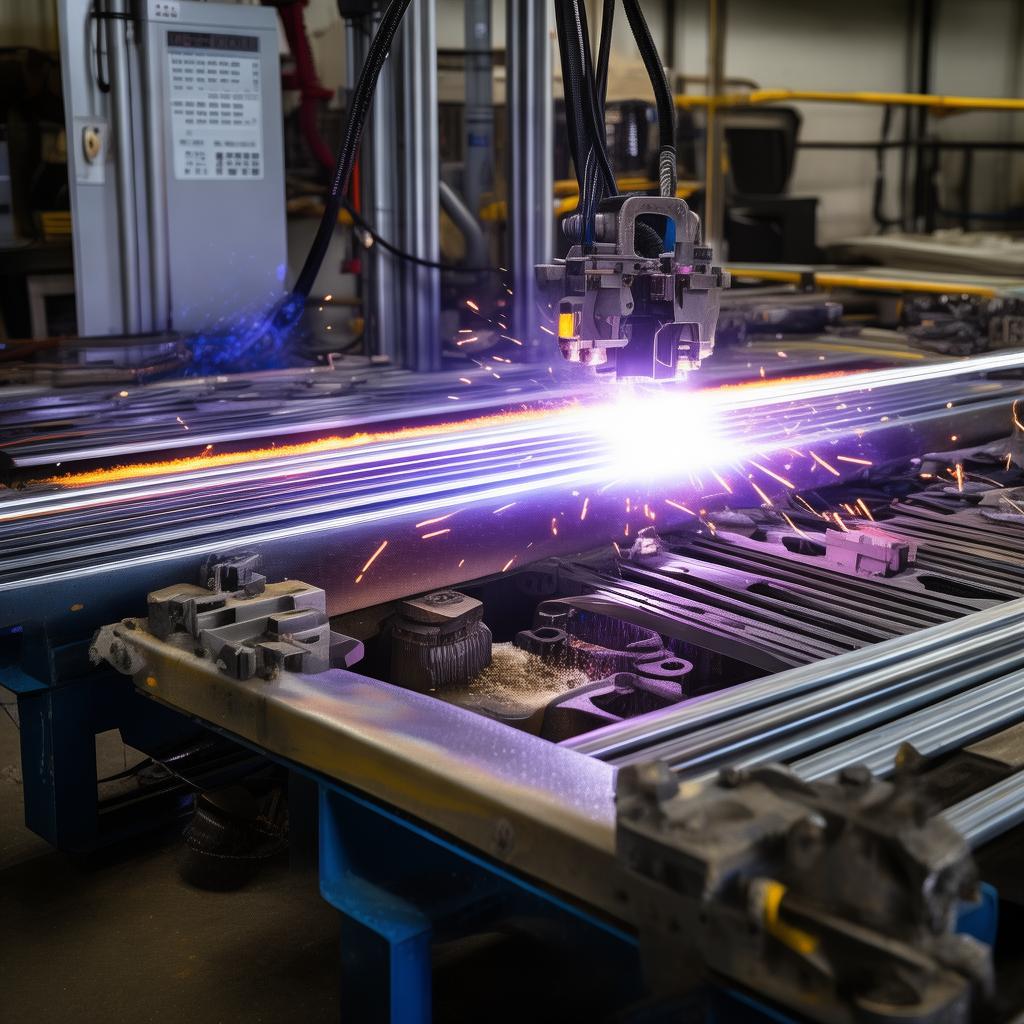
CNC machining center integrated automation
Product Overview
The CNC machining center integrated automation is a manufacturing automation solution designed for the metalworking and precision machining industry—combining high-accuracy CNC machining with automated loading, unloading, and in-process material handling. It helps fabrication shops, contract manufacturers, and job shops reduce manual touchpoints while improving throughput and part consistency across repeated production runs.
By integrating the machining center and automation workflow into one coordinated system, this platform supports stable production of shafts, housings, brackets, and other components where cycle time, repeatability, and traceable handling matter. When you standardize the process around CNC-to-automation communication, your team gains a smoother path from program execution to finished parts—without sacrificing machining performance.
If your goal is to scale output with controlled quality, a CNC machining center integrated automation cell is a practical step toward lights-out readiness and disciplined manufacturing operations.
Key Features
- Coordinated motion & workflow control: Synchronizes machining operations with material handling to reduce idle time between jobs.
- Reduced non-cutting labor: Automates loading/unloading so operators focus on setup verification, tooling readiness, and quality checks.
- Higher repeatability across batches: Consistent part presentation helps maintain stable machining conditions from shift to shift.
- Faster job changeovers: Enables structured process steps—tooling, workholding, and part routing—so production transitions are more predictable.
- Integrated safety and controlled access: Designed to support safe operation around automated transfer points and machine enclosure zones.
- Data-friendly production flow: Supports traceability and event-based monitoring to help you manage schedules, downtime causes, and quality review.
- Scalable cell concept: The automation architecture can be adapted for single-machine cells or multi-station layouts as your demand grows.
Technical Specifications
| Parameter | Specification |
|---|---|
| Integration approach | Machine + automation workflow coordinated for part loading/unloading and routing |
| Supported part handling | Workpiece transfer using automation-compatible workholding and staging |
| Control synchronization | Coordinated signals for start/finish events, safety interlocks, and transfer timing |
| Safety and safeguarding | Machine enclosure and transfer-zone safeguarding aligned with automated operation |
| Process support | Designed for repeated production of machined components with consistent loading behavior |
| Cell scalability | Configurable for different production volumes and layout constraints |
| Data visibility | Event and status reporting for scheduling, monitoring, and continuous improvement |
Note: Final configuration (workholding type, transfer layout, and I/O mapping) is determined during quotation based on your part geometry and production targets.
Application Scenarios
- Automotive and mobility components: Automated loading helps maintain stable machining conditions for repeated housing and bracket runs.
- Industrial machinery parts: Coordinated handling supports consistent output for shafts, spacers, and precision frames with defined tolerances.
- Contract manufacturing: The integrated workflow reduces manual steps when switching between jobs and customer schedules.
- Warehouse-to-machine feeding: Structured staging and transfer routines improve predictability from incoming material to finished output.
- Production scaling: A CNC machining center integrated automation cell can expand into multi-station layouts as volume increases.
Advantages
Compared with generic “add-on” automation kits, this integrated approach is designed to reduce friction between machining and handling. Instead of treating loading/unloading as a separate subsystem, the cell is built around synchronized signals and a production-first workflow, helping you achieve steadier throughput and fewer interruptions.
- Improved cycle stability by aligning transfer timing with machining readiness.
- More consistent part presentation to reduce variability caused by manual handling.
- Lower operational complexity through a unified automation workflow rather than multiple standalone controls.
- Clearer monitoring for troubleshooting, helping your maintenance team address stoppages faster.
Why Choose Us
We support manufacturers and distributors with practical automation integration—focused on manufacturability, safety, and smooth commissioning. Our process emphasizes application discovery first, then configuration and verification to match your parts, workholding approach, and production rhythms.
- Transparent quotation workflow: We define integration scope, required inputs, and expected responsibilities before implementation.
- Commissioning-minded engineering: We plan for safe ramp-up, operator training, and production acceptance criteria.
- Support for ongoing optimization: We help you refine the automated workflow to better match real production performance.
- Global readiness: Structured documentation and implementation steps for international projects and procurement.
If you share your part drawings and target takt time, we can propose a suitable configuration and integration plan for your specific CNC setup.
FAQ
1) What does “integrated” mean for a CNC machining cell?
It means the machining center and material handling workflow are coordinated through synchronized control signals, so transfers occur at the correct machine states and safety conditions are respected.
2) Will this work for my part geometry and tolerances?
We scope the solution around your part drawings, workholding needs, and production volume. The automation workflow and fixturing strategy are configured to support consistent presentation and repeatable machining results.
3) How long does commissioning take?
Timeline depends on the final configuration, site readiness, and any required tooling or workholding adjustments. During quotation, we outline the typical steps for integration verification and production ramp-up.
4) Can we run both short batches and longer production runs?
Yes. The integrated workflow supports repeated production while still enabling structured transitions between jobs, provided tooling and workholding setups are planned for changeover efficiency.
5) Do you support upgrades or expansion later?
Often, yes. Many facilities start with a single cell and expand the handling workflow or layout as volume grows—without redesigning the entire process foundation.
Ready to modernize your machining workflow? Share your part family, annual volume, and current CNC model, and we’ll recommend a configuration for your CNC machining center integrated automation project—request a quotation or inquiry today.
For reference, our integration team can also discuss alternative formulations of the cell concept based on your loading method and production layout, while keeping the core goal: coordinated machining and automation for reliable throughput.