
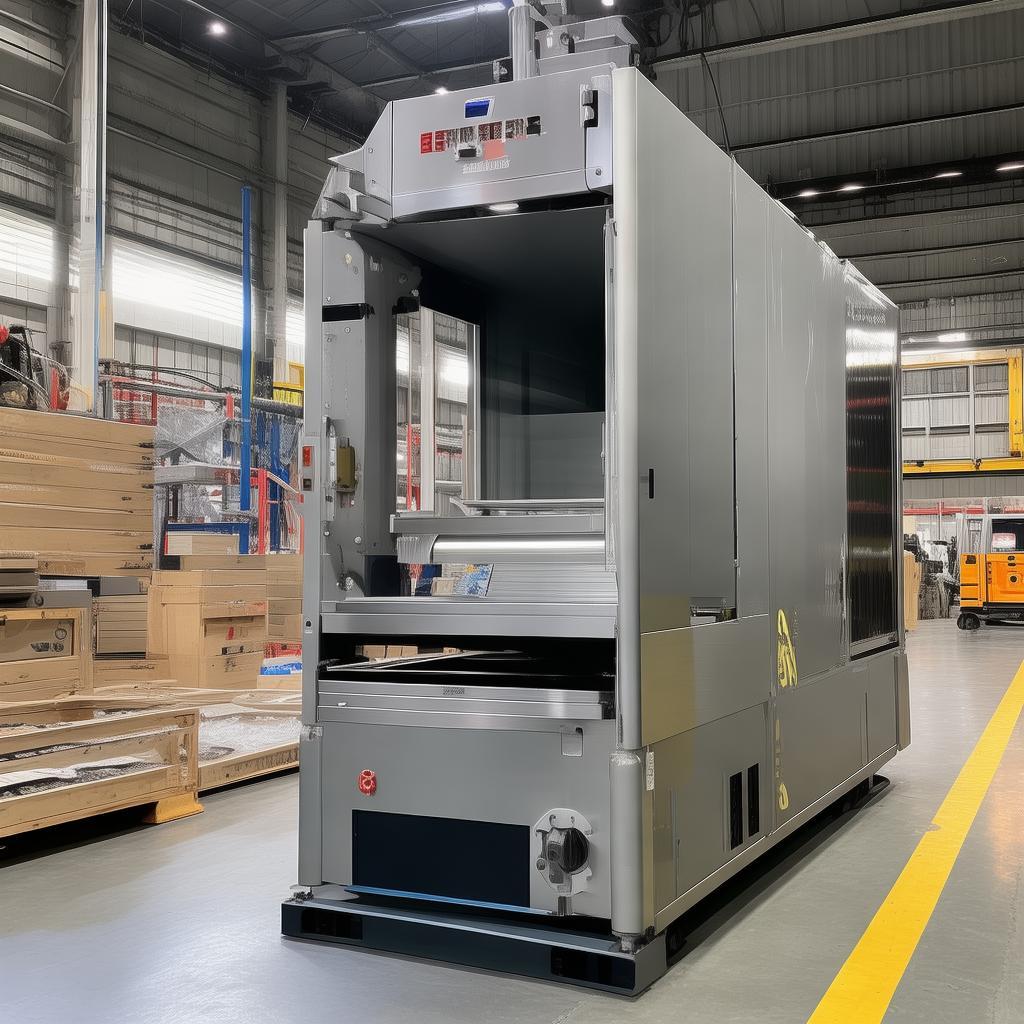
CNC machining center repeatability
CNC Machining Center Repeatability for High-Throughput Manufacturing
In metalworking and precision manufacturing, CNC machining center repeatability is the practical measure of how consistently a machining center returns to the same part dimensions across cycles—critical for stable tolerances, reduced scrap, and predictable assembly fit. Whether you run aerospace components, automotive brackets, or industrial tooling, repeatable positioning and thermal behavior help production lines maintain quality without constantly rework or re-calibration. This capability supports industries where batch-to-batch dimensional control is a procurement priority: automotive, job shops with tight customer specs, and contract manufacturers supplying to global OEMs.
Key Features
- Stable dimensional output—helps maintain consistent bore sizes, flatness, and feature locations from the first job piece to the last.
- Cycle-to-cycle confidence—designed for repeatable toolpaths and reliable return moves, improving throughput planning.
- Improved process control—reduces the “tolerance drift” that often forces manual adjustments during production runs.
- Thermal and motion consistency—supports smoother behavior as machines heat up, helping maintain long-run accuracy.
- Tooling and fixturing compatibility—repeatable machine behavior makes workholding results more predictable across shifts and operators.
- Lower scrap and rework—when return accuracy is dependable, fewer parts fall outside critical dimensional checks.
- Manufacturing-friendly integration—supports standard CAM workflows and inspection routines for easier validation at your site.
Technical Specifications
Specifications can be customized based on configuration, travel, and controller options. The table below reflects typical parameter categories used to evaluate CNC repeatability performance.
| Parameter | Specification |
|---|---|
| Repeatability assessment basis | Measured as positional return consistency across repeated cycles per applicable internal/industry test method |
| Axes coverage | Linear axes positioning consistency; rotary axes repeatability available for 4th/5th axis configurations |
| Guiding system | Precision linear guideways and wear-stable design for consistent motion over production hours |
| Drive and feedback loop | Closed-loop control with integrated position feedback for stable return positioning |
| Thermal management approach | Machine warm-up strategy and design features aimed at reducing thermal-induced drift during long runs |
| Calibration and maintenance | Adjustable service procedures and recommended maintenance intervals to preserve repeat performance |
| Controller and motion features | Advanced motion planning and repeat-friendly toolpath execution support consistent machining outcomes |
Application Scenarios
- Automotive subcomponents: consistent pocket and hole locations to improve assembly yield across high-volume batches.
- Precision fixture and mold work: reliable return positioning supports stable reproduction between prototype and production runs.
- Aerospace-grade metal parts: dependable dimensional control supports tight inspection schedules and traceability workflows.
- Contract manufacturing: repeatable machine behavior helps standardize output when jobs rotate by customer and shift.
Advantages
Generic machine choices often look acceptable at commissioning but may lose confidence during long runs due to inconsistent return motion, thermal drift, or insufficient control over repeat behavior. By focusing on verified positional consistency and repeat-friendly motion control practices, this configuration is built to support stable machining outcomes—so your tolerances stay predictable, your inspection workload drops, and your production plan becomes easier to trust.
- More consistent hole-to-slot relationships for reduced downstream fitting time.
- Reduced scrap risk when jobs require tight dimensional verification after tool changes.
- Faster ramp-up because your CAM strategy and measuring plan align with stable return performance.
- Better operator-to-operator consistency, since the machine’s return behavior is designed to be dependable.
Why Choose Us
We support B2B buyers with practical documentation, responsive engineering communication, and implementation guidance aimed at protecting your production schedule. Our approach prioritizes traceable commissioning and clear acceptance criteria so you can validate how the CNC machining center repeats in your specific applications.
- Application-oriented selection support for tolerance-driven production needs.
- Transparent pre-delivery documentation and configuration confirmation.
- Commissioning and setup guidance aligned with your inspection process.
- Ongoing support practices designed to help maintain repeatable performance over time.
FAQ
Q1: What does CNC machining center repeatability mean for my production parts?
It indicates how consistently the machine returns to the same position across repeated cycles, which directly affects the repeatability of feature dimensions such as hole locations, slot geometry, and critical surfaces.
Q2: How is repeatability different from accuracy?
Accuracy reflects how close results are to the target dimension, while repeatability reflects how consistently results match each other over repeated runs—both matter, but repeatability is often the foundation for stable mass production.
Q3: Will repeat performance change after warm-up or during long production runs?
Thermal behavior can influence outcomes. This configuration includes thermal management considerations intended to keep return behavior stable as the system reaches operating temperature.
Q4: What should we validate during acceptance testing?
We recommend validating key features tied to your process—such as critical hole patterns, pocket-to-wall relationships, and any measurements that determine assembly fit—using your own fixturing and inspection method for realistic proof.
Q5: Can you support repeatability goals for complex parts with multiple tool changes?
Yes. Tool change strategy, fixturing repeatability, and consistent motion execution all influence final results; we can help align your CAM and setup approach so the machine’s return performance supports predictable dimensional outcomes.
If you share your part geometry, tolerances, material, and annual volumes, we’ll help you confirm whether this approach meets your CNC machining center repeatability requirements and provide a quotation tailored to your configuration and inspection plan. Request a technical inquiry or send your drawings for a fast, production-focused review.