
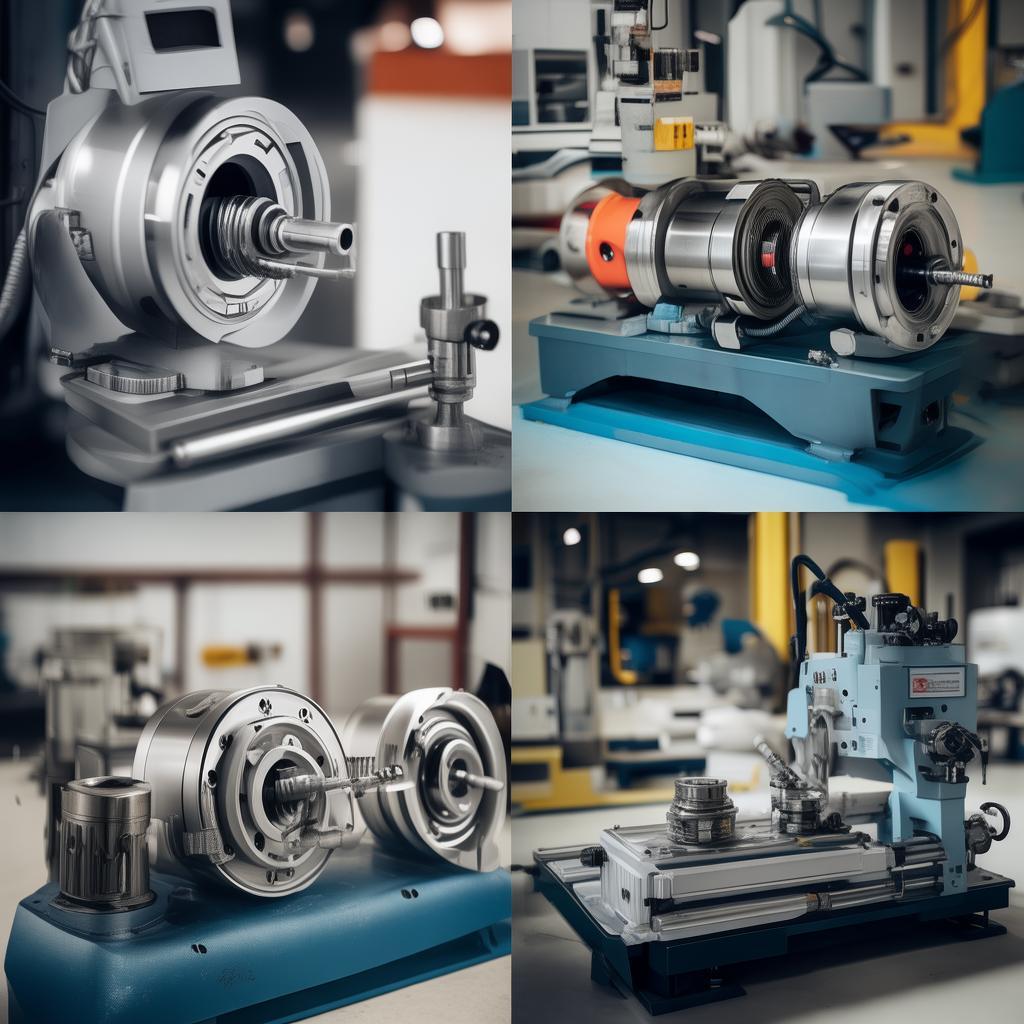
CNC machining center with automatic tool changer
Product Overview
A CNC machining center with automatic tool changer is an industrial milling platform designed for repeatable, high-mix production of precision parts—combining programmable multi-axis machining with automated tool change to reduce downtime and standardize quality. In metalworking manufacturing, especially for job shops and contract manufacturers producing engineered components for automotive, industrial machinery, and general fabrication, this type of CNC center is typically selected to shorten cycle times, improve part consistency, and enable lights-out operations when paired with disciplined workholding and tooling processes.
If your operation needs dependable machining capability with fewer manual interventions, a CNC machining center featuring an automatic ATC helps keep production moving while supporting scalable throughput across varied part families.
Key Features
- Automatic tool changing cuts non-productive time by swapping cutters as the program runs—supporting faster part completions and fewer operator actions.
- Stable machining workflow improves repeatability for production batches, helping reduce variation across shifts and operators.
- Flexible manufacturing for mixed lots makes it practical to handle different part geometries and tooling paths without rebuilding the process every time.
- Program-driven consistency enables standardized machining strategies that can be validated and reused for quotation-to-production continuity.
- Cleaner shop-floor execution supports improved ergonomics and safer operation by minimizing frequent manual tool handling during cycles.
- Production scalability helps distributors and manufacturers expand output by making changeovers quicker and reducing bottlenecks at the machine.
Technical Specifications
Note: Specifications can be configured for different work envelopes and tooling setups. The table below reflects typical configuration fields used for quoting and selection.
| Parameter | Specification |
|---|---|
| Machine Type | CNC milling machining center with automatic tool changer (ATC) |
| Tool Change Method | Automatic tool magazine / tool changer integrated into cycle control |
| Spindle Interface | Standard spindle toolholder compatibility (confirm required tool system) |
| Workpiece Handling | Manual or semi-automatic loading options depending on line layout |
| Control System | Programmable CNC control for multi-operation machining cycles |
| Tool Management | Tool library management to support consistent multi-step programs |
| Typical Use Materials | Steel, aluminum, cast iron, and other industrial workpieces (confirm cutting strategy) |
| Configuration Options | Tool magazine capacity, spindle/toolholder system, and machining envelope |
Application Scenarios
- Automotive and supplier components: production of bracketry, housings, and machined features requiring repeatable operations.
- Industrial machinery parts: multi-step milling for gearbox components, machine mounts, and structural features.
- Job shop high-mix work: shorter setups and automated tool changes to improve throughput across varied customer drawings.
- Prototype to small-batch transition: consistent CNC programs help scale from engineering runs to production quantities.
Advantages
Compared with basic single-operation setups or generic stand-alone milling equipment, a CNC machining center designed with an automatic tool changer offers a more production-oriented workflow. You get fewer interruptions between steps, more consistent results from standardized tool libraries, and a clearer path to running multi-step machining programs with reduced operator involvement.
- Less downtime between tooling operations helps stabilize daily output.
- Tool-change automation supports repeatability across batches—useful for procurement commitments.
- A tool-managed machining center reduces reliance on manual tool swaps that can introduce variation.
- Programming-based operations improve quote-to-production continuity when jobs move quickly through the factory.
Why Choose Us
We support manufacturers and distributors with practical equipment selection, clear documentation, and responsive communication—so you can plan delivery, installation, and commissioning with confidence.
- Transparent quoting based on your workpiece requirements and tooling plan.
- Guidance on configuring the machining center workflow to reduce friction during production ramp-up.
- Reliable after-sales support processes for typical industrial deployment needs.
- Buyer-focused documentation to assist procurement, compliance review, and internal handover.
If you share your part drawings and target cycle goals, we can recommend an appropriate configuration for your CNC machining center with automatic tool changer setup.
FAQ
Q1: What kinds of parts are best suited for an automatic-tool machining center?
Multi-feature parts—such as housings, brackets, and machined structural components—where multiple operations can be executed in one program benefit most from automated tool changing.
Q2: Will the tool changer reduce operator work, or is it mainly about speed?
It improves both. The automatic sequence reduces manual tool swapping and helps maintain consistent execution across runs, while also shortening idle time between steps.
Q3: What should we provide to get an accurate configuration for a CNC machining center with automatic tool changer?
Share part materials, drawing files (or key dimensions/features), annual or monthly volume, and your current tooling/workholding approach so we can align the ATC/toolholder plan and workflow.
Q4: Can this setup support mixed production lots with frequent changeovers?
Yes. The CNC workflow plus managed tool library makes it practical to run different programs while minimizing downtime—an advantage for job shops and contract manufacturers.
Q5: Are there risks to consider when switching from manual tooling to an ATC workflow?
As with any automation upgrade, outcomes depend on disciplined tool prep, correct tool offsets, and stable clamping. We can help map a practical ramp-up approach so the CNC machining center with automatic tool changer delivers predictable results.
Ready to evaluate a CNC machining center for your production line? Send your part drawings, material details, and target quantities—we’ll respond with a configuration recommendation and a quotation path tailored to your manufacturing needs.