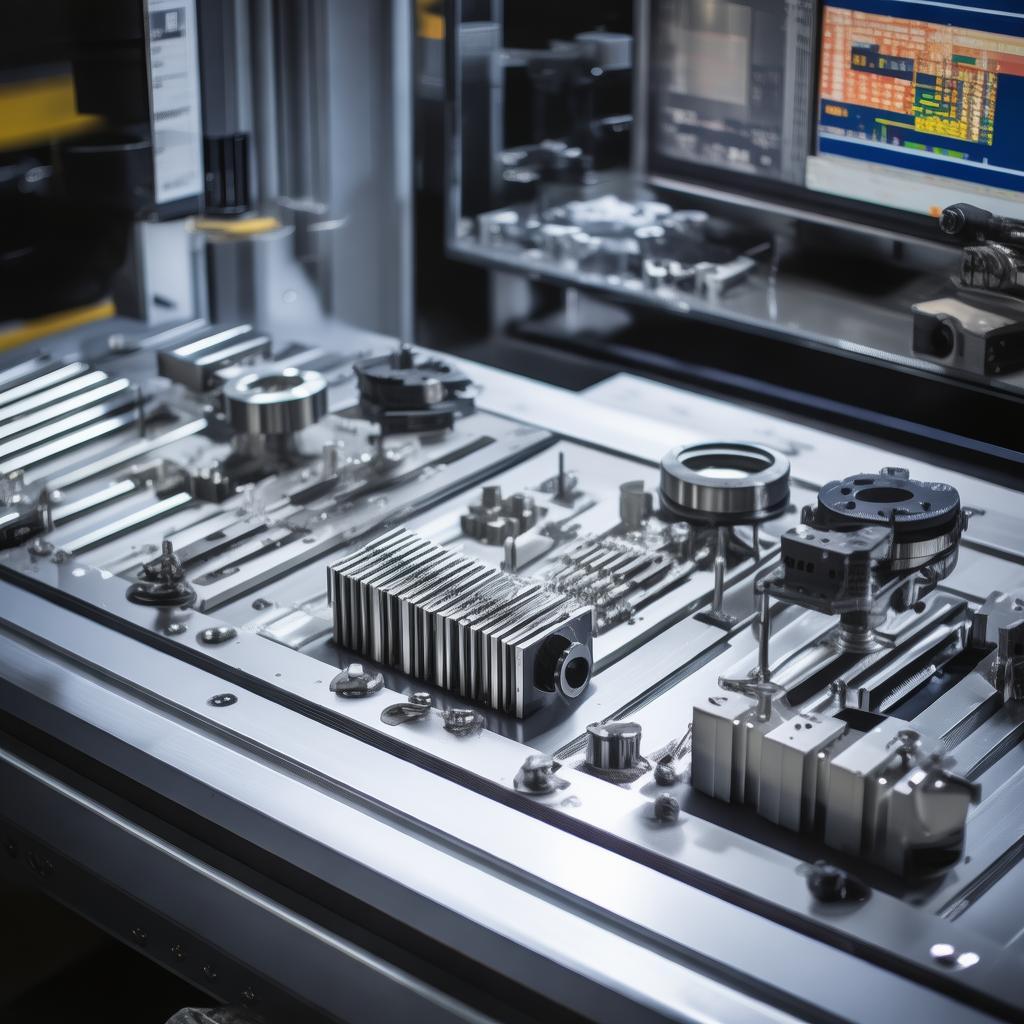
CNC milling machine
Product Overview: Precision CNC milling machine for job shops and manufacturing lines
A CNC milling machine is a computer-controlled machining center designed to remove material with rotating cutting tools to form accurate parts from metal, plastics, and composite workpieces. In industrial manufacturing, it supports the production of precision housings, brackets, gears, molds, and tooling components where dimensional repeatability, surface finish, and process reliability directly impact throughput and scrap rates. With programmable multi-axis control and rigid motion, this milling platform helps production teams standardize quality across batches while keeping setup times predictable.
Whether you’re prototyping new designs or running mid-to-high volume production, the CNC milling workflow enables consistent geometry, efficient toolpath generation, and easier scaling from one-off work to repeatable manufacturing.
Key Features
- Repeatable accuracy for production consistency: Stable positioning and controlled tool motion support dependable dimensional outcomes across multiple setups.
- Fast, organized programming: CAM-to-machine workflow helps reduce manual trial-and-error and shortens time to first article.
- Process flexibility across materials: Compatible with common industrial workpieces, allowing a single platform to support varied part families.
- Smooth surface finishing potential: Controlled feed and tool engagement supports quality finishing suitable for assembly-ready components.
- Reduced changeover effort: Repeatable offsets, tool management, and standardized procedures make it easier to switch between jobs.
- Designed for shop-floor reliability: Rigid construction and stable motion help maintain performance during daily industrial use.
Technical Specifications
| Parameter | Specification |
|---|---|
| Machine Type | Computer Numerical Control (CNC) milling platform |
| Axis Configuration | Multi-axis motion system (based on model) |
| Spindle System | Industrial spindle with controllable speed (based on configuration) |
| Tooling | Toolholders and cutter compatibility (confirm with tooling plan) |
| Workholding | Vise, clamps, or custom fixtures (based on application) |
| Control & Programming | G-code/CAM workflow support (based on controller option) |
| Cooling & Chip Management | Flood or mist cooling + standard chip clearing options (based on model) |
| Safety & Interlocks | Operator safety guarding and interlock provisions |
Note: Specific numeric values (travel, spindle speed, power, tool capacity, and accuracy class) vary by configuration. Share your part envelope and material requirements for an exact spec sheet.
Application Scenarios
- Automotive and mobility components: Produce bracketry and structural parts with consistent geometry from repeatable toolpaths.
- Precision metal fabrication: Mill housings, covers, and machined plates where tight tolerances and surface quality matter for assembly.
- Tooling and molds: Perform pocketing, contouring, and finishing operations on mold inserts and tooling components.
- Small-batch engineering: Support frequent design changes with programmable workflows that reduce downtime between jobs.
- Distributor and integration projects: Standardize a reliable platform for customers requiring stable milling performance and serviceability.
Advantages
Compared with generic milling solutions, this CNC machining center is built for industrial repeatability and workflow efficiency. It streamlines the path from CAD/CAM programming to on-machine production, reducing setup variability and limiting scrap caused by inconsistent manual operations. The result is better job consistency, more predictable cycle planning, and improved capacity utilization.
- More stable production outcomes versus bench-top or purely manual milling setups.
- Streamlined repeat runs using saved programs, offsets, and standardized operating steps.
- Better capability for complex contours and multi-step part finishing within one clamping strategy (when fixturing allows).
- A scalable platform for job shops that balance prototypes, small batches, and recurring parts.
Why Choose Us
We focus on delivering industrial CNC equipment with procurement-ready documentation, practical configuration support, and responsive communications for international customers. Our goal is to help you select the right milling system for your parts, materials, and production targets—not just the most basic machine listing.
- Clear quotation process with configuration confirmation based on your part requirements.
- Packaging and logistics planning for reliable shipment and safe arrival.
- After-sales support coordination to minimize downtime during ramp-up.
- Integration assistance for common CAM-to-control workflows and recommended tooling approaches.
FAQ
1) What materials can this CNC milling machine process?
It’s typically used for metals and a range of engineered materials depending on cutter selection, coolant strategy, and cutting parameters defined for your application.
2) Do I need special CAM software to run parts?
Most users generate toolpaths in standard CAM workflows and then run the resulting programs on the controller. We can confirm the expected file and programming format based on the specific control option you choose.
3) How do I choose the right configuration for my production?
Share your part dimensions, required features, annual volume, and target tolerance/finish. We’ll help match axis capability, work envelope, spindle/tooling needs, and recommended fixturing approach.
4) What’s included in commissioning and ramp-up?
Support typically includes setup coordination, guidance for initial test runs, and operator orientation aligned with your chosen workflow. Exact scope depends on the package you select.
5) Can this be used for both prototypes and production runs?
Yes. The programmable nature of a CNC milling platform makes it well suited to job-shop environments where you alternate between engineering prototypes and repeat production parts.
If you’d like an exact quotation and a configuration recommendation for your parts, send us your part drawings, material type, and target throughput. We’ll respond with a clear proposal and next-step plan for procurement and implementation.