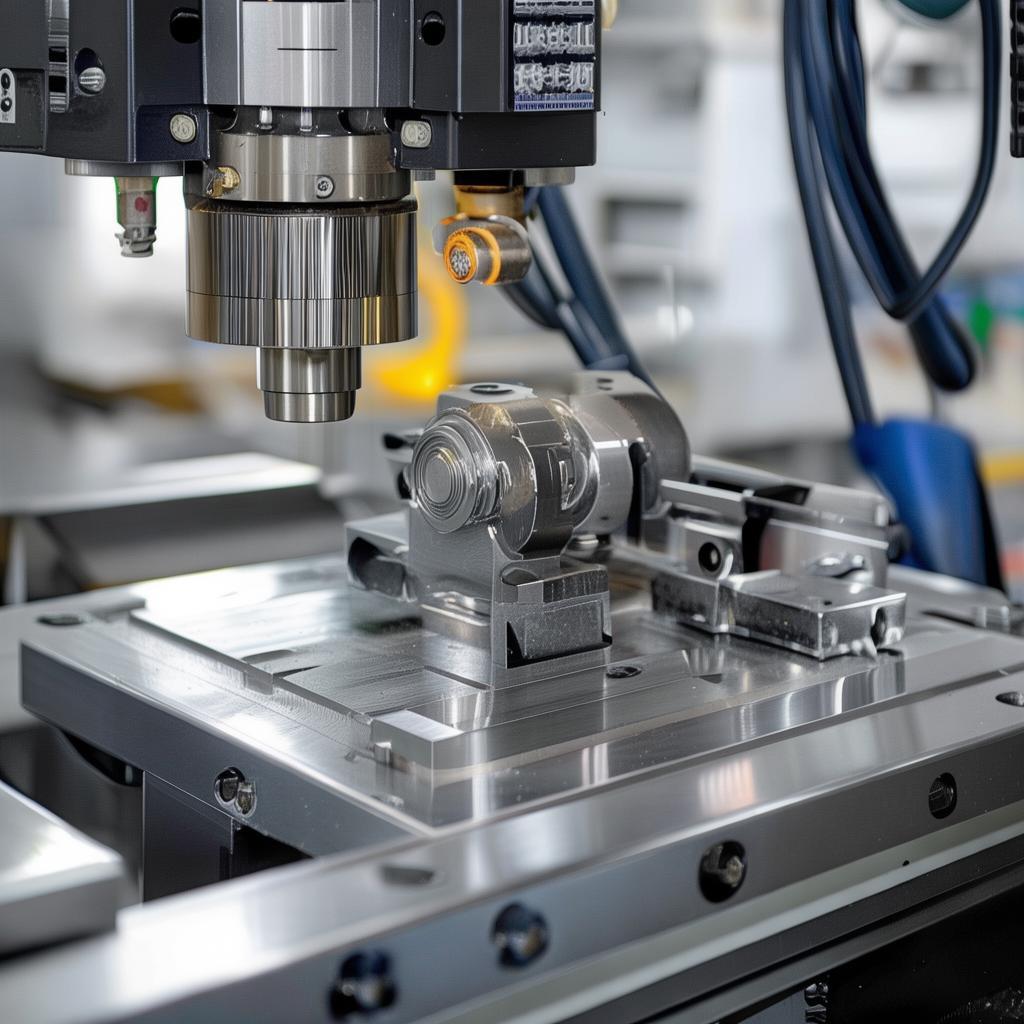
CNC multi-axis machining center
Product Overview
A CNC multi-axis machining center is a precision manufacturing platform built for producing complex parts with high accuracy, repeatability, and efficient setup workflows. In the mold, die, and precision components industry, buyers rely on multi-axis machining to reduce manual fitting, shorten lead times, and achieve consistent surface quality on intricate geometries such as cavities, cores, and tight-tolerance features. This equipment supports simultaneous machining approaches that help convert CAD models into production-ready parts with fewer operations—making it a strong fit for moldmaking houses, tool & die shops, and precision job manufacturers seeking dependable capability for 3D forms.
Key Features
- True multi-direction capability for complex surfaces—supporting 3D machining paths that reduce the need for multiple re-fixturing cycles.
- Stable machining performance that helps maintain dimensional consistency from the first part to the last, supporting reliable series production.
- Toolpath efficiency using coordinated axis motion to improve throughput on parts with deep pockets, contours, and angular features.
- Process flexibility for mixed production—small batches, prototype-to-production transitions, and repeat jobs that require fast changeovers.
- Improved surface integrity from controlled cutting strategies, aiding deburring reduction and supporting better downstream forming or assembly results.
- Reduced secondary operations by combining roughing, semi-finishing, and finishing in fewer setups to lower handling risk.
- Operator-friendly workflow designed for day-to-day production—helping engineering and shop teams maintain predictable output.
Technical Specifications
| Parameter | Specification |
|---|---|
| Machine type | CNC multi-axis machining center (milling) |
| Number of axes | Multi-axis (configuration per customer requirement) |
| Travel (X/Y/Z) | As configured (please specify part envelope) |
| Spindle interface | Machining-ready spindle compatible with tooling set |
| Workholding | Fixture/table configuration designed for repeatable setups |
| Control system | CNC control with multi-axis motion coordination |
| Positioning & repeatability approach | Designed for consistent machining results across production runs |
| Cooling / lubrication concept | Process-support coolant system and lubrication package |
Note: Final configuration (axis arrangement, travel, spindle/tooling options, and control features) is typically selected based on your part geometry, material, and production targets.
Application Scenarios
- Mold & die machining: machining complex cavities and cores with consistent surface quality for repeatable molding output.
- Precision aerospace and industrial components: finishing angular features and sculpted geometries where coordinated tool motion matters.
- 3D contour production for fixtures and tooling: producing robust tool bodies and inserts without excessive manual rework.
- Prototype-to-production transitions: reducing engineering-to-floor time by keeping the same multi-axis programming workflow.
Advantages
Compared with generic alternatives like simpler 3-axis machines or single-operation tooling setups, a multi-axis machining platform can streamline production for complex parts. By enabling coordinated motion across several axes, you can reduce re-fixturing, shorten machining routes, and improve consistency on multi-surface components. The result is typically lower total process time and fewer interruptions across the job shop workflow.
In production environments where lead time and part quality are equally critical, the benefits compound: less handling risk, reduced scrap potential, and improved repeatability—especially when multiple features must be matched in one work envelope. If your team is currently assembling parts from multiple setups, upgrading to a CNC multi-axis machining center often changes the economics of how complex components are produced.
Why Choose Us
We support international manufacturers and precision workshops with practical machine selection guidance and production-focused integration. Our approach emphasizes fit-for-purpose configuration, clear documentation, and responsive communication throughout procurement and commissioning.
- Selection support based on your part dimensions, materials, and process plan—not just catalog specs.
- Configuration assistance for tooling, workholding, and multi-axis workflow optimization.
- Ongoing technical support for setup questions, troubleshooting guidance, and continuous improvement.
- Supplier-side consistency for procurement, packaging, and cross-border delivery coordination.
FAQ
1) What types of parts benefit most from a CNC multi-axis machining center?
Parts with complex 3D geometry—such as molds/dies, sculpted cavities, angular features, and multi-surface components—benefit most because coordinated axis motion reduces re-fixturing and supports consistent results.
2) How do we confirm the right axis configuration and travel?
Share your part drawings and maximum envelope (X/Y/Z dimensions), material, and target operations. We’ll map your requirements to the appropriate multi-axis layout and machining workspace.
3) Can this machine handle both roughing and finishing in one setup?
Yes—multi-axis coordinated machining is commonly used to perform sequential operations within fewer setups, helping maintain alignment and reducing handling-related variation.
4) What should we prepare before commissioning for stable production?
Provide your planned workholding approach, tooling list (holders, inserts, collets), coolant/air strategy, and representative part programs (or CAD/CAM files). This allows us to streamline commissioning and shorten ramp-up time.
5) Is the machine suitable for small-batch or job-shop work?
Absolutely. The platform is designed for flexibility in mixed production, supporting faster changeovers and consistent output when you’re machining varied geometries using a coordinated multi-axis workflow.
Ready to evaluate fit for your production requirements? Send your part drawing, material details, and target throughput, and request a quotation—we’ll help you align the right configuration for reliable multi-axis machining results.