
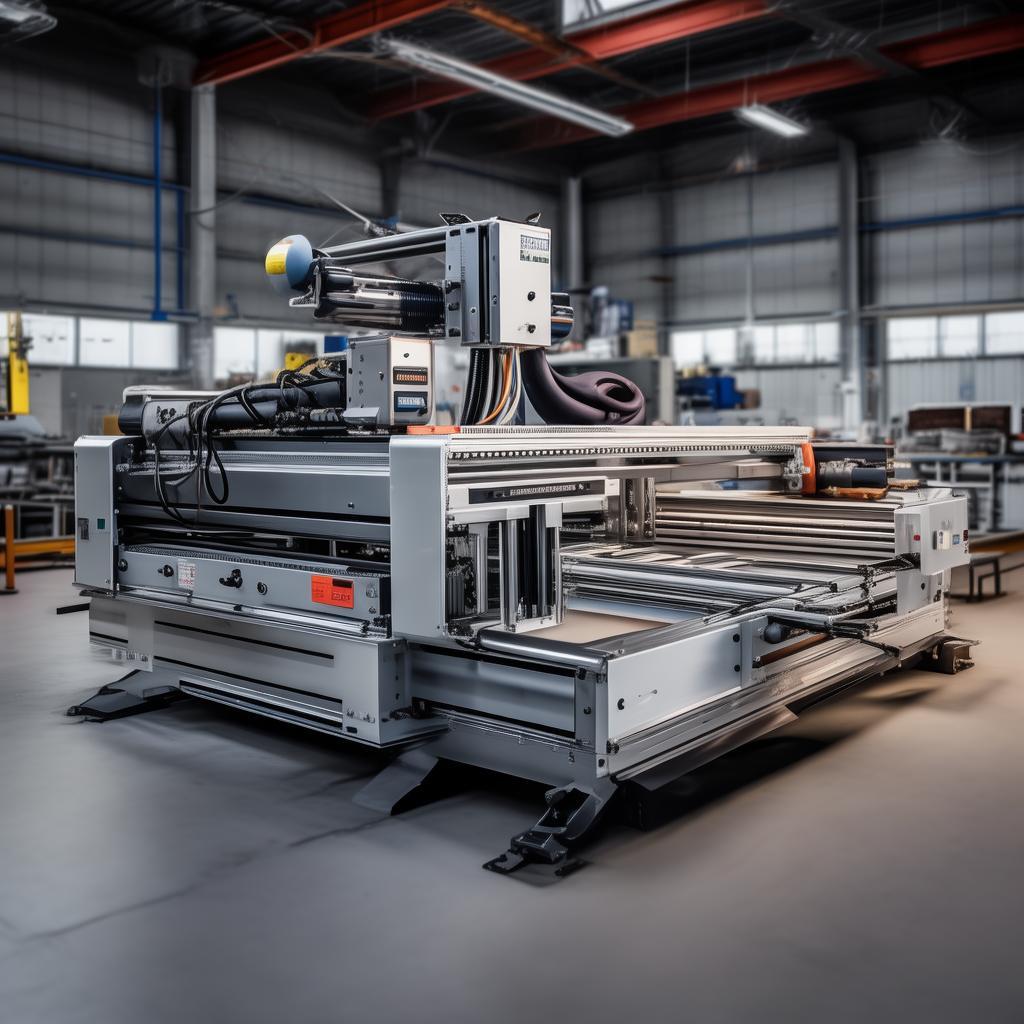
CNC plasma cutting equipment
Product Overview
CNC plasma cutting equipment is a production-grade CNC cutting system engineered for precision plate processing in metal fabrication and manufacturing operations. By automating torch positioning with controlled motion, it enables repeatable cutting of steel, stainless, and other conductive materials for high-mix jobs or steady throughput. This type of system is widely used by fabricators, equipment builders, and industrial OEMs to streamline layout-to-part workflows, reduce rework, and increase machine utilization.
Whether you’re manufacturing brackets, frames, enclosures, or custom sheet metal components, a CNC-guided plasma platform helps production teams standardize output quality while keeping cycle times predictable.
Key Features
- CNC motion control for consistent parts: Automated toolpaths improve dimensional repeatability across batches, supporting tighter tolerance targets in fabricated assemblies.
- Reduced setup time: Import CAM/programmed paths and minimize manual marking, enabling faster changeovers between product families.
- Stable cutting for clean edge finishing: Designed for reliable arc control and torch guidance to help limit dross and reduce downstream grinding.
- Production-friendly workflow: A repeatable, digital process supports traceability from drawing to part, simplifying quoting and job management.
- Flexible for varied part geometries: Capable of cutting complex contours, holes, and profiles—useful for custom work and engineered components.
- Lower per-part cost at scale: Automation and repeatability help maximize material yield and machine utilization compared with purely manual plasma cutting approaches.
- Built for industrial integration: The system can be paired with existing CAD/CAM processes and shop practices to standardize production output.
Technical Specifications
| Parameter | Specification |
|---|---|
| Control & CNC interface | CNC controller with programmed path execution for torch positioning |
| Cutting method | Plasma cutting with guided torch motion |
| Working area options | Multiple bed sizes available (configure based on your part envelope) |
| Positioning system | Motorized CNC axes for repeatable toolpath tracking |
| Program workflow | CAM-generated toolpaths with job-based execution |
| Consumables & maintenance | Designed for practical day-to-day consumable replacement and service access |
| Safety features | Shop safety provisions and interlocks integrated to support controlled operation |
Application Scenarios
- Fabrication shops cutting medium-complexity plate parts for structural assemblies and frames.
- Industrial OEM production preparing enclosures, brackets, and housings with repeatable geometry.
- Job shops transitioning between customer designs to improve throughput without changing core workflow.
- Maintenance and engineering departments producing replacement components based on drawings and templates.
Advantages
Compared with generic cutting setups and purely manual plasma work, a CNC-guided system delivers better process control and repeatability—critical for procurement teams managing cost, schedules, and quality across recurring jobs. Automated path execution reduces operator variance, helps streamline quoting from CAD/CAM inputs, and improves part consistency for downstream welding, assembly, and fit-up. For high-mix production, the same digital workflow supports efficient changeovers without rebuilding templates from scratch.
This is particularly valuable when your teams need predictable yields, less rework, and a manufacturing footprint that scales as demand grows.
Why Choose Us
We support industrial buyers with a procurement-first approach: clear documentation, dependable supply communication, and practical guidance to help you select the right configuration for your shop.
- Responsive pre-sales consultation to align the machine envelope, workflow, and production needs.
- Transparent ordering and documentation practices suitable for international sourcing.
- After-purchase support focused on uptime: commissioning coordination, maintenance guidance, and spare planning.
- Configuration options designed to fit different production layouts and part sizes.
FAQ
Q1: What materials can this CNC plasma cutting system handle?
A: Plasma cutting is typically used for conductive metals; your exact material mix and thickness targets determine the best configuration and operating approach.
Q2: How do I prepare jobs—do I need special software?
A: Most shops use CAM to generate torch toolpaths from CAD drawings, then run those programs on the CNC controller as part of standard job execution.
Q3: Is the machine suitable for both production runs and custom one-off parts?
A: Yes. CNC programming supports rapid changeovers for custom work while maintaining repeatability for repeat orders—an advantage over manual plasma cutting approaches.
Q4: What should I consider when choosing a working area?
A: Consider the largest part dimensions you commonly cut, plus nesting and loading strategy. A properly sized bed reduces constraints and improves throughput.
Q5: What maintenance is required for a plasma cutting platform?
A: Routine upkeep includes managing consumables and keeping key components in good condition. We can advise on practical maintenance planning to support stable production.
If you’d like a quotation for CNC plasma cutting equipment or want help selecting the best configuration for your production range, send us your part sizes, material types, and typical thickness targets—we’ll respond with a tailored recommendation and next steps.