
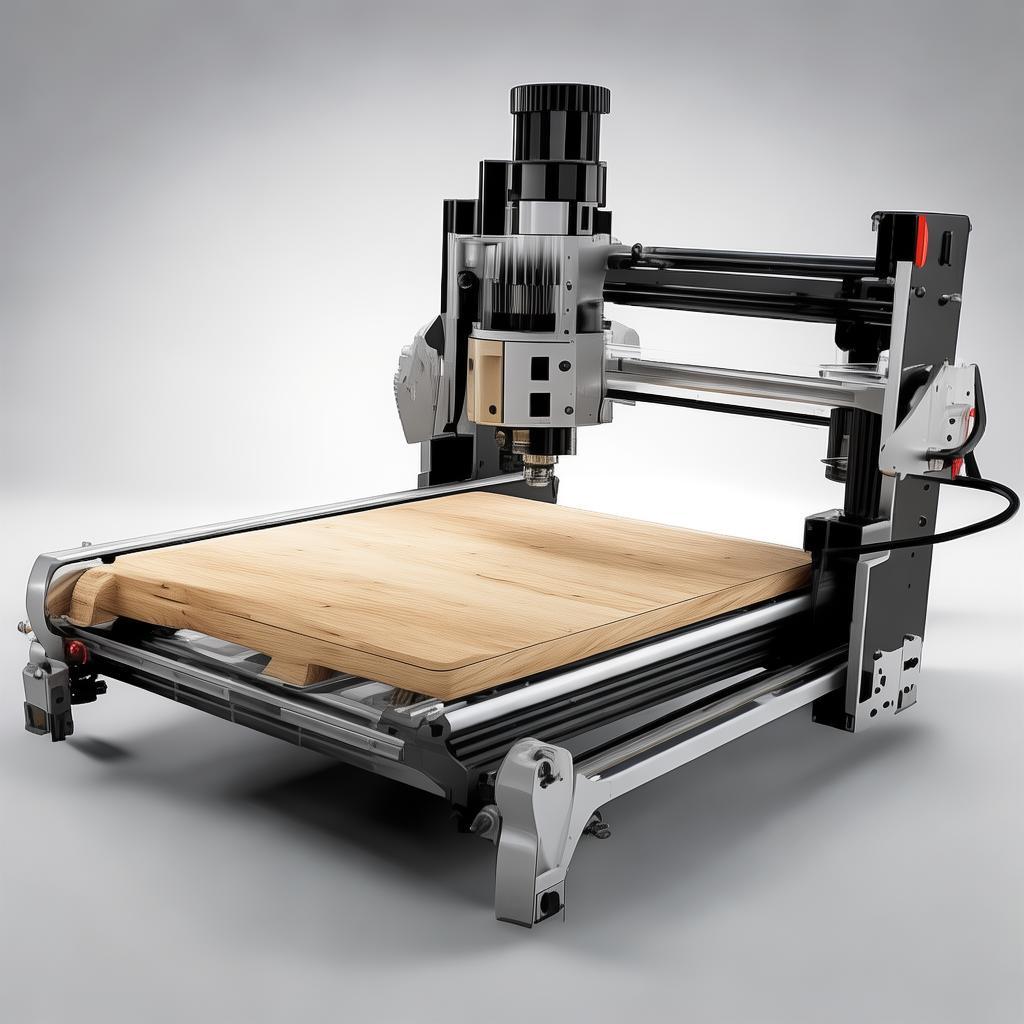
CNC plasma cutting system
Product Overview
A CNC plasma cutting system is an industrial fabrication tool used to precisely cut conductive metals—such as carbon steel, stainless steel, and aluminum—directly from CAD/CAM designs. In manufacturing environments like fabrication shops, metal service centers, and light industrial panel manufacturers, it helps teams reduce manual layout time, improve dimensional consistency, and scale production without sacrificing quality. This system integrates CNC control with a plasma torch for stable, repeatable cutting paths, making it well-suited for batch orders, repeat parts, and complex profiles. If you’re sourcing an automated cutting solution, this CNC plasma cutting system approach is designed around reliable throughput, operator-friendly operation, and clean handoff from engineering to production.
Key Features
- CAD/CAM-to-cut workflow: Converts design intent into accurate toolpaths so production can start faster with fewer manual interventions.
- Consistent cutting quality: Stable motion control supports straight edges, reliable corner control, and repeatability across long production runs.
- Efficient nesting & throughput support: Helps maximize material utilization and reduce wasted stock—critical for cost-per-part targets.
- Built for shop-floor usability: Practical controls and straightforward job management support operators and reduce training time.
- Safety-aware operation: Designed for industrial environments with operational guardrails that support stable, controlled cutting sessions.
- Serviceable architecture: Modular components and accessible interfaces simplify maintenance planning for industrial uptime requirements.
- Scales from prototypes to production: Ideal for both one-off engineering changes and standardized production orders.
Technical Specifications
| Parameter | Specification |
|---|---|
| System Type | CNC plasma cutting platform with torch control and motion coordination |
| Control Interface | CNC controller for job execution, torch coordination, and motion parameters |
| Working Area | Configurable cutting envelope for small-to-mid production needs |
| Plasma Torch Control | Program-controlled torch height/sequence coordination (configuration dependent) |
| Cutting Data Input | CAD/CAM-generated toolpaths (format support dependent on your software) |
| Drive System | Motorized axes with CNC-linked motion control for accurate path tracking |
| Materials (General) | Conductive metals such as carbon steel, stainless steel, and aluminum (process settings required) |
| Operating Mode | Production job execution with repeatable program runs |
Application Scenarios
- Fabrication of structural components: Enables consistent plate cutting for brackets, frames, and custom steelwork.
- Panel and enclosure manufacturing: Supports repeatable cut patterns for industrial housings and machine guards.
- Job-shop prototyping and change management: Reduces revision time when engineering updates are frequent.
- Batch production for OEM suppliers: Improves dimensional uniformity across multiple quantities of the same part.
- Metal service center throughput: Helps standardize cutting workflows for incoming customer orders.
Advantages
Choosing a purpose-built automated cutting configuration delivers advantages that generic “basic” systems often struggle to match. This solution is engineered for production practicality—job execution stability, consistent motion coordination, and an easier path from engineering data to the cutting floor. Compared with manual plasma setups or entry-level automation, you typically gain faster turnaround, fewer operator-dependent results, and more predictable part-to-part quality—especially when orders repeat or complexity rises.
In other words, it’s designed to behave like an industrial workhorse: the CNC plasma cutting system workflow helps reduce rework, shorten production cycles, and improve material utilization through structured programming and repeatable execution. Whether you’re modernizing an existing line or building capacity, the result is a more controllable, scalable cutting process.
Why Choose Us
We support buyers across international trade and manufacturing procurement with a focus on dependable delivery and implementation. Our team works with you to align system configuration with your product mix, working envelope, and production expectations—so the delivered plasma cutting solution performs as intended in your shop.
- Procurement-friendly communication and documented handover for smoother purchasing and commissioning.
- Practical guidance for job setup and integration with your existing CAD/CAM workflow.
- Support during installation planning and operational readiness to minimize downtime after arrival.
- A configuration approach that prioritizes uptime, maintainability, and production stability.
If you’re comparing options, request a quotation for the exact specification package that matches your parts, thickness range, and target throughput—then evaluate the delivered configuration rather than generic claims.
FAQ
1) What metals can this CNC plasma cutting system handle?
It’s intended for conductive metals such as carbon steel, stainless steel, and aluminum. Actual results depend on selected process settings and consumables for your material and thickness.
2) Do we need CAM programming, or can we cut directly from CAD?
You typically use CAD/CAM to generate the cutting toolpaths required for CNC execution. We can help confirm supported file workflows so your engineering process matches production needs.
3) How does the system support repeat production and job changes?
The CNC-driven workflow runs stored jobs consistently and allows you to update toolpaths when designs change—reducing reliance on manual setup and minimizing variation across batches.
4) What do we need to plan for installation and shop integration?
Plan for your working envelope, material handling approach, power and safety requirements, and operator access. We’ll align configuration with your facility constraints during quotation and implementation.
5) How do we choose the right configuration for our production?
Start with your part dimensions, typical thickness range, material mix, and expected order volume. We’ll recommend a configuration for the motion envelope and workflow so your CNC plasma cutting process stays efficient at scale.
6) Is this suitable for a job shop or for high-volume production?
Yes. The automation benefits are valuable in job-shop environments where revisions happen frequently, and in high-volume lines where consistency and throughput matter. The key is matching the system configuration to your product mix.
Ready to upgrade your cutting capacity? Share your typical part sizes, material types, and production targets, and we’ll provide a tailored quotation for the right automated plasma cutting configuration—including a clear path to commissioning for your shop.