
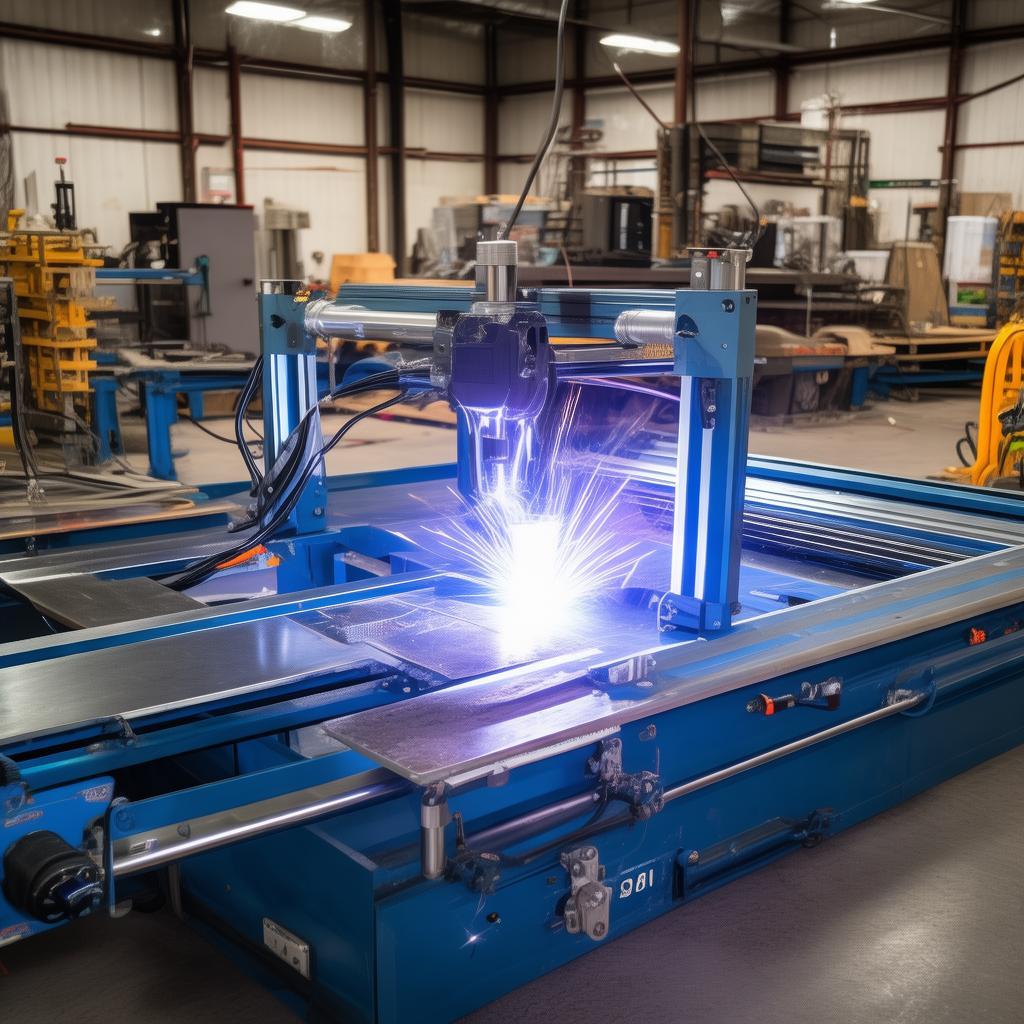
CNC plasma table
Product Overview
A CNC plasma table is a computer-controlled cutting system designed for precise, repeatable fabrication of metal parts. It uses a high-speed plasma torch and CNC motion control to cut plate components efficiently, making it a practical choice for the fabrication and manufacturing sector—especially for shops producing steel structure parts, enclosures, brackets, and custom work orders. By combining guided torch travel with automated path control, a CNC plasma table helps teams reduce manual layout time, improve cut consistency, and speed up production from nesting through finished parts.
Key Features
- CNC-guided cutting accuracy for consistent part profiles across repeats and production batches.
- Optimized nesting workflow to help reduce scrap and improve material utilization for plate runs.
- Stable torch motion control that supports smooth cuts and dependable lead times for shop-floor planning.
- Faster job changeovers versus manual cutting, supporting job-shop variety without sacrificing repeatability.
- Production-ready automation designed to run repeatable programs for quotes, production orders, and distributor fulfillment.
- Easier process standardization so engineering inputs translate into uniform outputs that reduce rework.
- Shop-friendly operation with a workflow that supports training of operators and integration into existing fabrication lines.
Technical Specifications
| Parameter | Specification |
|---|---|
| CNC control system | Computer numerical control for coordinated torch movement and cutting path execution |
| Cutting method | Plasma cutting via CNC-controlled torch travel |
| Motion guidance | Linear motion platform designed for repeatable path tracking |
| Input programming | CNC cutting programs prepared from CAD/CAM data |
| Workpiece handling | Designed for plate-based cutting workflows common in fabrication shops |
| Safety features | Machine safety controls and operational safeguards for shop use |
| Power & integration | Configured for integration into standard manufacturing environments (exact parameters provided during quotation) |
Note: Exact cutting ranges, travel sizes, and plasma power configurations are provided per quotation based on your plate thickness, material mix, and production targets.
Application Scenarios
- Steel structure fabrication: cut frames, brackets, and connection plates with consistent geometry.
- Industrial enclosures and sheet metal components: produce repeatable panels for equipment OEMs.
- Job-shop production: accelerate custom part turnaround by reusing CNC programs for reorders.
- Distributor fulfillment: scale plate cutting for multiple customer specifications with controlled outputs.
Advantages
Compared with generic cutting alternatives, an NC plasma cutting table from a qualified supplier delivers more than automation—it brings standardization. Where manual cutting and low-end setups can vary between operators and shifts, CNC-controlled torch travel supports repeatability for consistent part fit-up. It also improves production planning by enabling nesting workflows and repeatable programs, which can reduce rework and late-stage adjustments.
In addition, selecting the right industrial CNC plasma platform for your shop’s material and output mix helps you balance productivity with process stability—so your cutting line behaves predictably across different job sizes, rather than requiring constant operator tuning.
Why Choose Us
We support buyers with a procurement-focused approach: clear configuration guidance, practical implementation planning, and responsive communication for international purchasing. Our goal is to help you choose the correct setup for your cutting requirements and integrate the system smoothly into your existing production workflow.
- Requirements review to align the system configuration with your plate sizes, material mix, and throughput expectations.
- Documentation and quotation clarity so stakeholders can approve the solution confidently.
- Ongoing support coordination for installation planning and operational ramp-up.
- Professional service orientation for distributors and manufacturing partners handling multiple projects.
FAQ
1) What is a CNC plasma table typically used for?
It’s commonly used in fabrication for cutting steel plate and sheet-based components such as brackets, panels, structural parts, and other repeatable metalwork.
2) How do I choose the correct machine configuration?
We recommend sharing your typical plate thickness, material types, part complexity, and monthly workload so we can size the setup appropriately for stable production.
3) Can the system handle custom designs and one-off jobs?
Yes. Once CAD/CAM programming is prepared, the CNC cutting process can run custom parts efficiently, which is especially valuable for job shops and manufacturers with varied orders.
4) What makes a CNC plasma table better than manual plasma cutting?
CNC control reduces variability between operators and improves repeatability, supporting consistent part geometry and faster transitions between jobs.
5) Do you provide integration and ramp-up support?
We coordinate installation planning and operational guidance so teams can start producing confidently with the selected CNC plasma cutting setup.
If you’re evaluating a CNC plasma table for your next production line, share your material types, plate sizes, and target output. We’ll respond with a tailored quotation and configuration recommendations to match your manufacturing needs.