
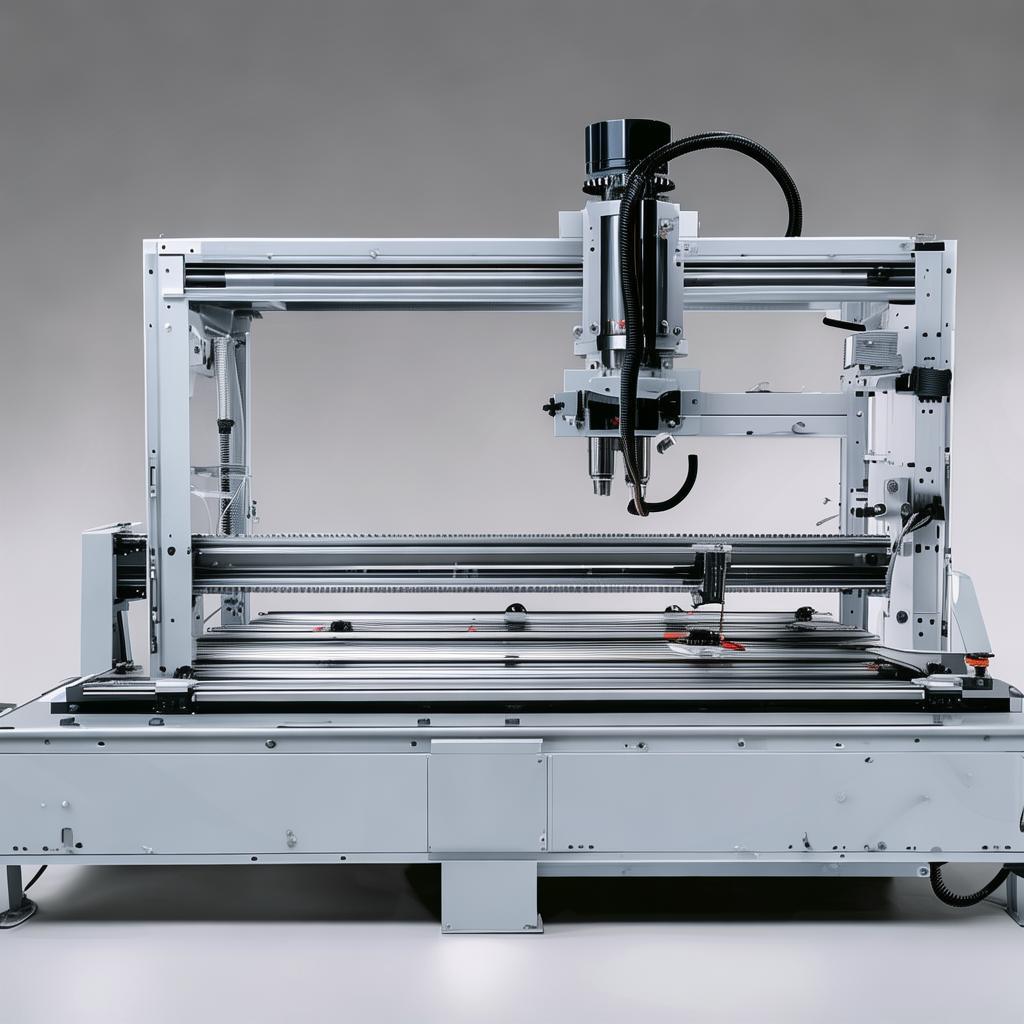
CNC router for composite materials
Product Overview
A CNC router for composite materials is a CNC machining platform engineered to cut, trim, and shape fiberglass, carbon fiber, aramid (Kevlar-like) laminates, and related reinforced panels with consistent edge quality. Widely used in the composites manufacturing and industrial fabrication sectors, this type of router helps manufacturers move from CAD model to production parts faster, with tighter repeatability across batches. For procurement teams and process engineers, the goal is straightforward: predictable toolpaths, stable dimensional results, and reliable throughput when working with abrasive, layered materials.
Key Features
- Composite-tuned routing capability designed for layered fiber materials, supporting clean cuts and controlled trim operations to reduce rework.
- Accurate, repeatable machining paths that help maintain part-to-part consistency—critical for molds, jigs, and production components.
- Stable motion and high-quality drive control to hold geometry during long cutting cycles and larger panel processing.
- Process flexibility for nesting layouts, multi-part cutting, and batch production of standard and custom sizes.
- Toolpath efficiency that supports optimized material utilization and shorter lead times from program to part.
- Production-focused usability with workflow designed for repeat runs: load, run, verify, and move on to the next batch.
- Support for dust and fiber management through configurable setup options to help protect operators and keep machining areas clean.
Technical Specifications
| Parameter | Specification |
|---|---|
| Machine type | CNC router for composite and reinforced panel processing |
| Working area (XYZ) | Configurable to customer requirements |
| Spindle / cutting interface | Composite-oriented cutting setup (options based on material and tooling) |
| Control system | CNC controller suitable for production routing workflows |
| Motion and drive | Precision drive system for stable path control |
| Positioning accuracy | Designed for repeatable production part tolerances (final values depend on configuration) |
| Max cutting thickness | Material- and tooling-dependent; engineered by application |
| Compatibility | CAD/CAM program workflows (industry-standard formats supported by configuration) |
| Dust/fiber management | Configurable extraction and routing-area setup |
| Power & integration | Electromechanical integration planned for the buyer’s plant environment |
Application Scenarios
- Boat and marine components: cut foam-backed composites and reinforced panels for consistent assemblies.
- Wind energy parts and tooling: produce nests and trimmed blanks with repeatability for larger laminate work.
- Aerospace composite fabrication support: fabricate jigs, fixtures, and prep components aligned to CAD geometry.
- Automotive supplier production: route and trim composite sheets for interior/exterior trim, reducing hand finishing time.
- Industrial mold and prototype shops: machine composite-based core materials and templates for faster iteration cycles.
Advantages
This option for reinforced-material cutting is built for the realities of composite production—abrasive fibers, layered build-ups, and the need for stable output over repeated runs. A dedicated CNC routing solution for composites helps you reduce variability that often appears with generic wood/metal routers, especially when you’re nesting multiple parts on a single sheet or processing complex contours.
- Better process control for composite cutting operations, improving edge consistency and lowering downstream rework.
- Production-oriented workflow design to support batch operations and shorter lead times.
- Toolpath and integration readiness for composite workflows, including CAD/CAM program-driven production.
- Configurable setup that aligns the machine to your materials, tooling strategy, and plant constraints.
- A practical path to scaling output—helpful when demand grows beyond prototype quantities.
Why Choose Us
Choosing a composites CNC routing system is not only about the machine—it’s about deployment, support, and confidence during ramp-up. We focus on delivering a dependable procurement experience: clear communication, application-focused configuration guidance, and responsive after-sales assistance. If you already have a CAM workflow, our team will coordinate integration details so your manufacturing process remains stable from day one.
- Process-first consultation to match the CNC router for composite materials to your actual part types and production needs.
- Transparent documentation and practical guidance for commissioning and operator onboarding.
- Support designed for industrial buyers—planned responses, clear escalation paths, and service-oriented communication.
- Compatibility planning for your existing setup: tooling approach, material handling, and extraction requirements.
FAQ
Q1: Can this system handle carbon fiber and fiberglass laminates?
Yes—when configured with appropriate tooling, cutting parameters, and fiber/dust management practices for the specific laminate type, it can support composite machining workflows across carbon fiber and fiberglass applications.
Q2: What CAM workflows are compatible with the CNC router for composite materials?
Most customers use standard CAD/CAM toolchains that generate CNC programs. We coordinate program formats and integration details based on your current process so production ramp-up is efficient.
Q3: How do you determine the correct working area and configuration?
We review your maximum panel size, part nesting strategy, cutting thickness, and production targets. Based on that, we propose the most practical workspace and machine configuration for your composite manufacturing needs.
Q4: Will I need special fixturing to machine composite parts?
Depending on thickness and surface type, composite work often benefits from stable vacuum or mechanical workholding strategies. We can advise on setup considerations to help maintain repeatability during longer runs.
Q5: How do you support commissioning and training?
We provide commissioning guidance and operator onboarding support focused on your part program workflow, safe handling practices, and production procedures for composite routing.
If you’re evaluating a dedicated router for reinforced panels, share your material types, sheet sizes, target thickness, and sample part drawings. We’ll respond with a configuration recommendation and a practical quotation for your CNC router for composite materials project.