
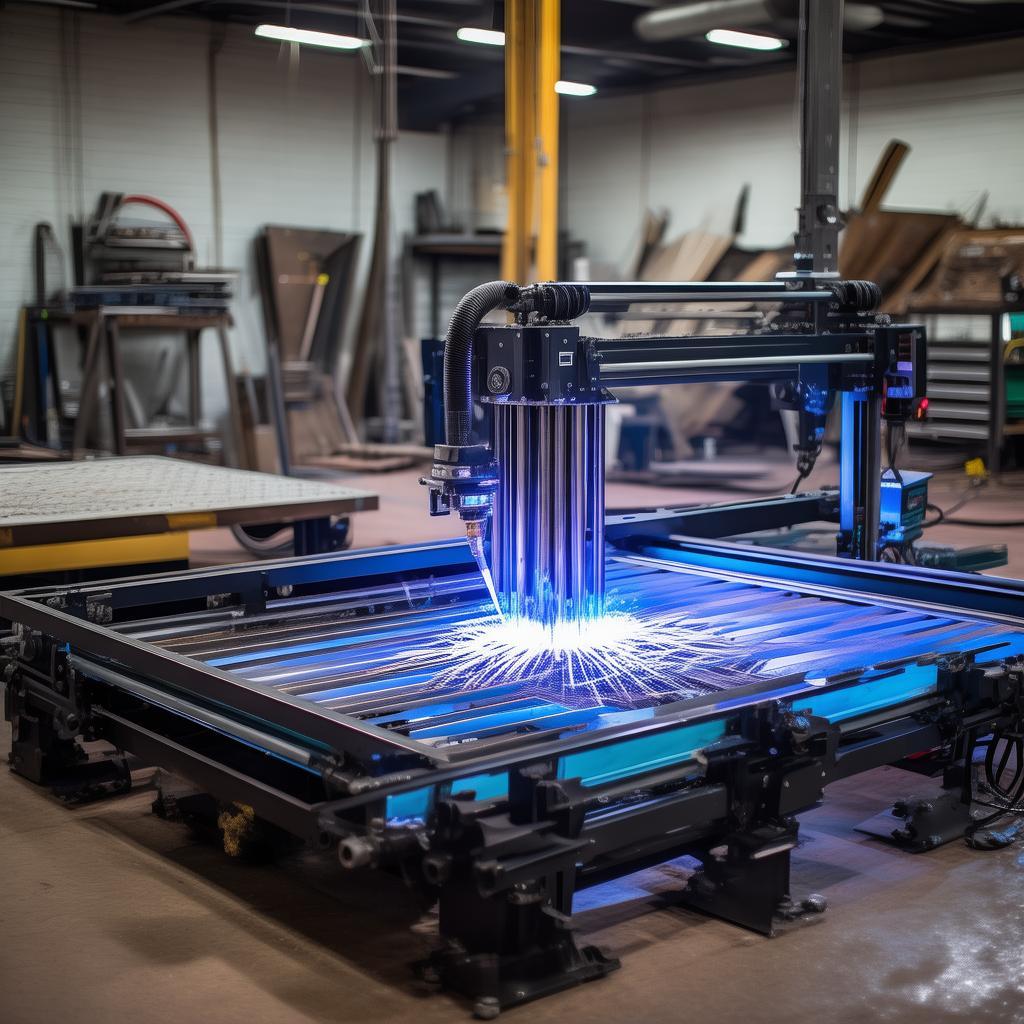
CNC router for foam cutting
Product Overview
A CNC router for foam cutting is a precision computer-controlled cutting system built for the sign, packaging, insulation, and industrial fabrication supply chains that rely on repeatable, clean part geometries. By combining CNC motion control with a foam-compatible cutting tool path, it delivers consistent profiles, accurate nesting layouts, and fast throughput for prototypes through production runs. Typical applications include dimensional cutting of panel components, engraving/relief detailing, and mass fabrication of inserts for packaging or protective cases—where speed and edge quality directly affect material yield and downstream assembly.
If your team needs dependable automation for lightweight foams—without manual rework or the variability of hand cutting—this type of CNC platform helps engineering and production maintain controlled tolerances, stable repeatability, and efficient job scheduling across shifts.
Key Features
- Repeatable part quality: CNC-controlled toolpaths reduce operator-dependent variation and help standardize edges, slots, and contours across batches.
- Clean, consistent cut geometry: Foam-focused routing strategies support stable kerf formation for packaging inserts, acoustic panels, and insulation shapes.
- Efficient material utilization: Designed for nesting workflows so production teams can minimize scrap and maximize output per sheet or block.
- Faster time from CAD to parts: Integrates engineering drawings and cutting paths so jobs move smoothly from design iterations to shop-floor execution.
- Production-ready automation: Supports repeat runs, toolpath reuse, and structured job management for procurement planning and on-time delivery.
- Foam-friendly handling considerations: Helps maintain consistent contact and cutting conditions that are important for light materials and thin sections.
- Scalable for small to medium fabrication: Suitable for engineering labs, contract manufacturers, and distributors building standardized foam component lines.
Technical Specifications
| Parameter | Specification |
|---|---|
| Machine type | CNC router for foam cutting (automated toolpath routing) |
| Controller & motion | CNC motion control for repeatable 2D/contour/slot paths |
| Supported cutting operations | Profiles, nesting cuts, engraving/relief paths, through/step cuts (configuration-dependent) |
| Typical materials | Foam sheets and blocks used in packaging, insulation, and display systems (toolpath tuned per density) |
| Workholding approach | Bed/worktable suitable for light materials; clamping or vacuum solutions based on application |
| Software workflow | CAD/CAM-driven toolpaths for predictable production routing |
| Safety & dust management | Integration-ready guidance for foam dust extraction and shop safety practices (details vary by configuration) |
Note: Specific dimensions, spindle/tooling options, and maximum working area depend on the chosen configuration. Request a quote for a tailored build for your foam type and part size.
Application Scenarios
- Packaging insert fabrication: Cut custom foam cavities for electronics and industrial components to protect against vibration and impact.
- Acoustic and insulation panels: Produce consistent slots and patterned profiles for sound management and thermal applications.
- Display and retail signage components: Route foam letters and backing shapes with repeatable contours for campaign rollouts.
- Prototype-to-production workflows: Convert CAD iterations into rapid, accurate part geometries for engineering validation and scaling.
Advantages
Choosing a purpose-built CNC router for foam cutting can outperform generic woodworking or “universal” routers because foam applications demand controlled cutting conditions, predictable path execution, and stable part handling. Compared with manual cutting or single-purpose jigs, automation reduces labor intensity and improves consistency—especially when engineering changes require rapid re-cutting.
- Lower scrap risk: Toolpath-driven machining supports efficient nesting and repeatable job setups.
- More consistent edges and features: Controlled routing helps maintain geometry across varying foam lots when procedures are standardized.
- Faster quoting and scheduling: CAD/CAM workflows make it easier to plan production capacity for distributors and contract manufacturers.
- Better fit for lightweight components: Foam-focused workflows help reduce variability caused by inconsistent handling and manual pressure.
Why Choose Us
We support international trade and manufacturing buyers with a practical approach: configuration guidance based on your foam type, part geometry, and throughput targets; documentation to speed procurement and installation; and responsive pre- and post-sale communication for stable production ramp-up.
- Procurement-friendly sales process with clear scope definition for your application.
- Technical consultation on cutting workflow and production setup to help reduce commissioning time.
- Support for integrating your existing CAD/CAM and shop procedures.
- Ongoing service readiness for distributors and contract manufacturers managing multiple jobs.
FAQ
1) What types of foam can this router handle?
It is intended for foam sheets and blocks commonly used in packaging, insulation, and display applications. The best results depend on foam density and thickness, so we recommend sharing your material specifications.
2) Is the CNC workflow suitable for small prototypes and production batches?
Yes. Toolpath automation supports quick re-runs and versioned revisions, making it practical for prototype iteration and consistent batch manufacturing.
3) How do we ensure consistent results across different job sizes?
We recommend standardized cutting strategies, repeatable workholding, and CAM settings aligned with your foam type. This reduces variance between short runs and high-volume schedules.
4) Can it be integrated into our existing CAD/CAM process?
Typically, yes. We can align on your file workflow and expected output so your engineering and production teams can move designs into the cutting stage with minimal friction.
5) What should we share to get an accurate recommendation?
Provide foam type (density/grade if available), thickness, target part dimensions, cutting features (slots/profiles/relief), and expected monthly volume—so we can recommend the right configuration for your application.
Ready to standardize foam component production with a reliable CNC routing setup? Share your sample parts and material details, and we’ll help you evaluate the right configuration and next steps toward a quotation.