
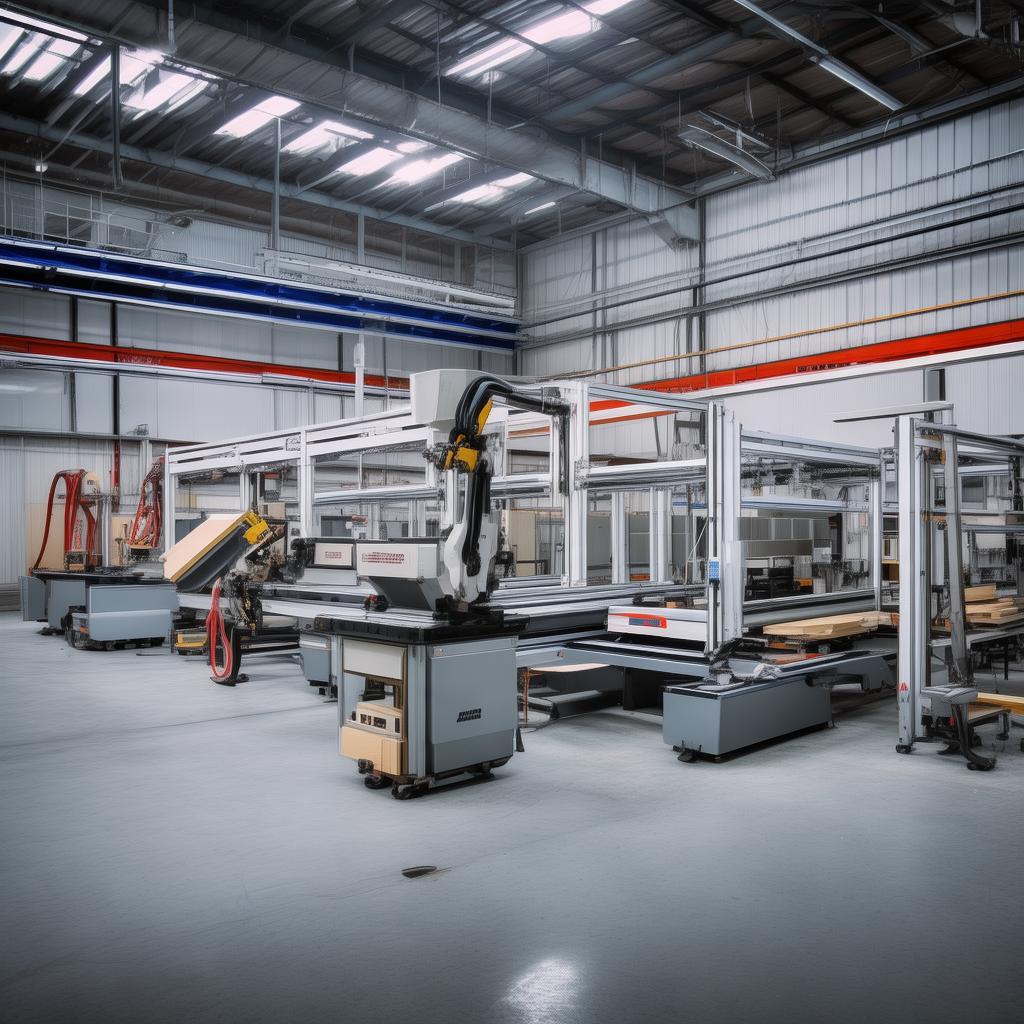
CNC router for mold making
Product Overview
A CNC router for mold making is a precision subtractive machine engineered to machine mold inserts, tooling components, and prototype cavities with stable accuracy and repeatable surface finish. Used across plastics tooling, composite tooling, aluminum/epoxy mold workflows, and die-prep environments, it helps manufacturers reduce lead times from CAD to tool-ready parts. By combining rigid construction, controllable motion, and practical tooling workflows, this CNC platform supports the throughput and process consistency procurement teams expect in mold production.
Whether your job shop is producing small batches of tooling or your factory is scaling mold runs, a dedicated router-grade machining center for molds can streamline roughing, finishing, and detail engraving while keeping process parameters consistent across projects.
Key Features
- Toolpath-friendly control for CAM workflows: Supports standard mold-making operations such as pocketing, profile cutting, and finishing passes to reduce programming iterations.
- Rigid machining for stable results: Designed to maintain dimensional integrity during longer roughing cycles and detailed cavity work.
- Repeatable quality for multi-part tooling: Helps maintain consistency across inserts and repeat jobs—important when molds must fit together without rework.
- Efficient finishing control: Enables fine passes for smoother surfaces, supporting downstream steps like polishing or coating.
- Production-ready workflow: Practical setup and cycle repeatability for job shops that need dependable throughput, not just one-off machining.
- Clear integration for mold departments: Works within established CAD/CAM processes so engineering and production stay aligned from drawing release to tool delivery.
- Serviceable design for uptime: Built with maintenance considerations in mind, helping reduce unplanned downtime and stabilize operational cost.
Technical Specifications
| Parameter | Specification |
|---|---|
| Typical applications | Mold inserts, tooling components, prototype molds, cavity/pocket machining, engraving |
| Machining process types | Roughing, semi-finishing, finishing, contouring, pocketing |
| Control & workflow compatibility | CAM/CAD-driven toolpaths; configurable workflow for production and job shops |
| Spindle & cutting setup | Tooling-driven configuration for typical mold-making cutting strategies (final selection by material) |
| Workholding approach | Supports modular fixtures for inserts, blocks, and tooling geometries |
| Expected output goal | Lower cycle time through process consistency and repeatability |
| Maintenance & support | Serviceable components and practical maintenance procedures for stable uptime |
Note: Exact machine configurations (travel size, spindle setup, and motion parameters) should be selected based on your mold dimensions, materials, and machining strategy.
Application Scenarios
- Machining plastic or composite mold inserts from CAD models for faster quoting and shorter tool lead times.
- Preparing tooling cavities and core parts where consistent pocketing and finishing passes reduce downstream correction work.
- Producing prototype molds and pre-series tooling to validate designs before full-scale production.
- Cutting detailed features such as reliefs, texture patterns, and engraving elements for improved surface quality.
- Supporting job-shop schedules by running repeatable programs for multi-cavity tooling components.
Advantages
Compared with generic wood/foam routers or lightly configured hobby/prototyping CNC units, a mold-oriented machine approach brings stronger process control to the parts that matter: cavity geometry, dimensional consistency between runs, and surface quality that affects fitting and finishing.
- Better tooling strategy alignment: Mold making needs predictable rough-to-finish transitions; the workflow is designed to support repeatable operations.
- Lower rework risk: More stable machining behavior helps reduce the need for manual correction after the tool is produced.
- Operational consistency across orders: Ideal for suppliers and distributors managing multiple customer projects with similar tooling requirements.
- Faster path from drawings to tool-ready parts: CAM-driven repeatability helps production teams hit deadlines without constant parameter re-tuning.
- Practical support for uptime: A serviceable platform reduces disruption when scheduled maintenance is needed.
Why Choose Us
We supply industrial CNC systems and tooling solutions with a procurement-first mindset: clear communication, responsive lead times, and support that respects production schedules. For buyers evaluating a CNC router for mold making, our goal is to help you select a configuration that matches your materials, part sizes, and machining workflow—so the machine performs in your factory, not just on paper.
- Transparent documentation for quoting, integration planning, and commissioning.
- Guidance on machine setup considerations for tooling workholding and repeatability.
- After-sales support focused on keeping production running smoothly.
- Consolidated sourcing for machine accessories and machining workflow needs.
FAQ
1) What materials can this CNC router handle for mold making?
The ideal material set depends on the spindle/tooling configuration and your cutting strategy. For mold workflows, we’ll help align the machine setup with your specific mold material and finish requirements.
2) Is a mold-focused router better than a standard CNC for general machining?
For cavity work and tooling inserts, a dedicated mold workflow approach improves process consistency—especially when you need repeatability across orders and reliable finishing transitions. That’s why many teams choose a CNC router for mold making over generic setups.
3) How should we choose the right size for our mold parts?
Start with the maximum block size, insert dimensions, and how you plan to fixture the work. We can help translate your part drawings into a practical working envelope for the machine you’re considering.
4) What CAM workflow is typically used?
Most mold shops use CAD/CAM-generated toolpaths for pocketing, contouring, and finishing. Your CAM setup can be matched to the machine’s operation style to support consistent rough-to-finish results.
5) Can this be scaled for production runs?
Yes. The goal of a mold making router system is repeatability: consistent programs, stable setups, and workflow support that helps you scale from prototypes to multi-part tooling.
6) What do we need to provide to get an accurate quote?
Please share your mold part dimensions, target materials, preferred machining operations (roughing/finishing/engraving), and expected production volume. That information ensures your configuration for CNC-based tooling is aligned with your process goals—whether you’re buying a CNC router for mold making or evaluating an alternative.
If you’re planning a tooling expansion or upgrading your CNC workflow for mold production, we’re ready to help you select the right configuration for your cavity sizes, materials, and finishing requirements. Request a quotation or send us your part specs—we’ll respond with a practical recommendation.