
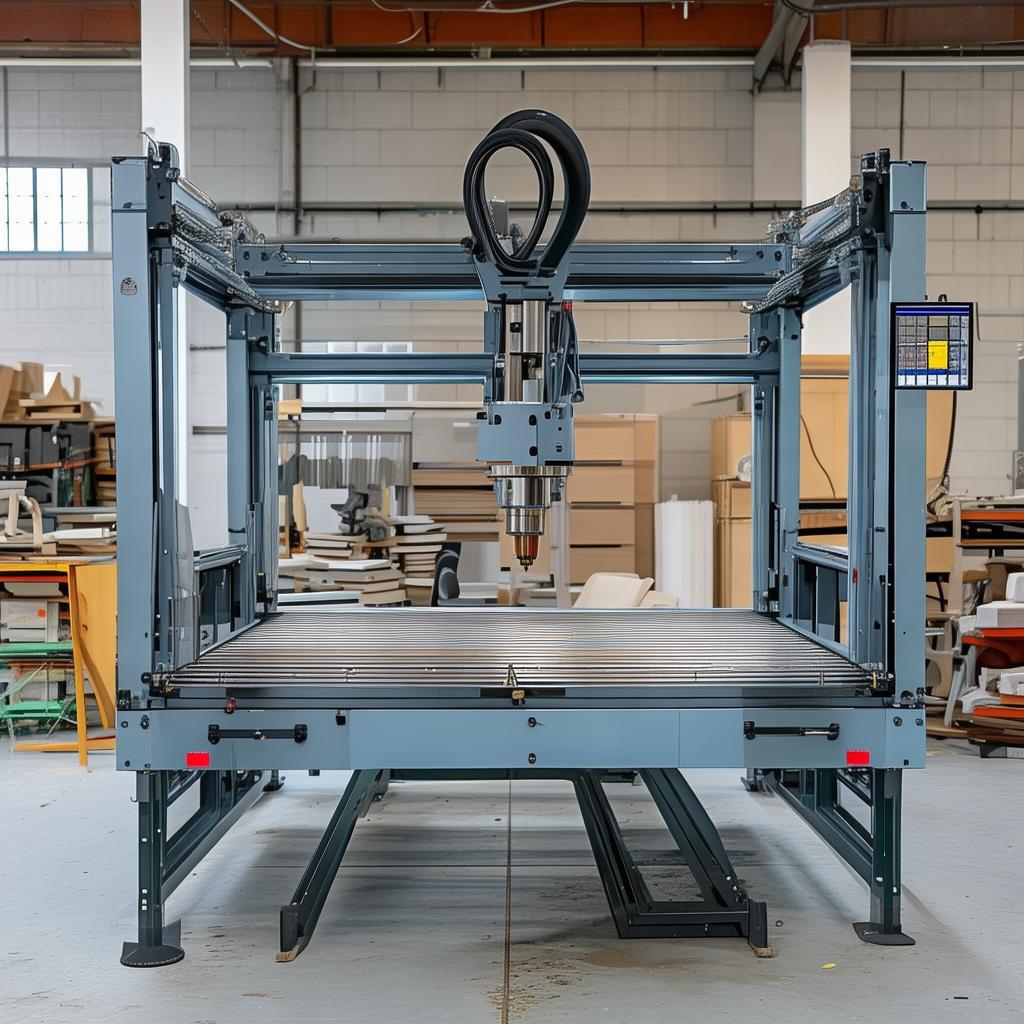
CNC router for panel nesting
Product Overview: CNC router for panel nesting for efficient sheet layout and cutting
A CNC router for panel nesting is an industrial cutting and routing machine designed to optimize flat panel usage—automating the layout (“nesting”) of parts on sheet material and driving precise CNC cutting paths. It is widely used in woodworking and panel processing (cabinet components, furniture panels, door cores, and interior trim), as well as in other industries that cut from sheets like plastics and composites. By combining reliable motion control, stable tooling access, and software-ready workflows, this solution helps manufacturers reduce waste, shorten setup time, and improve repeatability across production batches.
If your operation values throughput, part accuracy, and consistent edge quality, the right panel nesting workflow—supported by the machine’s rigidity, spindle integration, and tooling compatibility—is the foundation for predictable output.
Key Features
- Waste-reducing nesting workflow: supports efficient material utilization by generating cutting paths from optimized layouts, helping you hit more sellable parts per sheet.
- Stable cutting for panel materials: engineered for consistent routing across flat stock so parts come out accurately without excessive rework.
- Fast job-change readiness: designed for day-to-day production with repeatable setups, making it practical for mixed batches and frequent reprogramming.
- Toolpath-friendly control approach: supports nesting-generated geometries and typical panel operations (pocketing, profiling, drilling/boring workflows depending on tooling).
- Straightforward integration with CAM: helps production teams translate CAD/CAM nesting outputs into reliable execution on the shop floor.
- Operational safety and maintainability: practical machine design supports routine inspections and planned maintenance to keep uptime stable.
- Consistent edge and dimension quality: helps maintain part-to-part repeatability critical for assembly-ready components and downstream finishing.
Technical Specifications
| Parameter | Specification |
|---|---|
| Machine category | CNC routing system for sheet/panel operations with nesting workflows |
| Control & workflow | CAM-to-machine job execution designed for repeatable panel cutting |
| Repeatability focus | Configured to support consistent part dimensions across production batches |
| Panel bed / support approach | Built for stable sheet support during profiling and pocketing operations |
| Tooling compatibility | Supports common routing cutters for sheet processing; drilling/boring dependent on spindle/tooling package |
| Nesting use | Optimized for converting nested layouts into stable, production-ready cut paths |
| Production orientation | Designed for shop-floor efficiency, batch processing, and practical maintenance routines |
Note: Exact travel dimensions, spindle options, and power requirements vary by configuration. Share your panel size and material type and we’ll recommend the appropriate setup for your nesting workflow.
Application Scenarios
- Cabinet and furniture component production: nest door components, carcass parts, and internal panels to maximize sheet utilization.
- Large-format interior trim cutting: produce repeatable trim profiles and panels where consistency across multiple runs matters.
- Door core and panelized elements: convert CAD layouts into accurate cut paths for consistent fit-up at assembly.
- High-mix batch manufacturing: use nesting to reduce changeover waste when part variants rotate frequently.
Advantages
Compared with generic hobby-oriented CNC routers or one-off cutting machines, a purpose-fit system for panel layout and routing is built around the realities of production: sheet stability, repeatable indexing, consistent toolpath execution, and a workflow that meshes with nesting-driven CAM.
- Lower cost per part: optimized nesting throughput supports better material yield and reduces rework.
- More predictable quality: production-oriented rigidity and process stability help maintain dimension and edge consistency.
- Faster operational ramp-up: when the machine and workflow are aligned to nesting layouts, teams spend less time troubleshooting CAM-to-cut translation.
- Better fit for scaling: designed to support repeat production, not just single projects—ideal for distributors and manufacturers expanding capacity.
Why Choose Us
We support manufacturers and trade partners with procurement-friendly documentation, responsive technical communication, and practical deployment guidance for sheet-processing environments. Our focus is helping you choose the right configuration for your panel size, materials, and nesting output—so the machine performs as intended from the first production run of CNC panel cutting jobs.
- Clear quoting process with configuration options based on your production needs.
- Technical onboarding support for CAM workflow alignment and practical setup planning.
- Service-minded approach: documentation and maintenance guidance to reduce downtime risk.
- Partner-friendly communication for distributors and international buyers.
FAQ
1) What makes a machine suitable specifically for nesting-based sheet production?
Suitability comes from stable sheet support, reliable toolpath execution for multiple parts per panel, and workflow readiness to run nested layouts consistently across production batches.
2) Can a CNC router for panel nesting handle different thicknesses and materials?
It can, when properly configured for your material type and thickness range. Tooling selection, workholding strategy, and CAM parameters should be matched to the sheets you process.
3) Do I need specialized nesting software?
You need a nesting/CAM workflow that can generate accurate toolpaths for your part geometry. We can discuss practical integration so your layouts translate smoothly into machine-ready programs.
4) How do I reduce scrap and improve yield?
Focus on optimized layout rules in your nesting workflow, consistent zeroing/positioning, and tooling strategies that maintain predictable cutting performance—so every sheet produces the planned parts.
5) Is this appropriate for high-mix production with frequent design changes?
Yes. A production-ready setup for CNC panel cutting makes it practical to run varied batches, provided you have a repeatable workflow for job preparation and toolpath verification.
6) What information should I provide to get a proper configuration recommendation?
Share your panel sizes, material types and thickness range, typical part geometries (e.g., pocketing, profiling, drilling), target output volumes, and the nesting/CAM workflow you use today.
Ready to evaluate a CNC router for panel nesting for your production line? Send us your sheet dimensions, materials, and sample nesting layouts, and we’ll respond with a tailored quotation and recommended configuration for your panel workflow.