
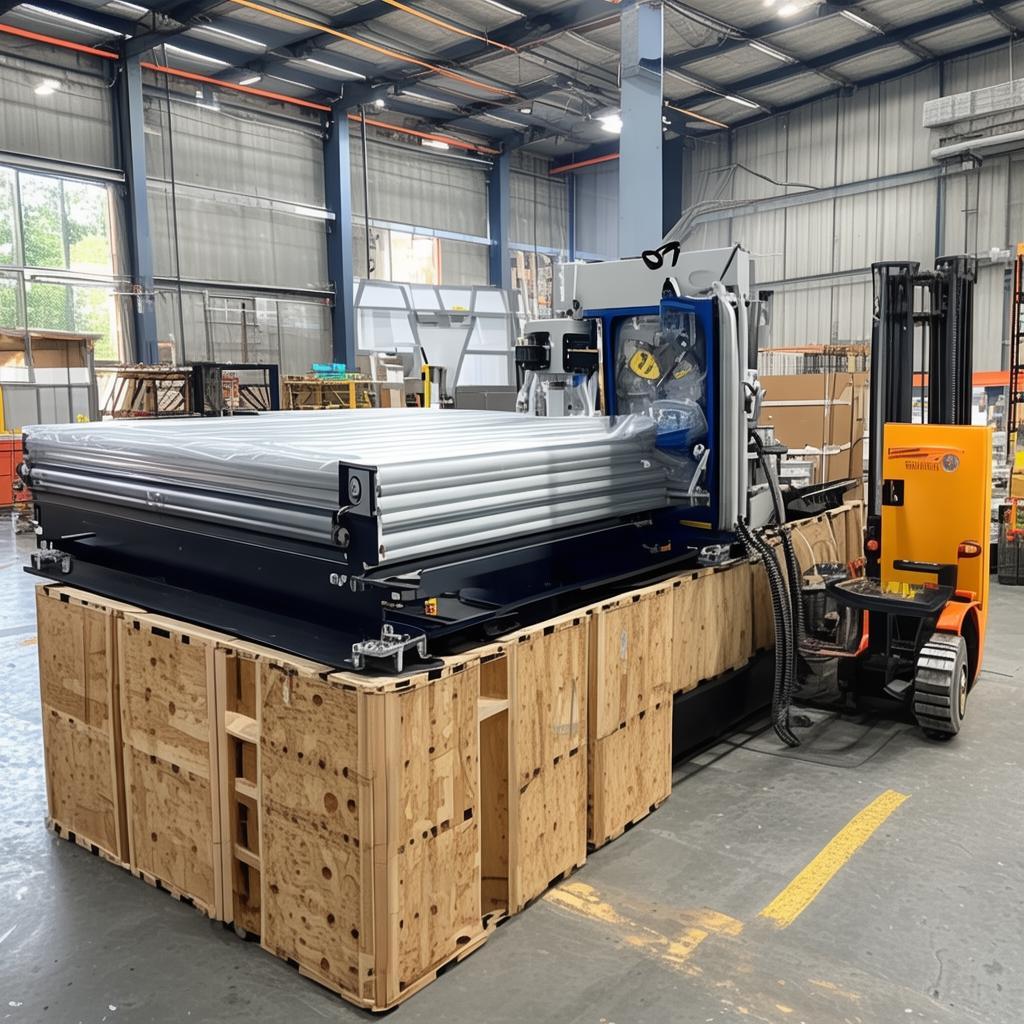
CNC router for panel processing
Product Overview — CNC Router for Panel Processing
A CNC router for panel processing is engineered for manufacturers who cut, carve, and rout flat sheet materials into accurate components for high-volume production. This industrial CNC work center is widely used in woodworking, cabinetry, and panel fabrication to produce consistent panel parts—such as doors, drawer fronts, panels, trims, and interior fittings—while minimizing manual rework. By combining stable mechanics with controlled tool paths, the system helps operations deliver repeatable quality from prototype runs to large batches.
Key Features
- Panel-ready repeatability: Designed to hold tolerances across repeated layouts, supporting standardized product families and easier downstream assembly.
- Clean edges and controlled routing: Optimized for machining paths that reduce chipping and improve surface finish on common panel materials.
- Faster changeovers: Digital toolpath programming reduces setup time for new SKUs, helping you respond to jobsite demand without lengthy manual templates.
- Stable workpiece handling: Panel-focused fixturing and support strategies help minimize vibration and maintain dimensional integrity during cutting and engraving.
- Production-friendly workflow: Built for cycle efficiency—cut, route, and drill operations can be coordinated to keep throughput steady.
- Toolpath compatibility: Works with standard CAD/CAM workflows used in furniture and panel processing plants, helping engineering teams streamline nesting and layouts.
- Operator-centric reliability: Emphasis on predictable operation and straightforward maintenance supports uptime for shifts and multi-day jobs.
Technical Specifications
| Parameter | Specification |
|---|---|
| Machine Type | 3-axis CNC router configured for flat panel processing |
| Typical Applications | CNC cutting, routing, profiling, engraving, and panel component shaping for cabinetry and furniture parts |
| Control & Programming | CAD/CAM-generated toolpaths; standard CNC programming workflow |
| Spindle/Tooling | Router spindle supporting common woodworking/panel tools (milling cutters, engraving tools) based on job requirements |
| Workpiece Handling | Panel support/fixture-ready bed for repeatable positioning and machining |
| Dust Management Compatibility | Designed to integrate with shop extraction solutions to keep routing areas clean |
| Power & Utilities | Configured according to site requirements; consult for exact electrical and air/aux needs |
| Safety & Protection | Industrial machine safeguarding practices for production environments (details per configuration) |
Note: Exact dimensions, spindle ratings, and travel ranges should be confirmed for the selected configuration and board sizes.
Application Scenarios
- Cabinet and furniture manufacturing—route doors, panels, and decorative profiles with consistent repeatability across batches.
- Panel nesting and cut-to-size production—maximize sheet utilization using CAD/CAM layouts for faster throughput.
- Interior fit-out component fabrication—produce standardized components for commercial projects with controlled dimensional stability.
- Prototype-to-production transition—convert design files into stable production toolpaths with reduced manual iteration.
Advantages
Compared with generic hobby-class CNC kits or general-purpose milling setups, this solution is aligned with the realities of panel plants: heavy sheet workflows, tight fixture repeatability requirements, and the need to deliver consistent edges and profiles at production speed. The result is less rework, more dependable part quality, and a smoother programming-to-production pipeline for your engineering and shop teams.
- Built to support recurring panel formats rather than one-off machining.
- More predictable machining behavior on typical panel materials used in furniture production.
- Better alignment with CAD/CAM nesting workflows common in woodworking operations.
- Lower operational risk through production-oriented design and maintenance expectations.
Why Choose Us
We support international manufacturers and distributors with a practical buying experience focused on uptime and long-term value. Our team helps you select the configuration for your panel sizes and product mix, and we coordinate documentation and operational guidance so your team can ramp up efficiently.
- Procurement clarity: Transparent configuration options tied to your machining needs.
- After-sales readiness: Support planning for commissioning and operational continuity.
- International supply focus: Packaging and shipping coordination for cross-border installation timelines.
- Application consultation: Guidance on tooling and workflow considerations for panel part production.
FAQ
1) What materials can this CNC system handle for panel processing?
It’s commonly used for panel goods in furniture and cabinetry workflows. The exact suitability depends on your tooling, spindle setup, and cutting strategy—share your material list and we’ll help you define the best approach.
2) Is this suitable for both prototyping and high-volume production?
Yes. Your CAD/CAM toolpaths can be refined for early runs and then repeated consistently for production batches, reducing manual rework and schedule risk.
3) How do I ensure consistent part quality across multiple sheets?
Quality is driven by stable workpiece support/fixturing, correct nesting strategy, and repeatable toolpath parameters. We can help you map the workflow to your current panel formats and production cadence.
4) What should we prepare in terms of CAD/CAM files and nesting?
You’ll typically provide CAD/CAM-generated files or DXF/CAD geometry used by your nesting software. We’ll align the programming workflow with your panel sizes and machining operations so the CNC router for panel processing runs reliably from the job ticket.
5) Can the machine integrate with our dust extraction setup?
Yes, it is designed to be compatible with standard shop extraction practices. For full alignment, share your dust system layout and typical processing materials.
6) How do we choose the right configuration?
We recommend starting with your maximum panel size, target part mix, and daily throughput requirements. With those inputs, we can advise on the most appropriate setup for your CNC routing workflow.
If you’re planning a new line or upgrading existing panel production capacity, request a quote and share your panel sizes, target materials, and annual volume. We’ll help you confirm whether this CNC router for panel processing setup fits your manufacturing workflow and quality targets.