
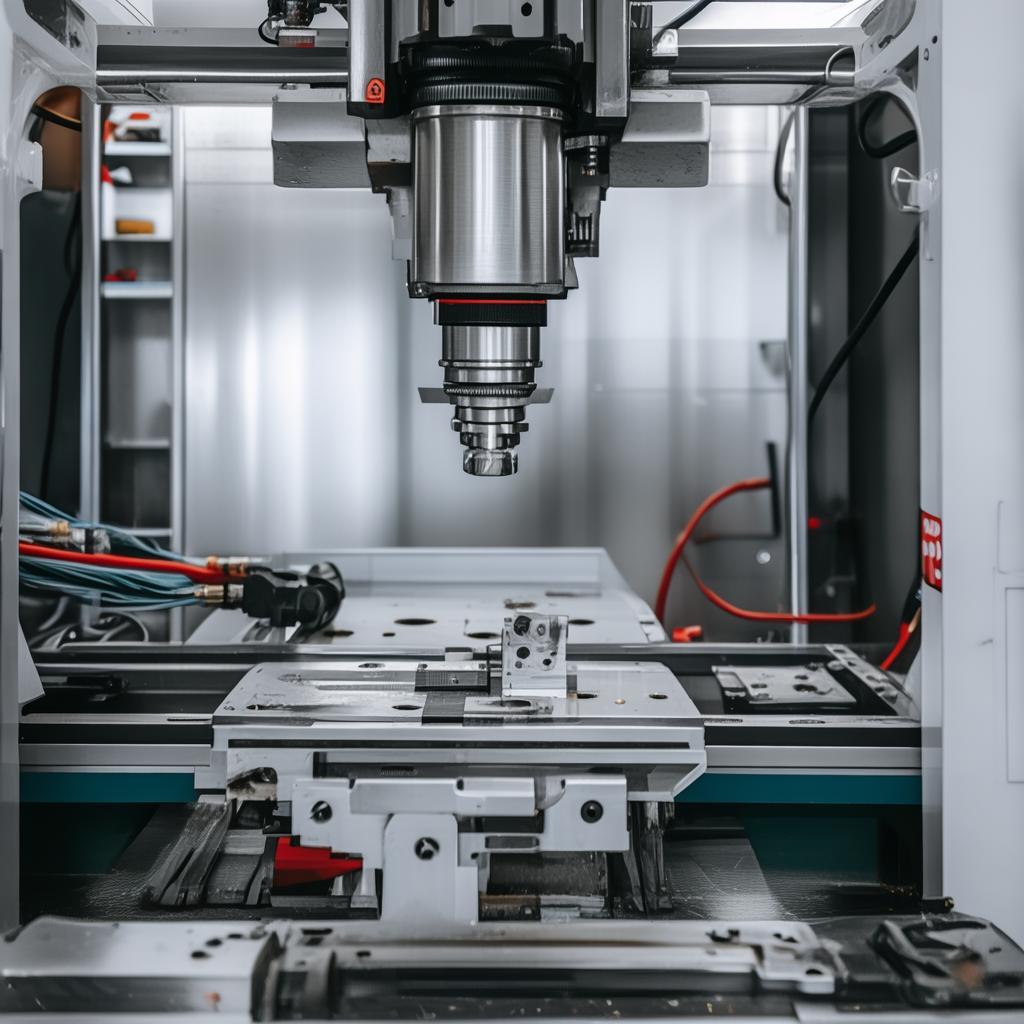
CNC router for prototype fabrication
Product Overview: CNC router for prototype fabrication for rapid, repeatable machining in manufacturing R&D
A CNC router for prototype fabrication is purpose-built for engineering teams that need fast, accurate, and low-friction iteration—from first concept to functional test parts. Designed for prototype shops and manufacturing engineering groups, it helps you cut, pocket, drill, and engrave engineered components in common prototype materials with predictable results and efficient workflows. When timing, design changes, and short production runs are critical, a CNC router platform delivers the throughput and consistency needed to keep development moving.
Key Features
- Prototype-first machining strategy Supports quick design updates and short-run production without retooling bottlenecks.
- Repeatable geometry for engineering validation Enables consistent part profiles across multiple iterations, helping reduce rework and measurement drift.
- Workholding-friendly workflow Designed to integrate with common fixtures and vacuum/fixture setups for faster changeovers.
- Clean-cut finishing options Offers reliable cutting paths for prototypes that may require assembly-fit surfaces or cosmetic finishing.
- Optimized for multi-material prototyping Suitable for typical materials used in R&D, from plastics and composites to softer metals depending on configuration.
- Operator clarity and stable day-to-day operation Built for a production environment where engineers and technicians need predictable performance during fast iterations.
- Scalable for prototype-to-small-batch needs Helps bridge the gap between proof-of-concept and limited manufacturing runs.
Technical Specifications
| Parameter | Specification |
|---|---|
| Controller / Motion Control | CNC motion controller suitable for standard G-code workflows |
| Spindle / Tooling Compatibility | Configurable spindle options for routing, pocketing, and engraving tasks (final selection by material/application) |
| Working Area | Available in multiple table sizes to match prototype part envelopes |
| Axis Configuration | Multi-axis CNC routing suitable for 2D/3D profiling and contouring |
| Repeatability / Stability | Designed for consistent part-to-part geometry during iterative builds |
| Cutting Support | Supports typical CAM-generated toolpaths for machining prototypes |
| Electrical / Integration | Standard industrial interfaces for integration with shop workflows (final specification on request) |
| Cooling / Dust Management | Provision for routing environments with practical dust and chip handling options |
Application Scenarios
- Mechanical product R&D Machining brackets, housings, and test fixtures where design changes are frequent.
- Electronics enclosures & mounting systems Producing prototype cases, cutouts, and cable-routing channels for fast validation cycles.
- Tooling and process development Creating jigs and localized fixtures for assembly trials and early production planning.
- Signage, mockups, and demonstrators Routing consistent engraving/contour details for sales and customer demonstrations.
- Small-batch production transition Supporting limited runs after prototype acceptance without starting from scratch.
Advantages
Choosing this CNC routing platform for prototype work gives you operational advantages that generic alternatives often struggle to deliver. Instead of treating each part like a one-off, it supports a repeatable workflow that aligns engineering design iteration with machining execution. That means fewer surprises on the floor, smoother handoffs from CAD/CAM, and a faster path to validated geometry.
- Better continuity between design revision and part output, reducing “prototype latency.”
- More predictable fit and interface surfaces for assembly testing and measurement-driven iterations.
- Efficient setup logic for frequent part changes—critical when engineering timelines are tight.
- A routing-first approach that supports common CAM toolpath strategies used across prototype teams.
- A foundation that scales from R&D prototypes to short production runs when demand stabilizes.
Why Choose Us
We support international buyers with procurement-friendly purchasing, responsive pre-sales engineering discussions, and clear documentation so your team can move from requirement to quotation quickly. Our approach is to match the router configuration to your actual prototype materials, part sizes, and expected iteration cadence—because the right setup matters as much as the machine itself.
- Requirements-led configuration guidance to reduce the risk of under-specification.
- Transparent communication and structured handover documentation for deployment.
- Serviceability-focused support to keep your development schedule on track.
- Procurement coordination for international projects and distributor channels.
If you are comparing options for a CNC router for prototype fabrication, we can help validate the best working envelope, tooling strategy, and workflow fit before you commit.
FAQ
1) What materials can this router handle for prototype work?
It’s designed for common prototype material families. Exact suitability depends on your configuration and tooling plan—share your sample parts and we’ll align the setup.
2) Is this suitable for frequent design revisions?
Yes. The platform supports CAM-based workflows that make it practical to iterate designs quickly while maintaining consistent output quality.
3) Can it support both 2D and 3D prototype components?
It’s intended for routing operations including contouring and profiling tasks used in 2D and 3D-style toolpaths—your CAM strategy and tooling selection will define results.
4) How do I choose the right working area and configuration?
We recommend selecting based on your largest typical part envelope, required clearances, and how often you reposition or fixture parts. Provide part dimensions and photos for best guidance.
5) What do I need to get started for prototype fabrication?
You’ll typically provide CAD/CAM outputs (toolpaths), chosen tooling, and your workholding approach. For a CNC router for prototype fabrication, we can support the workflow alignment during quotation to reduce onboarding friction.
6) Will this be cost-effective versus outsourcing prototypes?
Often, yes—especially when revisions are frequent or part files need iteration cycles. Internal machining can reduce lead times and rework costs; we can help compare your expected usage profile.
Want a configuration recommendation for your prototype parts and timeline? Request a quotation or send your typical part dimensions, materials, and iteration frequency—our team will help you match the right router setup for your workflow.