
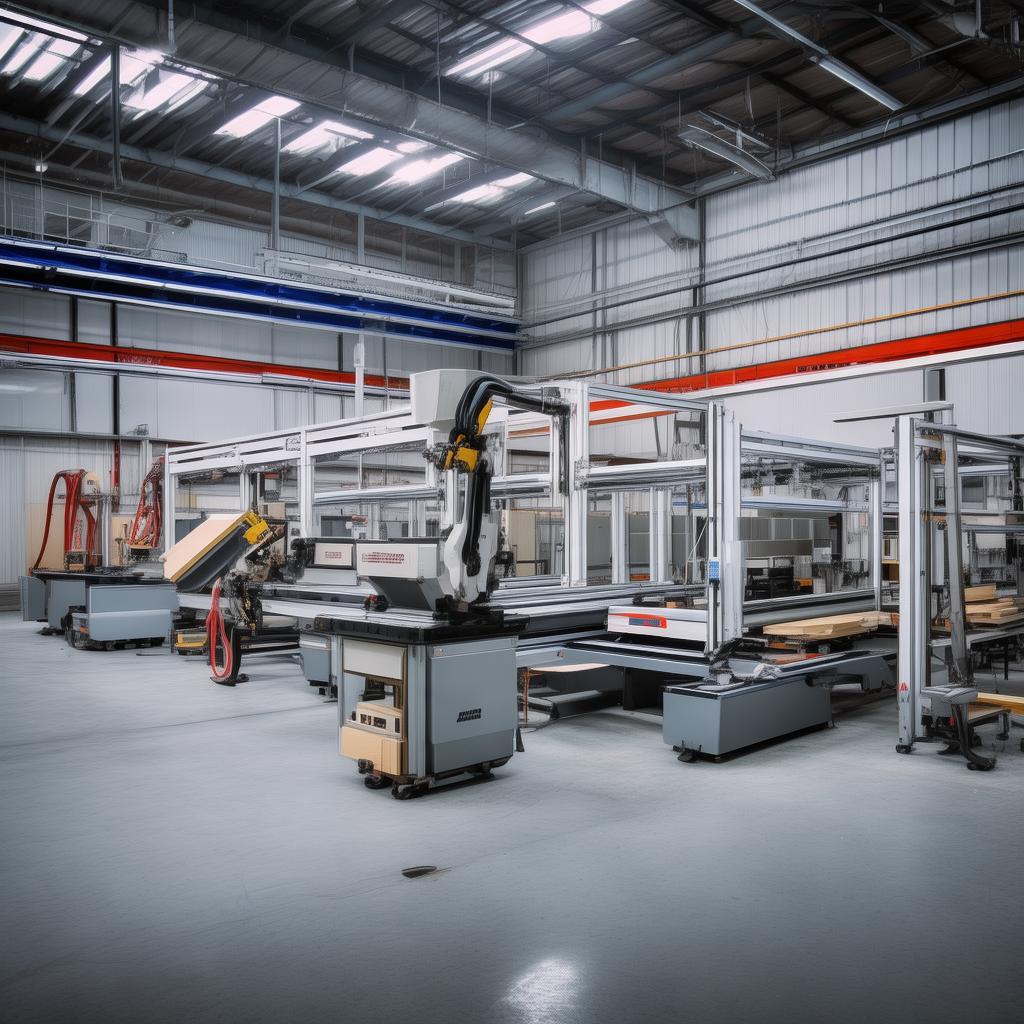
CNC router for sculpting
Product Overview — CNC router for sculpting built for precise, repeatable production in stone, metal, and composite workshops
A CNC router for sculpting is a computer-controlled machining system designed to carve, profile, and refine complex surfaces with controlled toolpaths—ideal for manufacturing environments where design intent must translate accurately into physical form. In the fabrication and sculptural production industry, buyers need stable geometry, clean edges, and efficient workflows that reduce rework. This CNC router for sculpting supports multi-pass finishing and high-detail engraving for workflows ranging from prototypes to consistent batch output.
Key Features
- Sculpting-grade surface quality: Toolpath control and stable motion help achieve smooth contours and accurate radii for ornamental and dimensional work.
- Production-ready repeatability: Consistent positioning and repeat machining cycles reduce variance between pieces—critical for short-run manufacturing and batch deliveries.
- Flexible tooling workflow: Support for common engraving, profiling, and finishing tool strategies enables a practical mix of roughing and detailing.
- Efficient programming-to-part flow: CAM-driven production supports sculpted geometries and automated cycles that reduce manual setup time.
- Rigidity where it counts: A robust mechanical design helps maintain dimensional stability during longer cuts and multi-stage carving.
- Operator-friendly operation: Clear control logic and structured workflows support shop-floor adoption for technicians and process engineers.
- Integrated dust/part-care planning: Built for practical workshop integration to support safer, cleaner finishing practices depending on material.
Technical Specifications
| Parameter | Specification |
|---|---|
| Machine Type | CNC router for sculpting applications (carving, profiling, engraving) |
| Recommended Materials | Wood, composites, foam/plastics (configuration-dependent); suitable for stone/metal options based on spindle & tooling package |
| Working Area | Configurable options available to match enclosure and production needs |
| Spindle / Tool Compatibility | Multi-tool workflow for roughing and finishing; tool selection depends on material and desired finish |
| Motion Control | Precision CNC positioning with CAM-based toolpath execution for sculpted contours |
| File Input | Standard CAM outputs supported (format and configuration confirmed during pre-sale review) |
| Cooling / Power Setup | System designed for stable operation during continuous carving cycles; details vary by configuration |
| Integration Readiness | Supports typical workshop workflows including workholding, dust management planning, and production scheduling |
Note: Exact configuration varies by material, spindle choice, and working-envelope requirements. Share your part dimensions and target materials and we’ll confirm a matched setup for your sculpting workflow.
Application Scenarios
- Architectural ornament panels: Carve decorative relief and repeatable motifs across multiple panels with consistent depth and edge definition.
- Hand-finished look from automated carving: Rough to shape, then apply finishing toolpaths for sculpted surfaces that require less sanding and rework.
- Prototype to production bridging: Use the same digital workflow to scale from prototypes to short runs—helpful for distributors serving recurring customers.
- Toolpath-based engraving and detailing: Produce crisp lettering, borders, and texture patterns with reliable repeatability on production schedules.
Advantages
Generic CNC router packages are often optimized for flat-panel cutting first, then “made to work” for sculpting. In contrast, this CNC router for sculpting approach emphasizes contour control, stable motion execution, and a workflow that supports multi-stage carving—so your design intent survives the transition from CAD/CAM to finished form.
- Better suitability for finishing strategies (roughing + finishing) rather than relying on single-pass machining.
- More dependable positioning for consistent parts, reducing scrap and customer dissatisfaction.
- Operational design that supports shop adoption—helping reduce downtime during changeovers and scaling.
- A configuration-first sales process so the router setup matches your material and tool plan (instead of forcing a one-size-fits-all system).
If you’re upgrading from entry-level engraving routers, this CNC router for sculpting configuration philosophy can provide a clearer path to consistent surface quality and more efficient production cycles.
Why Choose Us
We support international manufacturers, fabricators, and distributors with a practical pre-sales process and post-sale guidance designed to reduce commissioning risk. Our goal is straightforward: help you select the right configuration for your parts, tool strategy, and production volume.
- Application-focused consultation: We align working envelope, material plan, and machining approach before you place an order.
- Clear procurement experience: Documentation, scope alignment, and configuration confirmation reduce surprises during delivery and installation.
- Production-minded support: We help teams plan toolpaths, workholding considerations, and ramp-up steps for reliable output.
- Global shipping readiness: Packaging and logistics planning support multi-region deployments.
If you share your target materials and max part size, we’ll respond with an equipment configuration recommendation tailored to sculpting production—not just general routing.
FAQ
1) What materials can a CNC router for sculpting handle?
Material capability depends on your spindle and tooling package. Common use cases include wood and composite workflows; for stone or metal applications, we confirm the setup based on your requirements.
2) Do I need special CAM software or a particular file format?
You can typically use standard CAM outputs. During pre-sale review, we confirm supported formats and recommend a toolpath strategy for sculpted surfaces.
3) How do I achieve smooth sculpted finishes?
Smooth surfaces usually come from a combination of finishing passes, appropriate tool selection, and correct feed/speed tuning for your material—supported by a stable machine motion plan.
4) Can this be used for both one-off pieces and batch production?
Yes. The digital workflow makes it practical for prototypes and repeat jobs; batch consistency improves as you standardize workholding and toolpath parameters.
5) What should I measure before ordering a CNC router for sculpting system?
Share your maximum part dimensions, material type, desired surface finish, and roughing/finishing workflow goals. This ensures the working envelope and tooling setup match your sculpting production plan.
Want a tailored recommendation for your sculpting workflow? Send your part size, materials, and example drawings (or a typical CAD/CAM file), and we’ll prepare a configuration proposal and quotation for your CNC router for sculpting needs.