
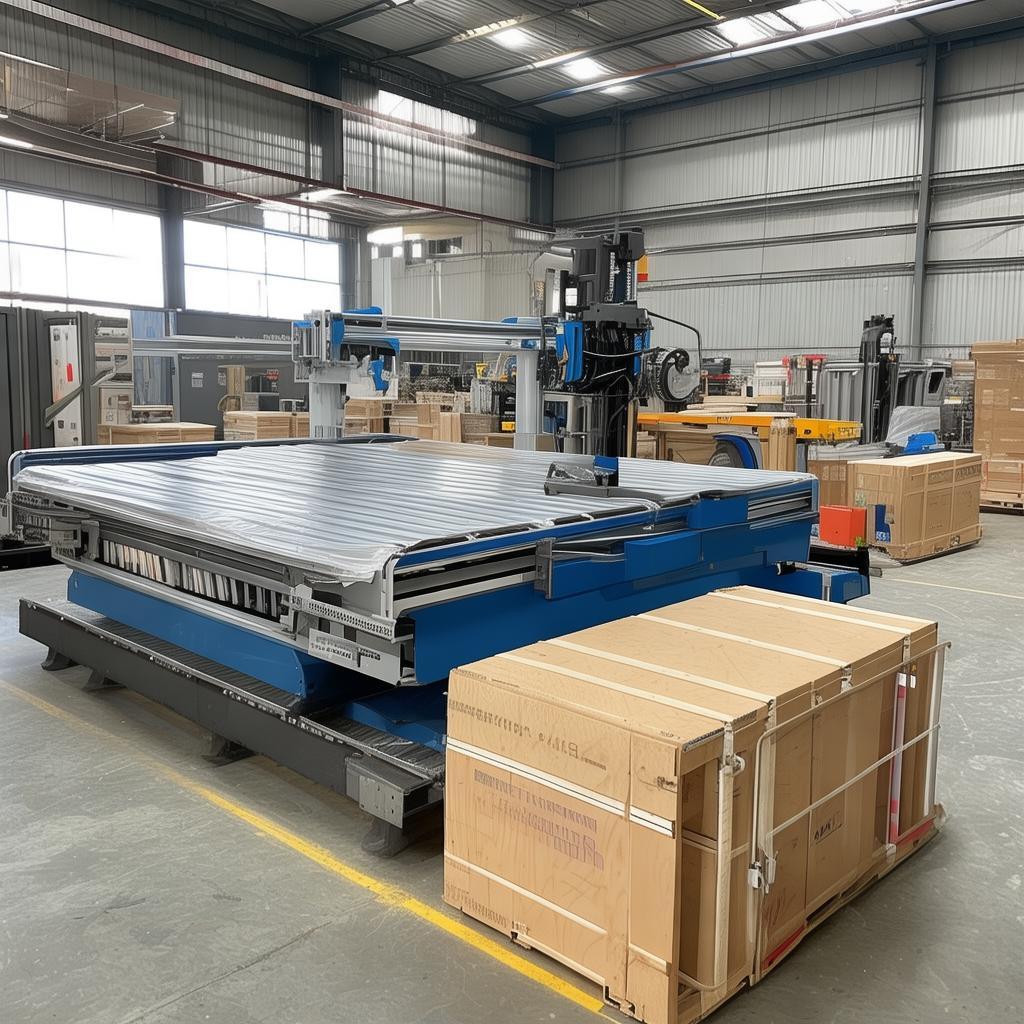
CNC router for sheet cutting
Product Overview
A CNC router for sheet cutting is a computer-controlled cutting system built for fast, repeatable part production from flat materials—ideal for manufacturers that need accurate nesting, clean edges, and efficient batch throughput. In industrial fabrication, this kind of CNC router supports applications such as foam, plywood, composite sheets, acrylic, and a wide range of engineered boards, turning CAD/CAM designs into consistent, production-ready components. If your team handles quoting, job planning, and shop-floor execution, a sheet-cutting router helps reduce manual layout work, improve dimensional consistency, and streamline changeovers.
Key Features
- Production-grade repeatability: standardized toolpaths and programmed processes help deliver consistent dimensions across runs, reducing rework and scrap.
- Efficient sheet nesting: optimized layout handling improves material utilization and helps lower cost per part for mixed-size batches.
- Clean, controlled cutting: stable cutting moves and appropriate process parameters support smoother edges and predictable kerf behavior.
- Workflow integration for engineers: CAD/CAM data preparation and job-ready program execution shorten the path from design to production.
- Quicker changeovers: swapping jobs is primarily a programming/task update rather than extensive manual setup.
- Scalable for job shops and distributors: designed to support both prototyping cycles and repeat production environments.
- Shop-floor reliability focus: practical build choices help maintain stable operation during continuous production schedules.
Technical Specifications
| Parameter | Specification |
|---|---|
| Cutting working area | Configurable to match sheet size requirements |
| Spindle / cutting head | Selected based on material, tooling, and finish targets |
| Positioning accuracy (setup dependent) | Designed for stable, repeatable part geometry |
| Drive system | Precision motion control for consistent toolpaths |
| Controller & software workflow | Program execution from standard CAM formats (configuration dependent) |
| Material handling | Designed for flat-sheet production and nesting workflows |
| Dust control considerations | Integrated approach recommended based on material type |
| Power & integration | Configured for your facility and production requirements |
Application Scenarios
- Furniture & cabinet fabrication: cut and route panel components from boards with repeatable geometry for large production batches.
- Signage and display systems: produce consistent cutouts and mounting parts from acrylic and composite sheets for retail installs.
- Packaging & protective inserts: nest repeat shapes to improve material usage and meet tight turnaround deadlines.
- Prototype-to-production transitions: reduce manual rework by reusing CAD/CAM programs and refining toolpaths for production runs.
- Industrial panel component manufacturing: handle batch orders where accurate part-to-part consistency matters more than one-off craftsmanship.
Advantages
Choosing a purpose-built CNC router for sheet cutting rather than a generic desktop or light-duty engraving setup can significantly improve process stability and throughput. This type of CNC system is designed around the realities of flat-material production—repeatable positioning, consistent program execution, and nesting workflows that production teams rely on for predictable outputs.
- Better alignment with CAD/CAM-driven manufacturing for smoother handoff from engineering to production.
- Improved material utilization through part nesting strategies suited to sheet processing.
- More reliable execution across multi-part batches, helping reduce scrap and rework costs.
- A production-oriented approach to toolpath stability and repeatability for consistent edge quality.
If you’re evaluating options, it’s often the difference between “cutting a file” and running a dependable sheet-processing operation that meets delivery commitments.
Why Choose Us
We support buyers with a procurement-focused approach: clear configuration guidance, practical workflow considerations, and documentation that helps you plan installation and production ramp-up. Our team works with distributors and manufacturers to align machine capability with material requirements and shop constraints.
- Transparent sales support that clarifies the right configuration for your sheet sizes and materials.
- Responsiveness during quotation and pre-install planning to minimize surprises on the shop floor.
- Practical guidance for optimizing cutting workflow, tooling selection, and program readiness for your jobs.
- Service-minded mindset focused on keeping production moving and reducing downtime risk.
FAQ
1) What materials can this sheet-cutting CNC router handle?
It’s commonly used for flat-sheet materials such as engineered boards, composites, and other fabrication-grade sheet goods; tooling and cutting parameters should be matched to your specific material and thickness.
2) Do we need special CAD/CAM software to run jobs?
You’ll typically use standard CAM workflows to generate toolpaths. We can discuss your current process and help align file formats and job preparation practices to your production needs.
3) How do we choose the right setup for our sheet size?
We recommend mapping your maximum sheet dimensions and typical part nesting strategy, then configuring the working area and workflow to reduce material waste and reduce handling time.
4) Will the CNC router for sheet cutting replace manual cutting entirely?
For many production workflows, yes—especially for repeatable parts and multi-up nesting. Some shops keep manual steps for trimming or special operations, but the routing/contouring workflow typically becomes the core production method.
5) What should we consider for dust control and shop safety?
Because dust requirements vary by material, we advise selecting an appropriate extraction approach and integrating it into your cutting workflow for safer operation and consistent visibility.
Want a configuration that fits your sheet sizes, materials, and production targets? Send us your typical part drawings, material list, and target throughput, and we’ll provide a quotation and recommended setup for your CNC cutting operation.