
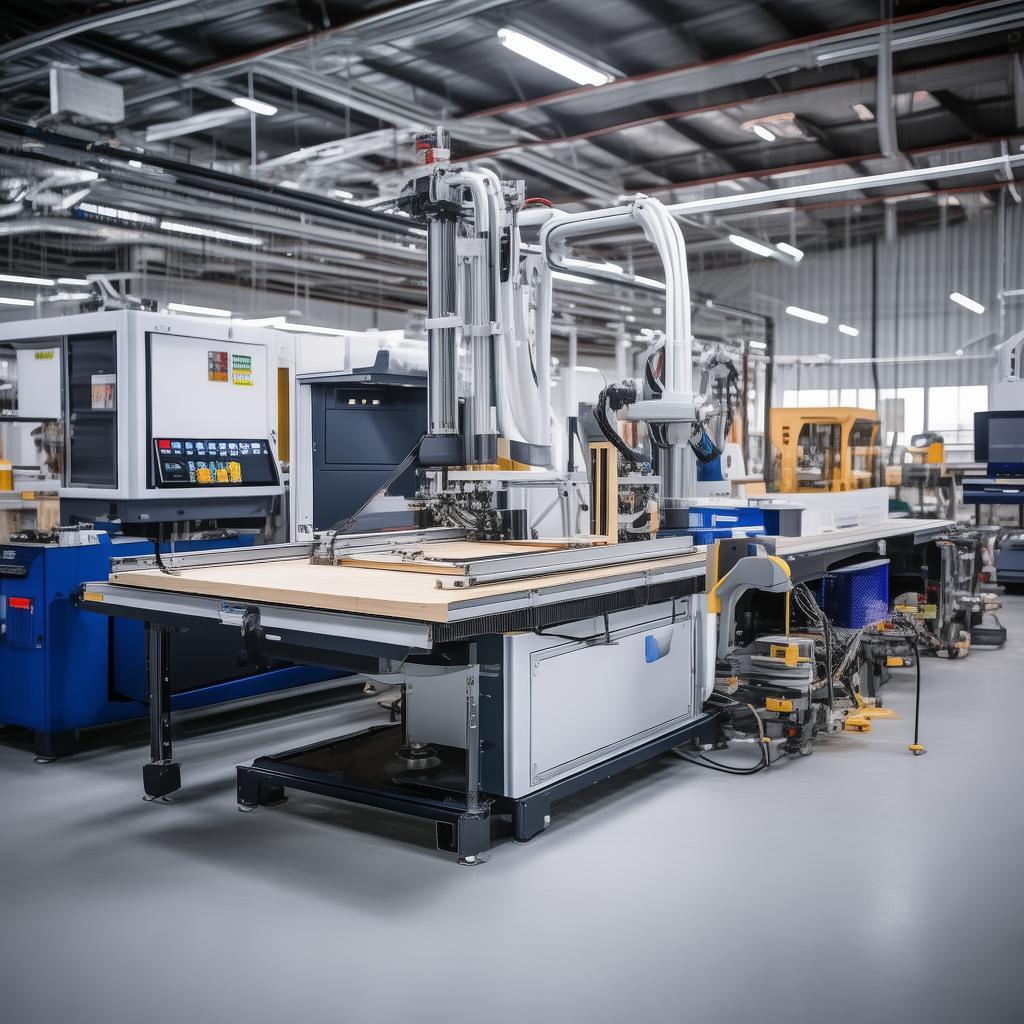
CNC router machine for wood
Product Overview
A CNC router machine for wood is a computer-controlled cutting system used in the woodworking and furniture manufacturing industry to machine panels and parts with high repeatability. By translating CAD/CAM designs into precise toolpaths, it automates production of cabinets, signage components, doors, frames, and decorative elements. For procurement managers and production engineers, the value typically comes from stable dimensional accuracy, lower scrap, faster job changeovers, and dependable throughput across typical wood processing workflows.
Key Features
- Production consistency for complex parts: Motion control helps maintain repeatability across runs, supporting batch production and multi-design schedules.
- Efficient CAD/CAM workflow: CAD/CAM-to-machine output reduces manual setup, supporting faster quoting and smoother engineering handoff.
- Toolpath-ready cutting for wood materials: Designed for common woodworking panel and sheet applications where clean edges and controlled routing matter.
- Reduced scrap and rework: Stable positioning and controlled cutting conditions help minimize dimensional drift and misalignment issues.
- Operational flexibility: Suitable for both production batches and job-shop work, including nesting layouts and customized parts.
- Safer, cleaner shop integration: Predictable operation supports standardized processes, reducing ad-hoc adjustments during production.
- Maintainable design approach: Built for everyday manufacturing environments where serviceability and long-term uptime are key procurement criteria.
Technical Specifications
| Parameter | Specification |
|---|---|
| Control system | CNC controller supporting standard G-code/CAM outputs (project configuration dependent) |
| Spindle & drive | Wood-cutting oriented spindle/drive package (selected to match tooling and material) |
| Working area | Configurable based on production needs and nesting strategy |
| Repeatability approach | Engineered to maintain stable positioning for consistent routing and profiles |
| Interface | USB/Ethernet-ready workflow options (model and configuration dependent) |
| Dust & chip handling compatibility | Designed for integration with shop extraction for wood chips and dust |
| Power requirements | Set per regional electrical standards and machine configuration |
Note: Exact figures (working envelope, spindle power, supported formats, and electrical configuration) can be tailored to your material thickness, tooling, and production targets.
Application Scenarios
- Furniture component machining: router-cut panel parts and profiles for consistent assembly-ready pieces.
- Custom signage & decorative panels: repeatable routing paths for clean edges and detailed outlines.
- Cabinet and door frames: automated cutting programs that reduce manual marking and drilling errors.
- Batch production with nesting: maximize sheet utilization while maintaining stable part-to-part quality.
- Small-batch job shop work: faster switching between designs without sacrificing geometry control.
Advantages
Compared with generic woodworking CNC systems or ad-hoc “router conversion” approaches, this wood machining configuration is built around stable production workflows: predictable toolpaths, practical integration for extraction and shop handling, and a procurement-friendly design mindset focused on uptime and maintainability. When you’re producing cabinets, frames, and panel components, the goal is not just cutting—it’s repeatability across shifting orders, materials, and thicknesses.
- Better job-to-job consistency for patterned or nested work, reducing downstream rework.
- More efficient CAD/CAM-driven manufacturing, shortening the time from design to production-ready parts.
- Manufacturing-oriented integration to support extraction and standard shop procedures.
- A configurable platform approach so your machine setup can match the tooling and material mix you actually run.
Why Choose Us
We support B2B buyers with a focus on practical deployment: configuration guidance aligned to your material types, assistance with production workflow planning, and responsive after-sales support for maintaining throughput. For customers purchasing a CNC router machine for wood, our team prioritizes clear communication on scope, options, and integration so your project stays predictable from order to commissioning.
- Procurement clarity: transparent configuration options and documented machine setup details.
- Deployment support: guidance to help your team ramp up with less downtime.
- Ongoing service mindset: focus on long-term uptime through maintainable design and support communication.
- Global readiness: packaging and logistics coordination tailored to international delivery requirements.
FAQ
Q: What materials can this CNC router handle for woodworking?
A: It’s intended for common wood-based boards and panel applications. For best results, we recommend matching tooling, spindle setup, and cutting parameters to your specific material thickness and grain structure.
Q: Do I need to replace my CAM workflow?
A: Most shops can continue using standard CAD/CAM processes that output CNC-friendly toolpaths (e.g., typical G-code workflows). We can help validate format compatibility and recommended settings for your products.
Q: How do I choose the correct working area for our production?
A: Selection is driven by your largest board size, part dimensions, and nesting strategy. Share your typical cut list and sheet sizes so we can propose an envelope that reduces rework and maximizes utilization.
Q: What integration is needed for dust and chip removal?
A: The system is designed to support shop extraction practices. We can advise on practical integration steps so your shop layout and airflow approach align with consistent cutting and cleaner working conditions.
Q: Is this suitable for both small runs and batch production?
A: Yes. A CNC wood router workflow is effective for job-shop customization and also benefits batch schedules through repeatable programs and efficient nesting.
If you’re evaluating a CNC router machine for wood for your next production line, tell us your typical materials, part sizes, and annual volume—we’ll provide a tailored quotation and configuration recommendation to match your throughput goals and shop constraints.