
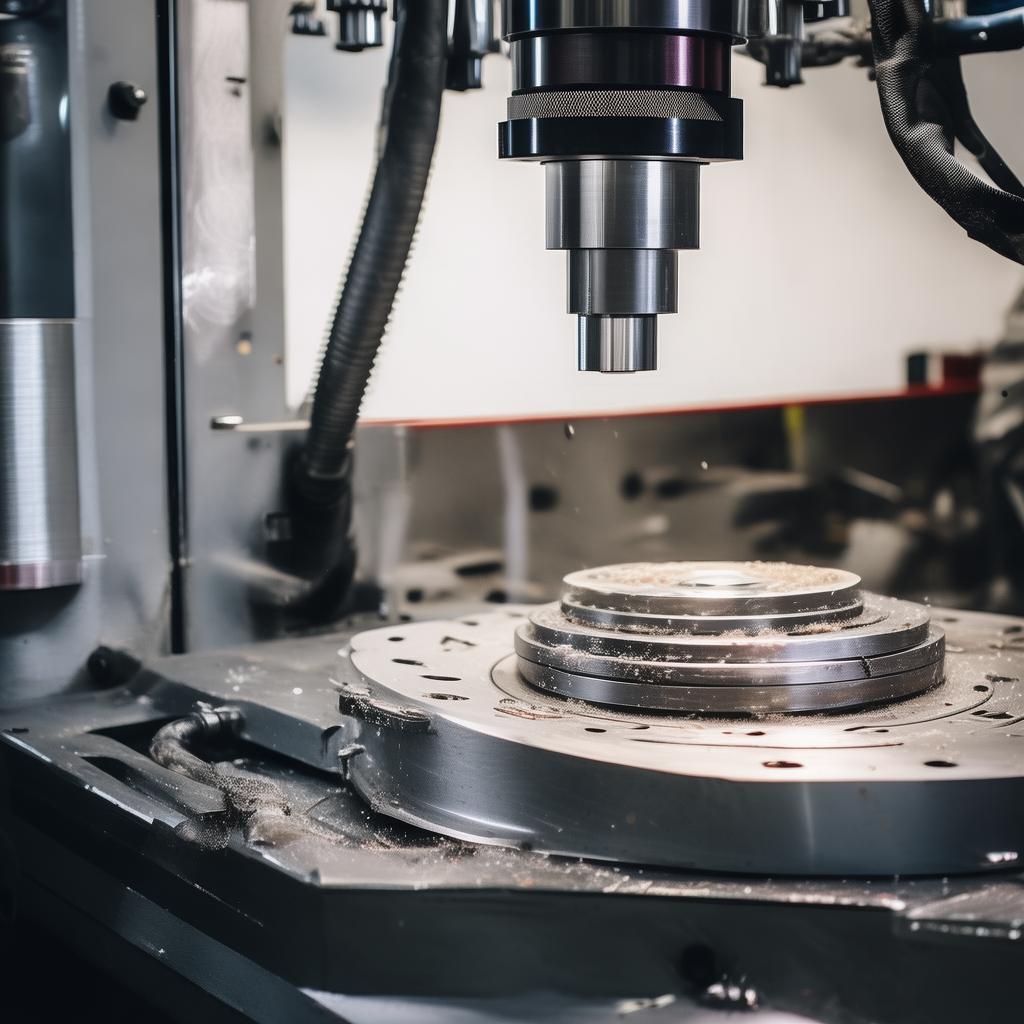
CNC router rotary table
CNC Router Rotary Table for High-Precision Multi-Side Machining
A CNC router rotary table is an industrial automation accessory that indexes and rotates workpieces to enable consistent, multi-side engraving and routing without manual re-fixturing. Common in woodworking, signage, stone/coated composite, and light industrial parts production, it improves accuracy for cylindrical, polygonal, and complex profiles—supporting repeatable results on production runs. Built for shop-floor workflows where uptime matters, a quality rotary axis helps you expand capability from single-face operations to full-form machining with controlled positioning and stable clamping.
Key Features
- Indexing repeatability that keeps geometry consistent across multiple sides—ideal for production engraving, routing, and panel detailing.
- Stable workholding and rotation to reduce chatter and movement, improving surface quality on delicate materials.
- Programmable rotary positioning so operators can machine stepped features, chamfers, or patterned surfaces with less setup time.
- Compatibility with CNC router workflows for straightforward integration into existing CAM processes and tooling routines.
- Efficient loading/unloading that supports batch processing and faster throughput for distributors and contract shops.
- Service-friendly design considerations to help reduce downtime during long-running operations (depending on configuration).
- Built for reliable shop operation to handle frequent cycles, enabling dependable multi-side machining with a consistent setup.
Technical Specifications
| Parameter | Specification |
|---|---|
| Rotary axis type | Indexing rotary table for CNC router multi-face machining |
| Position control | Programmable indexing with repeatable angular positioning |
| Workpiece mounting | Clamping/fixture-based mounting options (configuration-dependent) |
| Suitable applications | Wood, MDF/plywood, acrylic, composite panels, soft metals and similar materials (depending on setup) |
| Integration | Designed for CNC router spindle/cutting operations with compatible control interfaces |
| Indexing workflow | Multi-step CAM paths for successive angles and surfaces |
| Typical production use | Signs, nameplates, cylindrical/profile engraving, repeatable batch routing |
| Maintenance approach | Built for ongoing shop use with routine inspection/cleaning guidance |
Application Scenarios
- Rotary engraving of cylindrical handles or dowels where each side must match within a repeatable production tolerance.
- Multi-face signage routing on wood or composite panels without re-fixturing between angles.
- Carved architectural accents on hexagonal or polygon profiles with consistent edge detail.
- Decorative trims and patterned components requiring step-by-step indexing and controlled tool paths.
- Light industrial prototyping of symmetrical parts that benefit from full-form machining on a single workflow.
Advantages
Compared with generic indexing add-ons or ad-hoc setups, this CNC router rotary table option is built to support a controlled, repeatable machining workflow. The result is less time spent on re-fixturing, fewer alignment errors across angles, and smoother process planning for engineers and CAM programmers.
- More consistent geometry across multiple faces, reducing scrap and rework during production runs.
- Improved setup efficiency for batch jobs—helping operations maintain planned throughput.
- Better usability for operators through standardized indexing and repeatable mounting practices.
- A more scalable solution when expanding from single-side operations to full-form routing.
Why Choose Us
We support international trade and manufacturing buyers with practical purchasing guidance and an emphasis on dependable integration. Our team focuses on helping you select the right rotary configuration for your CNC router, tooling style, and material mix—so you can deploy quickly and avoid costly trial-and-error.
- Procurement-ready communication: clear documentation, straightforward commercial handling, and responsive pre-sales support.
- Application alignment: we help match mounting approach and indexing workflow to your parts and production targets.
- Operational reliability mindset: guidance aimed at reducing downtime in real shop conditions.
- Flexible sourcing for distributors: support for consolidating orders and planning replacements/expansions.
If you’re specifying a particular CNC router model or controller interface, share it and we’ll recommend the best-fit rotary table approach.
FAQ
Q1: Will this work with my existing CNC router?
In most cases, a rotary indexing table can integrate into standard CNC router workflows, but compatibility depends on your controller interface and mechanical mounting plan. Share your router model and we’ll confirm fit.
Q2: How does a CNC router rotary table improve multi-side machining?
It rotates the workpiece to preset angles so you can machine each face in sequence, maintaining consistent reference orientation and reducing manual re-fixturing.
Q3: What kinds of parts are best suited for rotary indexing?
Cylindrical, polygonal, and symmetrical profiles—especially for engraving, decorative routing, and batch components where repeatability across sides is critical.
Q4: Do I need special CAM programming?
CAM typically supports rotary workflows through angle-based toolpaths. We can help outline a practical indexing approach based on your part geometry and machining strategy.
Q5: What should I consider for workholding and material types?
Choose a clamping/fixture method that prevents slip during cutting and supports your material stiffness. For softer materials, stable fixturing helps reduce vibration and improves edge finish.
Ready to expand your router’s capability from single-face operations to controlled multi-angle production? Contact us for a quotation request and we’ll help you select the right CNC router rotary table configuration for your parts, tooling, and throughput targets.