
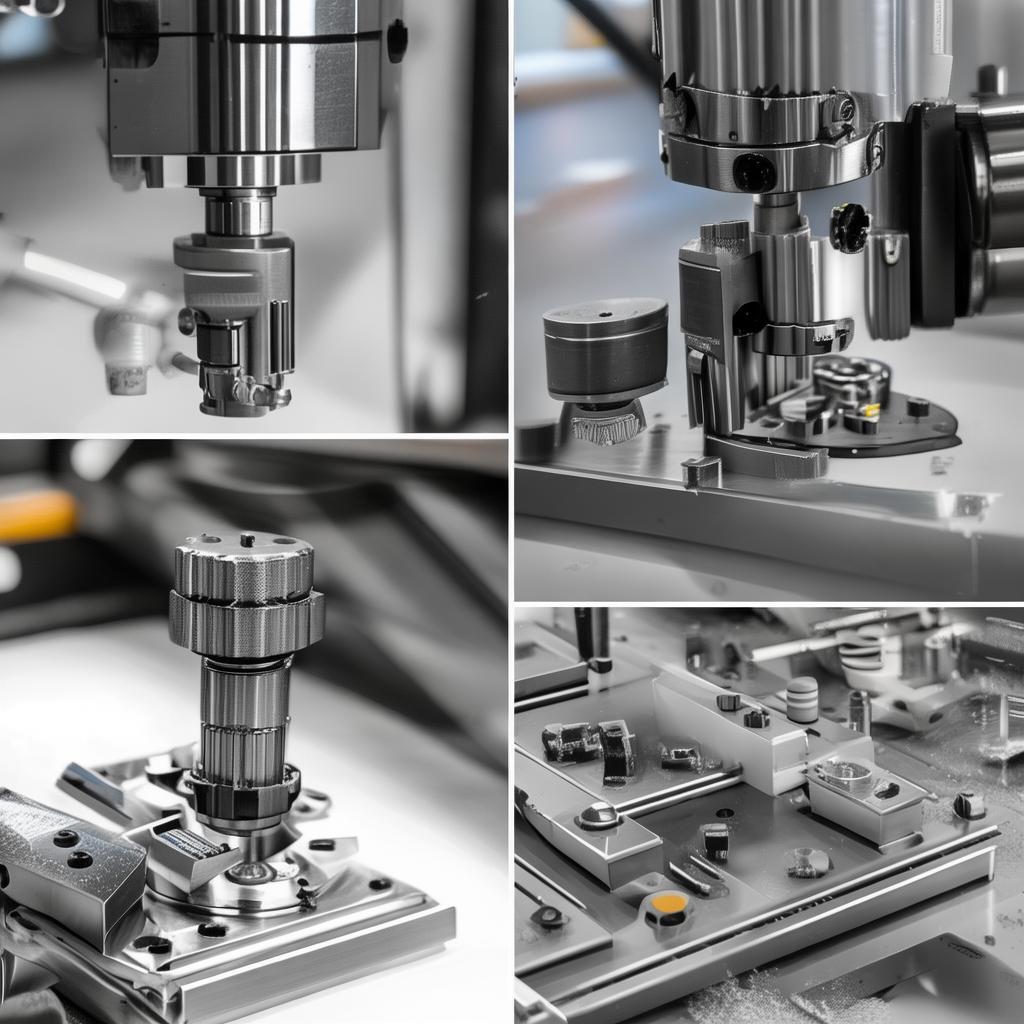
CNC router with ATC
Product Overview - High-Precision CNC Router with ATC for Wood, Composite & Panel Fabrication
A CNC router with ATC (Automatic Tool Changer) is built for industrial machining where parts must be routed, drilled, and finished with minimal manual intervention. This category of CNC router with ATC is widely used in the woodworking and panel processing industry—from cabinets and interior components to signage and architectural elements—where consistent toolpaths, repeatable quality, and short production cycles matter. With an integrated ATC, the machine can switch tools automatically for engraving, profiling, boring, and edge-ready finishing, supporting both production runs and custom jobs.
If you’re sourcing equipment for a cabinet shop, furniture manufacturer, or composite/panel fabricator, this solution helps streamline setup, improve job-to-job consistency, and reduce labor bottlenecks—so production stays on schedule even when work orders change.
Key Features
- Automatic tool changes for faster cycle times—route, drill, and finish without stopping the job to swap bits.
- Stable machining for repeatable part quality—supports consistent dimensions across cabinet components, panels, and routed details.
- Reduced operator workload—standardize workflows for recurring products while still enabling custom variations.
- Better throughput for multi-step designs—handles complex CNC programs more efficiently by combining operations into one workflow.
- Tooling flexibility—supports common router, engraving, boring, and trimming strategies used in panel and woodworking applications.
- Production-ready workflow—designed to support job shops and manufacturers that must balance speed, accuracy, and dependable uptime.
- Clean integration of automation—the ATC reduces manual handling and helps keep machining steps aligned with the CAM program.
Technical Specifications
| Parameter | Specification |
|---|---|
| Machine type | Industrial CNC router with automatic tool changer (ATC) |
| Control system | Programmable CNC control for CAM-driven machining workflows |
| Spindle (general) | High-speed routing spindle suitable for woodworking and panel tools |
| ATC capability | Automatic tool changing sequence to support multi-operation parts |
| Operating axes | Multi-axis CNC routing for profiling, pocketing, drilling and engraving operations |
| Vacuum/fixture compatibility | Designed for common fixturing approaches used in panel production |
| Tooling interface | Supports standard router tool sets and automated tool management (per configuration) |
| Typical industries | Cabinet manufacturing, woodworking, panel fabrication, signage, interior elements |
Note: Exact spindle power, ATC capacity, and working envelope can vary by configuration. Share your material types and part sizes to receive an accuracy-matched proposal.
Application Scenarios
- Cabinet & furniture components: Automate routing, boring, and engraving steps in a single CAM program for consistent repeat runs.
- Architectural panel fabrication: Produce trim profiles and detailed inlays with controlled tool changes to minimize rework.
- Custom signage and branding: Switch between cutting/engraving tools automatically to speed up short-batch orders.
- Composite board and laminates: Execute multi-step patterns efficiently while maintaining stable workflow from start to finish.
Advantages
Compared with a generic single-tool CNC router or manual tool-change systems, a CNC routing platform with an automatic tool changer reduces downtime and helps keep machining operations aligned with the CAM plan. Instead of pausing for bit swaps and operator intervention, the machine can progress through multi-operation jobs more continuously—especially beneficial for panel products that require routing plus drilling or engraving.
- Lower time lost to tool changes for complex parts with multiple tool diameters.
- Higher consistency by executing the same tool sequence across runs.
- Better scalability when order volume increases or job mix changes between standard and custom designs.
- Improved shop-floor planning—operators can focus on loading/unloading and verification rather than frequent retooling.
- More capable job costing—tool sequences and process steps can be standardized in CAM.
Why Choose Us
We support distributors and manufacturers with a procurement-focused approach: clear configuration options, practical guidance on tooling and CAM integration, and responsive communication for international projects. Our goal is to help you select the right automation level and machine setup for your materials and throughput targets—so the investment performs reliably after installation.
- Configuration guidance aligned to panel sizes, nesting strategy, and tool plans.
- Export-ready logistics support to streamline cross-border procurement.
- Application-oriented pre-sales communication for fewer surprises during rollout.
- After-sales responsiveness focused on minimizing downtime and helping your team get productive quickly.
If you share your working envelope, ATC tooling preferences, and target materials (MDF, plywood, HPL, solid wood, composites, etc.), we can recommend the most suitable configuration of the CNC routing system with automatic tool changing.
FAQ
1) What makes a CNC router with ATC different from a standard router?
An ATC automatically switches tools during a job, enabling multi-operation machining (routing, boring, engraving) with less downtime and fewer manual interventions.
2) Is this suitable for both mass production and custom work?
Yes. Multi-step tool paths benefit from automation in both high-volume runs and short-batch/custom orders where jobs change frequently.
3) What should we consider for tooling and CAM planning?
Plan tool lists, tool diameters, machining order, and clearances in your CAM program so the ATC tool sequence matches your process and minimizes unnecessary changes.
4) Can the machine handle typical woodworking and panel materials?
It’s designed for routing workflows commonly used in woodworking and panel fabrication. For best results, confirm feeds/speeds and tooling recommendations for your specific laminate/composite or board.
5) How do we choose the right configuration of an ATC-equipped router?
Start with your part sizes, required operations, and tooling needs (router tools, engraving tools, boring bits). We’ll help match those requirements to a configuration that supports your production goals.
Ready to evaluate a CNC router with ATC for your panel or woodworking workflow? Send your material types, maximum part dimensions, and target operations—we’ll reply with a configuration proposal and a quotation tailored to your production needs.