
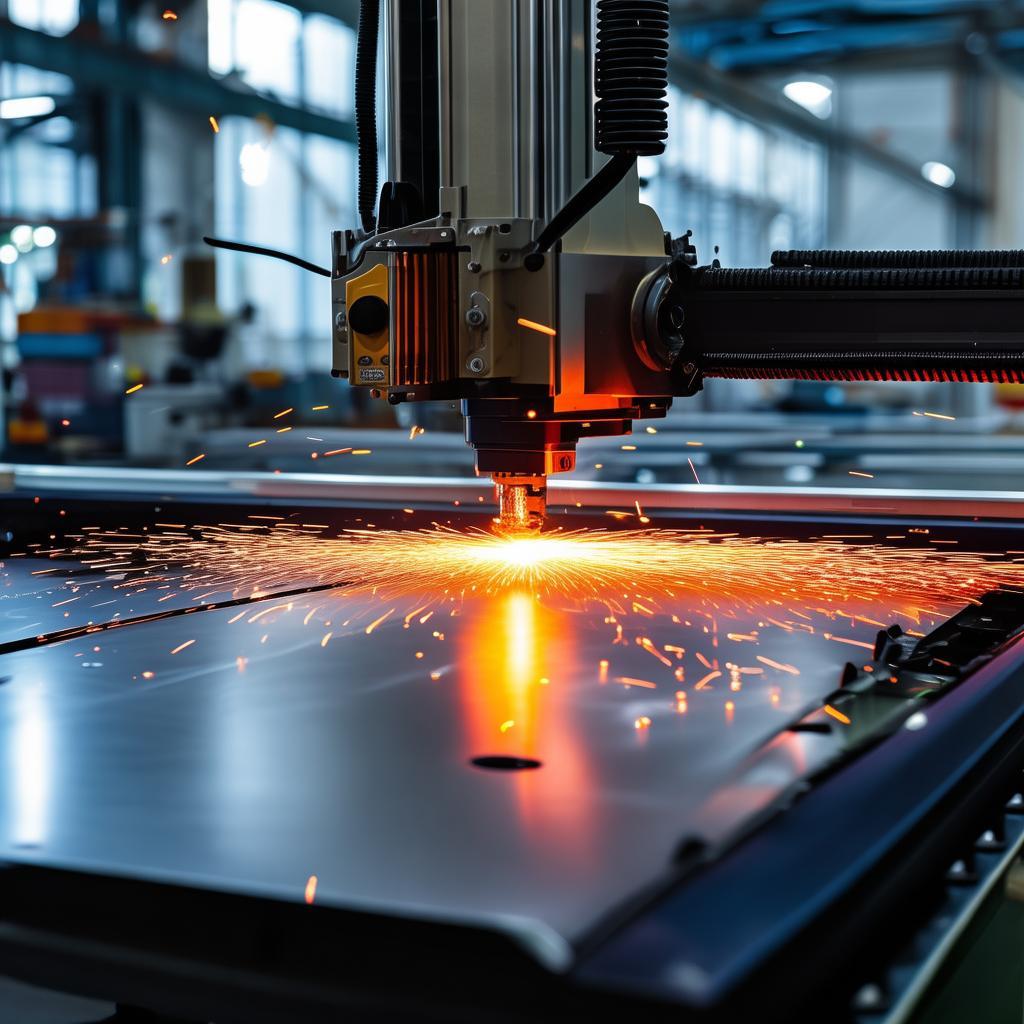
CNC router with homing sensor
Product Overview
Built for the woodworking and sign-making industry, this CNC router with homing sensor delivers repeatable, production-ready positioning for cutting, routing, and engraving tasks on wood, MDF, plastics, and composite panels. Its core function is to establish a reliable machine “home” position at startup and during controlled cycles, reducing setup time and improving consistency across batches—exactly what buyers look for when uptime and dimensional accuracy drive daily throughput.
Key Features
- Automatic reference return that helps the router re-establish its coordinate origin after power cycles or job changes.
- More consistent machining results thanks to improved repeatability for multi-part and multi-day production runs.
- Faster job setup for shop-floor operators—reduce manual jogging and repeated measurement during repeat orders.
- Production-focused workflow designed to support sign panels, furniture components, and custom decor lines where turnaround matters.
- Support for standard controller-driven cycles so programmers can integrate homing routines into existing workflows.
- Helps reduce scrap risk by lowering the chance of off-origin starts when running nested parts or revised templates.
- Stable operating behavior for repeatable routing depth and engraving placement across similar material batches.
Technical Specifications
| Parameter | Specification |
|---|---|
| Homing sensor | Reference/limit homing sensor for repeatable origin establishment |
| Primary industry use | Woodworking, signage, panel routing, engraving |
| Core function | Controlled machine homing to support reliable job coordinates |
| Typical material compatibility | Wood, MDF, plywood, plastics, composites (subject to tooling and spindle selection) |
| Operational benefit | Reduced risk of off-origin starting and faster repeat setups |
| Controller integration | Designed for standard CNC control routines (homing/reference return cycle) |
Application Scenarios
- Signage production: return-to-zero repeatability for multi-color text placement and nested cut layouts.
- Furniture and panel parts: consistent coordinate origin between setups for repeat jobs across days.
- Engraving and decorative inlays: predictable positioning when swapping templates and materials quickly.
- Job-shop batching: smoother transitions between customer orders without excessive manual verification.
Advantages
Compared with generic routing machines that rely on manual referencing, this CNC router platform is built around dependable origin routines. The added homing sensor strategy supports repeatable start positions, which is particularly valuable for sign-makers and woodworking shops running frequent changeovers, power interruptions, or long job schedules. You get a workflow that helps reduce “where did it start?” checks, improves repeat-order consistency, and supports smoother nesting and multi-part production—without requiring operators to memorize complex setup steps.
If your team runs multiple batches over time, this approach can be the difference between production pace and avoidable rework—because the machine can reliably establish its reference before machining begins. In practical terms, the homing routine helps protect coordinate accuracy when the shop demands consistency.
Why Choose Us
We supply CNC equipment for international trade and manufacturing partners with a procurement-first mindset: clear documentation, responsive pre-sales consultation, and a focus on configuration fit for your materials and production targets. Our team helps distributors and end users align the router configuration, control approach, and homing/reference behavior with real shop-floor needs.
- Supply and sourcing support for consistent build quality across shipments.
- Pre-sales guidance to match machine setup to your routing/engraving workflow.
- Straightforward communication so you can confirm requirements before purchase.
- After-sales assistance aimed at minimizing downtime and accelerating commissioning.
FAQ
1) What does a homing sensor do on a CNC router?
It helps the machine return to a known reference point (home/origin), so CNC coordinates start from a consistent position for each job and after interruptions.
2) Will this improve accuracy for repeated sign or panel orders?
It can. By establishing a consistent starting coordinate, a CNC router with homing sensor supports repeatable placements and reduces the need for manual re-verification when running similar layouts.
3) Is it suitable for power cycles and daily batch operations?
Yes. Homing/reference return routines help the router re-establish origin after a controlled restart, supporting production schedules that include pausing and resuming.
4) How does this affect CAM programming and workflow?
CAM outputs can remain consistent when the controller’s homing/reference return is used as the standard start procedure. Many teams simply incorporate the routine into their normal job start cycle.
5) What should we confirm before ordering?
Confirm your working area needs, material types, tooling/spindle plan, and how you intend to run homing/reference return (startup procedure, start-of-job cycle, and operator process).
Ready to streamline repeat setups and protect coordinate accuracy? Send us your application details (materials, job sizes, and expected production workflow) and request a quotation—our team can help you confirm the right configuration for your shop.