
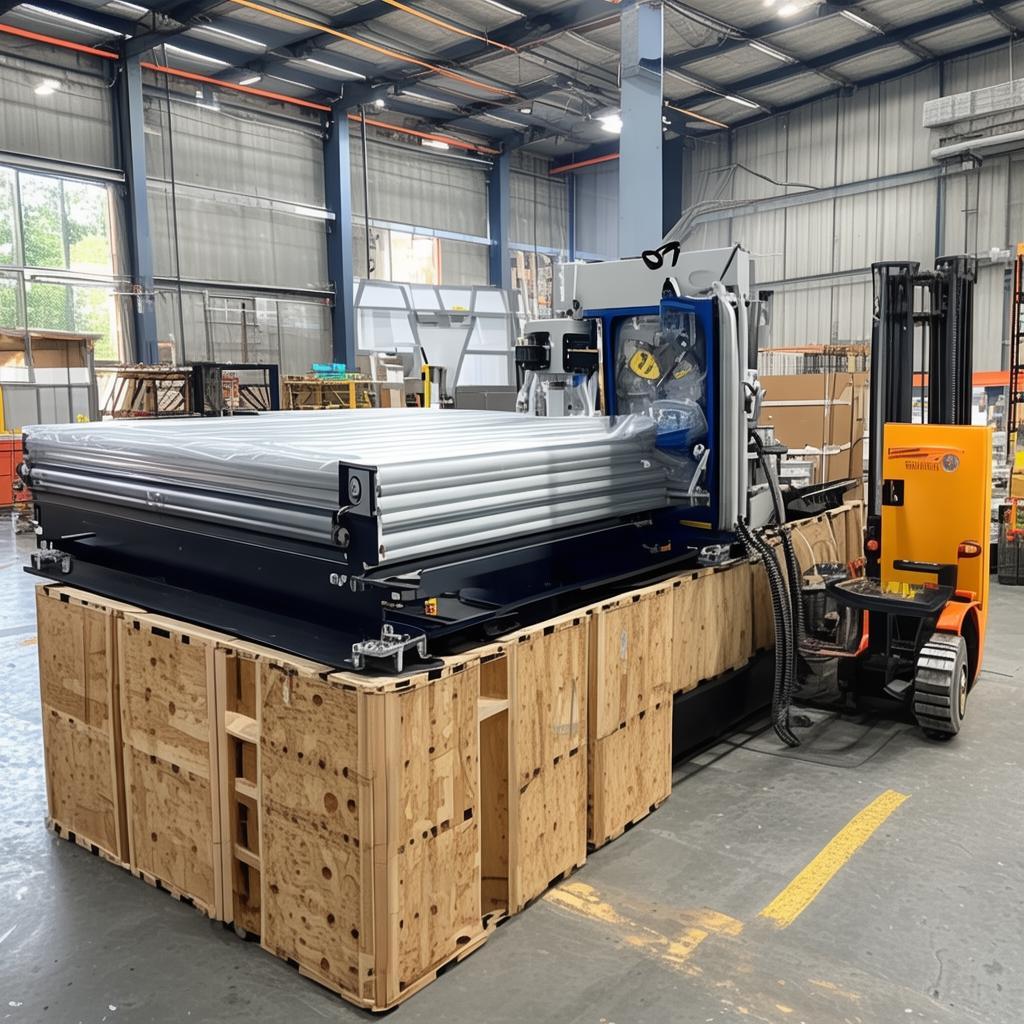
CNC router with rotary axis
CNC Router with Rotary Axis for Precision 3D Woodworking and Cylindrical Machining
A CNC router with rotary axis is designed for shops that need more than flat-panel cutting. By adding a rotating fourth axis, it enables continuous machining of round, curved, and multi-sided workpieces with reliable repeatability. This makes it a practical choice for furniture makers, sign manufacturers, custom millwork shops, and industrial wood product producers that want to expand capability without moving to a more complex machining center.
For buyers comparing automated woodworking equipment, this type of machine delivers a strong balance of versatility, productivity, and part consistency. It supports engraving, contouring, drilling, relief carving, and profile processing on cylinders, balusters, table legs, columns, molds, and other rotational parts. If your production includes both sheet materials and shaped components, a CNC router with rotary axis can help consolidate operations and reduce manual repositioning.
Key Features
- Supports cylindrical and 3D workpieces, helping you machine round parts in a single setup.
- Improves repeatability for batch production, especially when part geometry must stay consistent.
- Reduces manual clamping and repositioning, saving operator time and lowering setup errors.
- Handles engraving, milling, carving, drilling, and contour cutting on one versatile platform.
- Helps workshops expand into higher-value custom work, including decorative and architectural pieces.
- Compatible with common CAD/CAM workflows, making programming more accessible for production teams.
- Built for efficient daily use in commercial woodworking environments where uptime matters.
Technical Specifications
| Parameter | Specification |
|---|---|
| Machine Type | CNC router with rotary axis |
| Rotary Axis Function | 4th-axis rotation for cylindrical and multi-sided machining |
| Workpiece Types | Wood, engineered wood, foam, plastic, and similar machinable materials |
| Processing Modes | Engraving, carving, contouring, drilling, profiling, and relief machining |
| Control System | Industrial CNC controller compatible with standard programming workflows |
| Drive System | Precision motor-driven motion system for coordinated axis control |
| Table Configuration | Flat bed with rotary fixture support |
| Customization | Available for different working sizes, spindle options, and rotary attachment layouts |
Application Scenarios
- Furniture components: ideal for table legs, chair posts, and decorative curves that require consistent rotational machining.
- Architectural woodwork: suited for columns, balusters, and ornamental elements used in interior and exterior projects.
- Sign making: useful for rounded sign posts, carved display pieces, and custom 3D lettering work.
- Mold and pattern production: helps fabricate repeatable wooden or foam forms for downstream manufacturing.
- Custom workshop production: supports one-off designs and small batch jobs that change frequently.
Advantages
Compared with a standard 3-axis router, a CNC router with rotary axis gives manufacturers a much broader machining envelope for shaped parts. Instead of splitting a job into multiple setups, operators can complete complex cylindrical or curved features in a more controlled process. That means fewer alignment issues, lower dependence on manual skill, and better consistency across repeated orders.
It also helps reduce outsourcing for specialized turning and carving work. For businesses handling mixed production, the machine provides flexibility: it can support both conventional sheet processing and rotary machining, making it easier to respond to custom orders, short runs, and changing customer requirements.
For procurement teams, the key value is operational efficiency. A well-configured CNC router with rotary axis can simplify workflow planning, improve part quality, and create room for new product lines without needing multiple dedicated machines for every task.
Why Choose Us
We support industrial buyers, distributors, and workshop owners who need dependable equipment and clear communication throughout the sourcing process. Our approach focuses on practical machine configuration, responsive pre-sales consultation, and export-ready packing to support international delivery.
We understand that B2B buyers want more than a product listing. You need a supplier who can explain machine options, match specifications to your application, and support customization when your production requirements change. Whether you are comparing equipment for a new line or replacing an existing setup, we can help you evaluate the right rotary solution for your workflow.
If needed, we can also assist with specification confirmation, model selection, and quotation preparation to streamline your purchasing decision.
FAQ
1. What is the main benefit of adding a rotary axis?
It allows the machine to process round and cylindrical parts in a controlled way, reducing repositioning and expanding the range of parts you can produce.
2. Is this machine only for woodworking?
Woodworking is the primary use, but it can also be used for foam, plastics, and other compatible materials depending on the configuration.
3. Can it handle both flat panels and rotary parts?
Yes, many workshops use it for standard router tasks as well as cylindrical machining, making it a versatile production asset.
4. What kinds of products are commonly made on it?
Common products include table legs, stair components, columns, balusters, decorative carvings, molds, and custom sign elements.
5. Do you offer customization for different production needs?
Yes, machine size, spindle configuration, and rotary setup can often be adapted to match your material, part size, and workflow requirements.
If you are comparing options for your next project, contact us for a tailored quotation or technical recommendation. We can help you evaluate the right configuration for your application and production goals.