
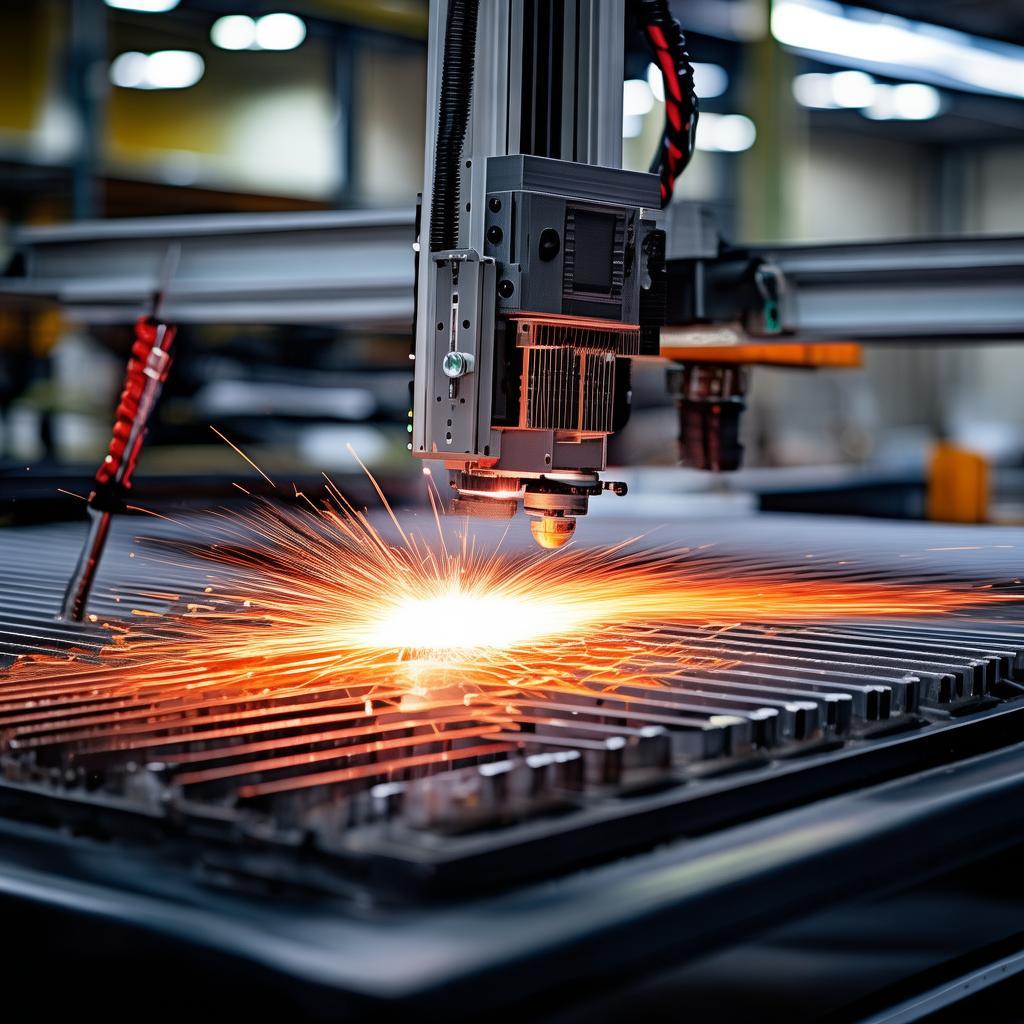
commercial CNC router machine
Product Overview
A commercial CNC router machine is a production-focused CNC tool designed to automate cutting, routing, engraving, and profiling across common manufacturing materials. Built for repeatability and day-to-day uptime, it’s commonly adopted in woodworking, signmaking, and light industrial fabrication where batches must be consistent, setups must be efficient, and operator time must be minimized. Whether you’re producing cabinet parts, decorative panels, or routed letters, this type of CNC system helps convert CAD/CAM files into accurate, scalable output.
This page outlines the business-ready capabilities buyers look for when sourcing a router for commercial production environments—workflow stability, tooling convenience, and support-friendly performance.
Key Features
- Production-grade repeatability for consistent part geometry across daily runs, reducing rework and scrap.
- CAD/CAM-to-production workflow that shortens the path from design to finished panels, signs, and components.
- Efficient routing and engraving suited for both small-detail work and larger surface machining.
- Stable motion control to improve edge quality and dimensional accuracy, supporting tighter tolerances in downstream assembly.
- Tooling-friendly usability designed to speed up common jobs like bit changes and material preparation.
- Designed for commercial throughput so you can prioritize order turnaround without sacrificing output consistency.
- Service-support oriented sourcing with practical documentation and guidance to help maintain long-term productivity.
Technical Specifications
| Parameter | Specification |
|---|---|
| Machine type | Commercial CNC router (cutting, routing, engraving, profiling) |
| Controller / motion system | CNC motion control for repeatable toolpaths and batch production |
| Compatible file workflow | Supports CAD/CAM program execution for automated manufacturing |
| Operational focus | Industrial signmaking, woodworking panels, and light fabrication jobs |
| Workholding approach | Material clamping and fixturing for stable machining |
| Typical outputs | Routed parts, engraved graphics, cut-to-size components |
Note: Specific machine dimensions, spindle details, and axis travel can vary by configuration. For an accurate quote, share your material types, part sizes, and production targets.
Application Scenarios
- Sign and branding production: carve routed letters, channel sign elements, and consistent logos from vector artwork.
- Wood panel and interior components: automate cutting and profiling for cabinet parts, panels, and decorative inserts.
- Prototype-to-run workflows: move quickly from sample parts to repeat jobs with stable program reuse.
- Distributor and reseller support: provide customers a turnkey CNC router setup that reduces installation risk and accelerates time-to-production.
Advantages
This commercial CNC router machine option is positioned for shops and industrial teams that need dependable throughput rather than occasional hobby use. Compared with generic routers, you typically gain:
- More consistent machining outcomes for repeat orders—important for commercial sign and panel production where uniformity drives customer satisfaction.
- Cleaner handoff from design to production by focusing on CAD/CAM execution workflows used by professional operators.
- Better operational fit for daily production through practical process-oriented configuration and usability considerations.
- Lower total risk in sourcing thanks to supplier guidance on setup, use, and maintaining productivity over time.
Why Choose Us
We support B2B buyers with a procurement-first approach—helping you select the right CNC router configuration for your materials, part sizes, and production plans. Our process is designed to reduce installation uncertainty and speed up ramp-up:
- Technical guidance before purchase so your purchase aligns with your production workflow.
- Transparent communication for international projects, including lead-time and documentation coordination.
- After-sales support readiness focused on keeping your router available for ongoing orders.
- Parts and maintenance planning to help you keep your production schedule stable.
If you share your target materials and typical part dimensions, we can recommend the most suitable configuration for your commercial router needs.
FAQ
1) What industries use a CNC router like this?
It’s widely used in woodworking component production, signmaking, and light fabrication where repeatable routing and engraving from digital files is required.
2) Will this work for both cutting and engraving jobs?
Yes—this type of commercial CNC router machine is intended for multiple shop-floor operations such as routing, profiling, and engraving depending on tooling and program setup.
3) How do I choose the right configuration for my production?
Provide your material types, maximum part size, and typical daily volume. We’ll help you align the router configuration and workflow to reduce trial-and-error.
4) What are the typical requirements to start running parts?
You’ll need your CAD/CAM workflow, appropriate workholding/fixtures for your material, and tooling suited to the operation—then validated job programs for production runs.
5) Is this suitable for batch manufacturing and repeat orders?
Yes. The goal of a production-grade router is stable output for consistent geometry across batches—reducing rework and supporting reliable delivery schedules.
Ready to source the right router for your shop’s next production cycle? Share your material list, part sizes, and target output volume, and request a quotation—we’ll help you evaluate the best fit for your commercial CNC router machine project.