
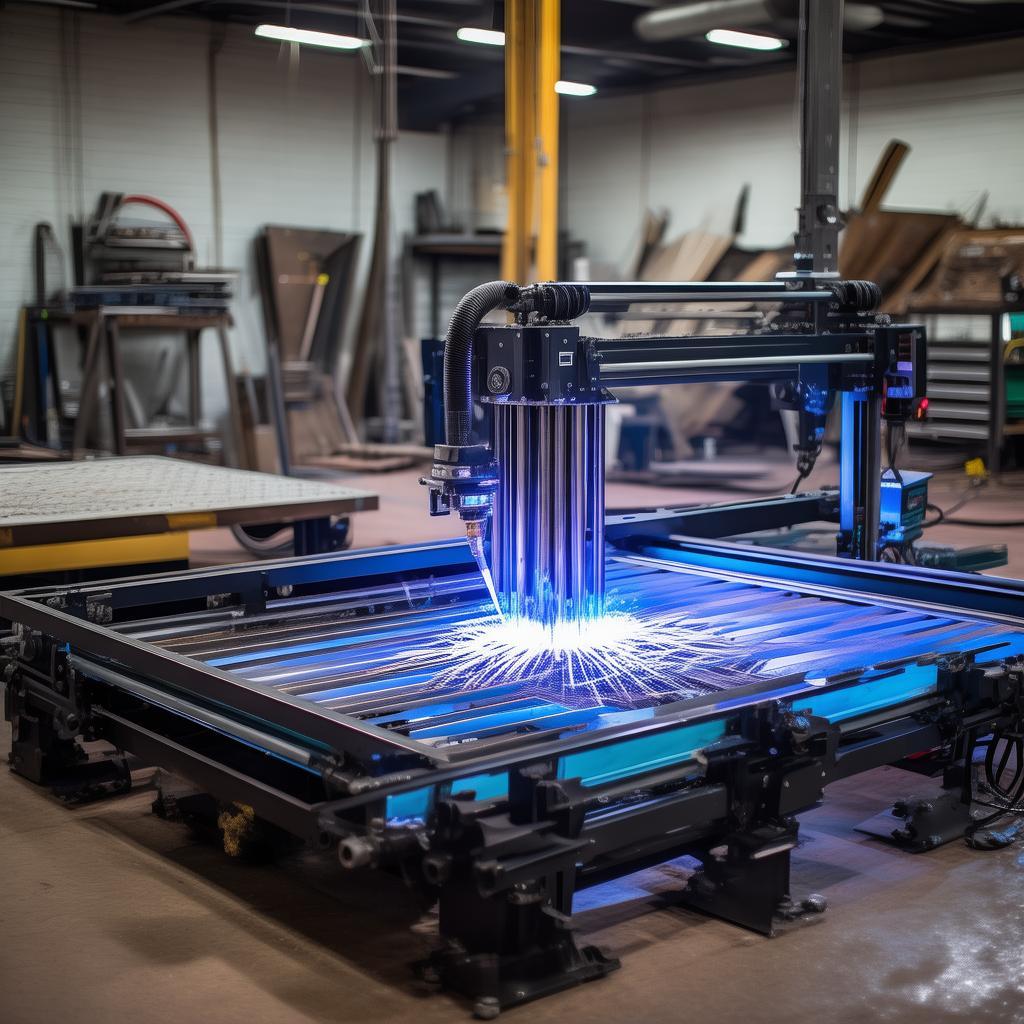
custom CNC router configuration
Product Overview
For precision production teams in the woodworking and sign-making sector, a custom CNC router configuration is the difference between “cutting parts” and delivering consistent, repeatable output across small runs and ongoing orders. Our configuration service tailors your CNC router to your toolpath requirements, material mix, and production workflow—so you get cleaner edges, stable routing quality, and smoother throughput for real-world fabrication. Whether you’re producing cabinet components, routing panel details, or manufacturing signage elements, the right setup aligns spindle behavior, control tuning, and tooling strategy with your applications.
Key Features
- Application-fit configuration: We align spindle speed ranges, routing strategy, and axis motion characteristics with the materials and geometries you actually run.
- Tooling compatibility: Your cutter types, tool lengths, and dust extraction needs are considered so setups support efficient routing and dependable finish quality.
- Stable repeatability: We tune motion and control behaviors to help maintain dimensional consistency across repeated jobs.
- Production workflow optimization: Configuration choices are made to reduce non-cutting time and simplify job changeovers for shop-floor teams.
- Integration-ready approach: We design the configuration to match common industrial cabinet and panel handling practices—fixturing, referencing, and typical material thickness ranges.
- Clear documentation: You receive an equipment configuration plan that supports internal training, distributor handover, and maintenance readiness.
- Scalable for future work: Options can be selected to support additional materials, tooling upgrades, or expanding part families without forcing a complete redesign.
Technical Specifications
Specifications below represent typical configuration elements we scope during a custom build. Exact selections are determined by your router size, materials, and process requirements.
| Parameter | Specification |
|---|---|
| Axis layout & motion package | Configured for your part sizes and routing paths, including axis motion behavior suited to panel/cabinet workflows |
| Spindle / speed coverage | Selected spindle speed range and control parameters aligned to wood composites, machining strategy, and finish targets |
| Workholding / referencing compatibility | Setup supports your typical fixturing and repeat referencing approach for consistent zeroing and alignment |
| Tooling interface | Configuration considers your cutter types (e.g., V-groove, straight, spiral) and tool length/holding requirements |
| Dust collection & routing environment | Options scoped to support efficient debris removal and stable cutting conditions |
| Control & parameter tuning | Motion and process parameters configured to improve consistency across repeated part geometries |
| I/O & automation readiness | Integration options considered for practical automation needs (e.g., operator workflow and production scaling) |
| Documentation & handover | Includes configuration notes to help teams operate and maintain the system effectively |
Application Scenarios
- Cabinet and panel component production: Configure motion and tooling strategy for consistent grooves, mortises, and edge details.
- Sign and display fabrication: Set up routing behavior and material handling compatibility for clean lettering and durable finishing.
- Nested parts for small batches: Optimize cut planning fit and shop-floor changeover practices to keep short runs profitable.
- Multi-material jobs: Scope spindle coverage, tooling interface, and process tuning for repeatable results across varied board types.
Advantages
Generic “one-size-fits-all” CNC settings can leave production teams fighting with inconsistent edge quality, unstable dimensional results, and slow changeovers. A tailored configuration focuses on the real bottlenecks—tooling fit, motion tuning, spindle/process alignment, and practical referencing—so your CNC router behaves like a purpose-built tool rather than a compromise.
- Better process stability for repeat parts, reducing rework and scrap.
- Improved operator confidence due to documented, shop-floor-ready configuration choices.
- More efficient production cycles by aligning the setup to your workflow and tooling reality.
- Lower risk when expanding product lines, because the setup is selected with growth in mind.
Why Choose Us
We work like an engineering partner to procurement teams, integrating your production requirements into the equipment configuration process rather than offering off-the-shelf assumptions. Our approach emphasizes clear communication, practical documentation, and a focus on long-term maintainability—so distributors and end users can confidently deploy the system for day-to-day production.
- Requirement-led planning: We start from your materials, part types, and production constraints.
- Process-aware configuration: The setup is chosen to match real routing behavior and shop-floor needs.
- Global supply & project coordination: Support for international buyers who need dependable sourcing and coordinated delivery.
- Quality-focused handover: Documentation and guidance designed to reduce ramp-up time after installation.
FAQ
Q1: What does a custom CNC router configuration include?
It typically covers the tooling interface, spindle/process alignment, motion/parameter tuning approach, and setup compatibility decisions—scoped to your materials, part types, and production workflow.
Q2: Can you configure the router for different woodworking materials?
Yes. We consider your material set (for example, composite boards and common sheet/wood variations) and select a routing-oriented configuration approach so your results remain consistent across job families.
Q3: Do you support distributors and integration projects?
Yes. We provide configuration documentation designed for handover and maintenance readiness, supporting distributor-led deployments and multi-customer integration needs.
Q4: How do we start the process for a tailored setup?
Share your target products, typical material thickness, cutter types, and throughput goals. We then propose the configuration plan that fits your production realities.
Q5: Will this replace our current process or complement it?
Most teams use the tailored configuration to improve current output—cleaner routing, more repeatability, and more reliable job changeovers—while keeping their established part designs and production practices.
Ready to move from generic settings to a production-ready setup? Request a quotation or inquiry today—tell us your router size, materials, cutter types, and part priorities, and we’ll propose a custom CNC router configuration path that supports your woodworking fabrication goals.