
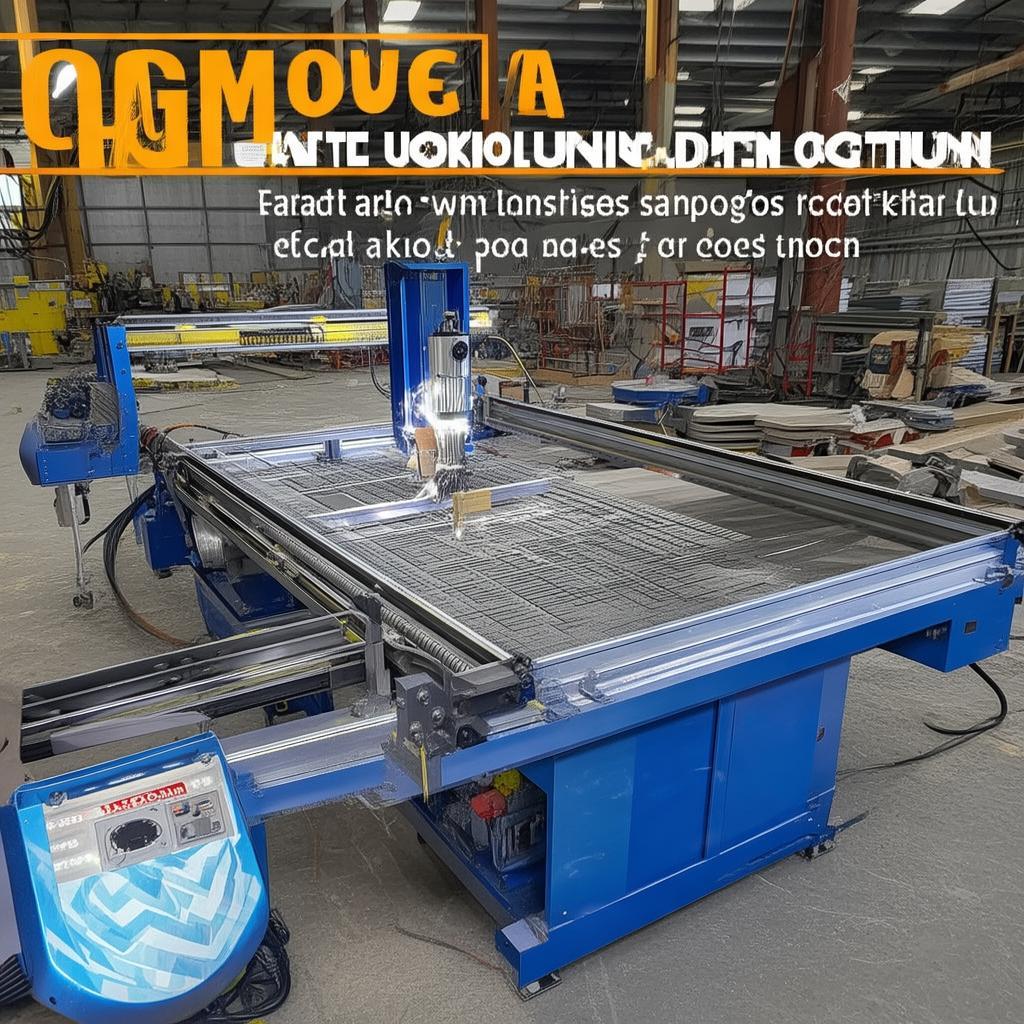
gantry CNC router
Product Overview
A gantry CNC router is a large-format CNC machining system designed for precise, repeatable cutting and machining of sheet goods, panels, and fabrication components. Commonly used in woodworking, furniture production, sign making, and fabrication, it enables automated routing, engraving, and trimming with consistent quality from prototype to high-volume work. By integrating a rigid gantry structure with computer-controlled toolpaths, this type of router helps production teams reduce manual setup time, improve part consistency, and scale output without sacrificing accuracy.
Key Features
- Production-grade stability: Gantry construction supports straight, smooth tool movement for reliable routing on panels and composite materials.
- Repeatable machining workflows: CAD/CAM-driven part programs help standardize dimensions across shifts and operator teams.
- Efficient material utilization: Automated cutting paths support optimized nesting and reduced scrap for cost control.
- Versatile tooling compatibility: Supports common router bits and application-specific tools used in engraving, profiling, and contour work.
- Serviceable motion system: Accessible components and a maintainable design help minimize downtime during routine maintenance.
- Integrated production safety considerations: Built for shop-floor use with safe operating practices and practical guarding approaches.
- Scalability for job-shop or panel lines: Suitable for short runs, custom work, and repeat orders where consistency matters.
Technical Specifications
| Parameter | Specification |
|---|---|
| Control interface | CNC controller with standard G-code workflow (project-dependent) |
| Working area | Available in multiple bed sizes for panel and sheet formats (quote required) |
| Motion system | Motorized axes with CNC motion for stable routing paths |
| Spindle configuration | Router spindle suitable for wood, plastics, and composite materials (configurable) |
| Tooling | Compatible with common CNC router bits and application-specific cutters |
| Vacuum / workholding options | Support for clamps or vacuum table configurations depending on material type |
| Cooling & lubrication approach | Machining-oriented design with maintainable lubrication practices (system dependent) |
| Dust management compatibility | Recommended integration with extraction systems for clean routing environments |
Note: Working area, spindle power class, and control options are commonly configured per customer application. Share your target material and maximum panel size for a precise spec sheet.
Application Scenarios
- Furniture & cabinet components: Rout consistent grooves, profiles, and panel shapes for repeat orders.
- Sign making & fabrication: Produce engraved letters and cut overlays with stable edges and controlled detailing.
- Interior trim & architectural panels: Automate high-mix, low-to-mid volume routing while maintaining dimensional uniformity.
- Prototype-to-production transitions: Use CAM programs to scale from one-offs to batch runs with minimal rework.
Advantages
Compared with generic hobby or light-duty CNC systems, a production-oriented gantry router delivers stronger process control for panelized work. The rigid frame and shop-focused design help maintain path stability during routing and profiling, supporting cleaner contours and fewer adjustments between parts. In practice, this means better throughput, more predictable machining results, and a smoother operator experience—especially for busy fabrication floors where consistency is tied directly to customer satisfaction and rework reduction.
If you’re deciding between entry-level machines and a more capable industrial platform, the differentiators usually show up in daily operations: repeatability across jobs, easier program repeat runs, and improved maintainability. This is where a gantry CNC router approach is typically selected—when production reliability matters.
Why Choose Us
We support international buyers and manufacturing customers with a procurement-first mindset—focused on configuration clarity, delivery planning, and practical rollout. Our goal is to make it easy to specify the right machine for your material mix and output targets, then stand behind installation guidance and ongoing service coordination.
- Application-led configuration: we align machine setup to your workholding, material type, and routing style.
- Clear documentation: structured information to help engineering, operations, and purchasing teams review fit.
- Responsive pre-sales communication: faster scoping and fewer surprises during ordering.
- Ongoing support coordination: help with commissioning planning and troubleshooting workflows.
If you have specific country requirements or an internal QA checklist, share it—we’ll confirm the information we can provide.
FAQ
Q1: What materials can this router handle?
It’s commonly used for wood, MDF, plastics, and composite panels. Exact capabilities depend on spindle/tooling and your feed/speed strategy—confirm your material list for a tailored recommendation.
Q2: Do I need special CAM software to run parts?
Most buyers use standard CAD/CAM to generate CNC toolpaths that produce G-code for the controller. We can help confirm compatibility with your workflow during scoping.
Q3: How do I choose the working area size?
Select a bed size that matches your largest sheet/panel plus practical allowances for tool approach and clamping or vacuum hold-down. Provide your maximum part dimensions and preferred nesting strategy.
Q4: What workholding options are typical for panel cutting?
Depending on material and accuracy needs, many installations use vacuum tables or clamps. Your dust management and part thickness also influence the best approach.
Q5: Is a gantry CNC router suitable for high-mix, short-run production?
Yes—this platform type is widely used for job shops and fabrication teams because programs can be reused and adapted for new designs, reducing manual setup time while supporting consistent outputs.
Ready to evaluate fit for your production workflow? Share your maximum panel size, target materials, and typical job types—we’ll respond with a configuration proposal and quotation for your gantry CNC router needs.