
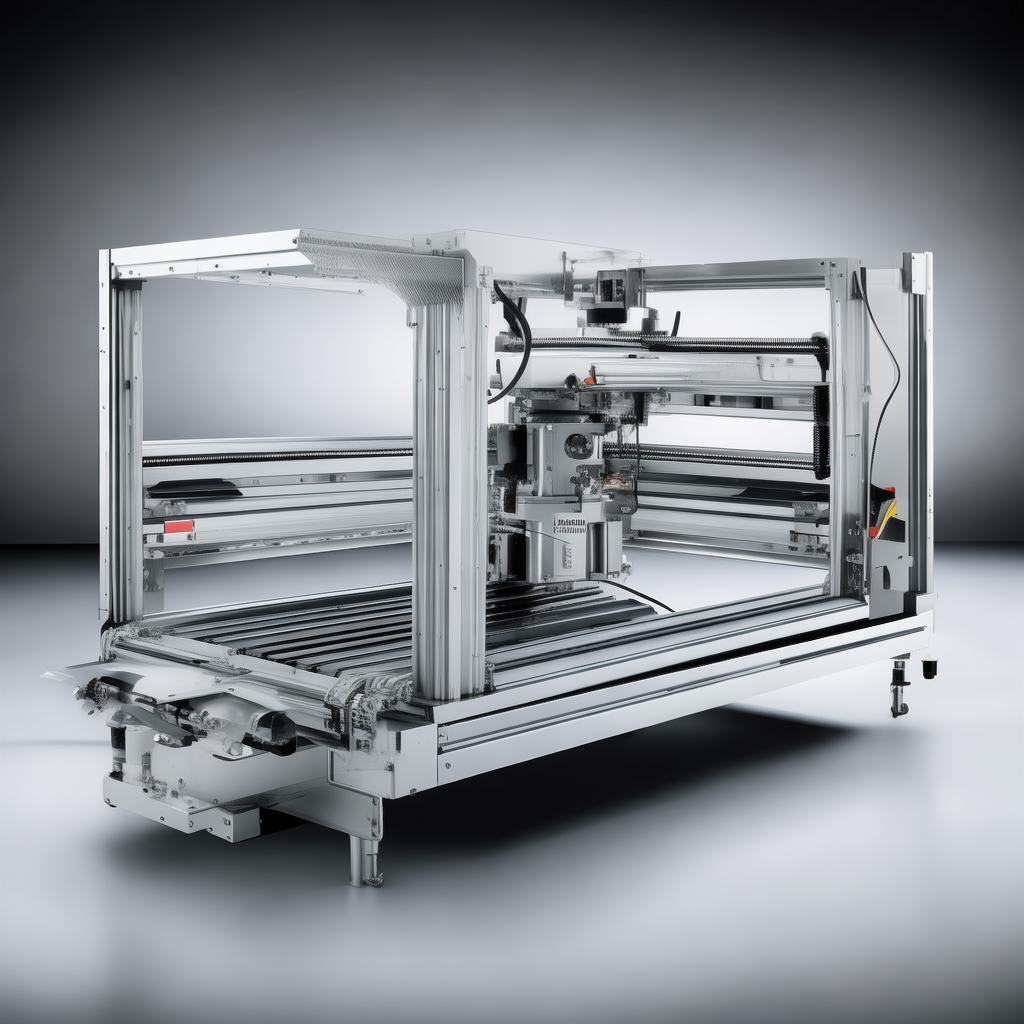
rigid frame CNC router
Product Overview: Rigid Frame CNC Router for Demanding Manufacturing
A rigid frame CNC router is engineered for stable, repeatable cutting and routing when workpiece size, material density, or process accuracy demand a robust machine foundation. In the wood, composite, and sign-making supply chain, it supports precise panel processing, consistent edge quality, and efficient production of repeatable parts. With a stiff mechanical structure, controlled motion, and production-ready workflow, this CNC router helps manufacturers reduce scrap and maintain tight dimensional tolerances across long runs.
Whether you produce cabinetry components, architectural panels, modular interior parts, or fabrication-grade routed elements, a rigid, vibration-resistant design is the difference between “good enough” prototypes and dependable output. That’s where this category of rigid frame CNC router platforms performs best—turning design files into finished parts with confidence.
Key Features
- Enhanced stability for accurate routing—a rigid structure helps minimize deflection during load, supporting consistent dimensions.
- Production-friendly repeatability—designed for repeat cycles and multi-panel workflows where dimensional consistency matters.
- Improved surface finish—stable motion and structural stiffness contribute to cleaner edges and more predictable routing paths.
- Efficient setup for part runs—file-to-part operation supports faster job turnover for quoting and scheduling.
- Integration-ready for shop systems—compatible with common CNC workflows so procurement teams can align it with existing production processes.
- Durable build for industrial duty—focused on long-term reliability in busy fabrication environments.
- Lower risk of rework—when the machine base remains stable, process control improves and fewer parts end up needing remanufacturing.
Technical Specifications
| Parameter | Specification |
|---|---|
| Machine Type | Rigid frame CNC router (panel and sheet processing class) |
| Working Area | Configurable (confirm based on your material dimensions) |
| Drive System | CNC servo drive (selected per configuration) |
| Positioning / Control | CNC motion controller for routing operations |
| Spindle / Router Compatibility | Suitable for common wood/composite routing setups (configuration dependent) |
| Table / Vacuum Options | Configurable workholding solutions (e.g., vacuum or T-slot compatible systems) |
| Electrical / Interface | Industrial-grade power and standard CNC interfaces (varies by region and configuration) |
Note: Specifications can vary by configuration (working area, spindle class, and workholding). Share your part dimensions and materials for an accurate machine configuration.
Application Scenarios
- Cabinet and panel fabrication: consistent routing for doors, panels, and interior components.
- Signage and architectural elements: stable cutting of boards and composite materials for clean edges and repeatable results.
- Modular interior and furniture parts: production-ready machining for standardized product lines.
- Multi-material routing workflows: efficient switching between job batches with controlled process behavior.
Advantages
Compared with lightweight or generic hobby-grade CNC routers, a rigid-frame design category delivers practical manufacturing benefits: it resists vibration under cutting load, supports steadier toolpaths, and helps maintain dimensional consistency across larger panel processing. For shops that quote recurring jobs, the cost of rework and part mismatch often outweighs the price difference—so selecting a stable platform is a direct ROI decision.
In procurement terms, this rigid platform approach reduces uncertainty. When you evaluate a rigid frame CNC router for your production line, you’re prioritizing process control, stable machining behavior, and predictable output—especially when machining larger workpieces or running longer shifts.
Why Choose Us
We support international manufacturers, distributors, and fabrication shops with a straightforward purchasing and commissioning approach. Our team helps you select a configuration aligned with your materials, part sizes, and production goals—so the CNC router you receive is appropriate for your real workloads.
- Application-focused guidance: recommendations based on your workpiece dimensions and machining strategy.
- Procurement-friendly documentation: clear product information for quotation, planning, and installation.
- Responsive support: assistance during configuration and initial commissioning to reduce downtime risk.
- Global shipping coordination: packaging and logistics planning to help meet delivery schedules.
FAQ
Q: What materials is a rigid frame CNC router best suited for?
A: It’s commonly used for wood-based boards, composites, and similar fabrication materials where stable cutting behavior improves edge quality and dimensional repeatability.
Q: How do I choose the correct working area?
A: Select based on your largest part dimensions and how you plan to gang-nest components. Share your typical panel sizes so we can recommend a practical travel and table layout.
Q: Will this type of CNC router reduce rework?
A: For routing and panel work where machine stiffness affects deflection, a rigid design helps support steadier toolpaths—improving repeatability and reducing mismatch-driven rework.
Q: Can the machine be configured for my production workflow?
A: Yes. Working area, workholding options, and routing/spindle compatibility can be tailored to your materials and job mix for a smooth integration into your line.
Q: What information do you need for a quotation?
A: Please provide your maximum part dimensions, material types, target output (single pieces vs batch runs), and any special workholding requirements.
If you’re evaluating a stable CNC solution for production panel routing, contact us for a configuration recommendation and a quotation request. Share your parts and materials, and we’ll help you select the right rigid frame CNC router setup for your workload.