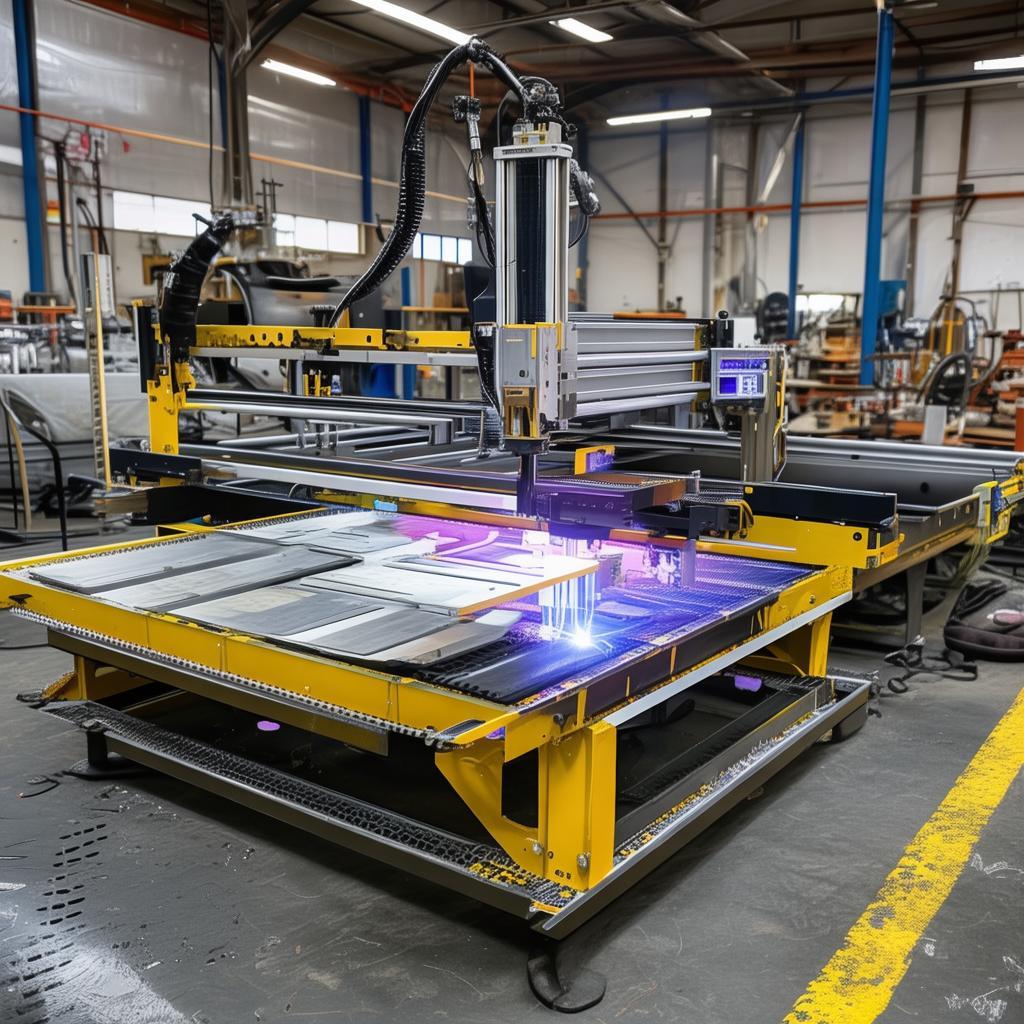
CNC custom tooling
Product Overview
CNC custom tooling is engineered for modern manufacturing where repeatability, tight tolerances, and stable output matter. Typically used across metalworking, machining, automotive, aerospace supplier ecosystems, and general precision fabrication, our custom cutting and forming tool solutions help job shops and production lines machine parts efficiently—turning design intent into reliable, production-ready results. From one-off prototypes to high-mix runs, custom-made tool geometries, interfaces, and cutting strategies support consistent quality while reducing unplanned downtime.
If you need tooling that fits your exact process—workholding, materials, operations, and target tolerances—our CNC custom tooling approach is built to match your requirements and manufacturing constraints.
Key Features
- Process-aligned design: Tooling geometry and mounting choices are made around your actual operations, not generic templates.
- Stable performance for production: Reduce variability between setups by standardizing interfaces and dimensional control.
- Improved machining efficiency: Optimized cutting behavior helps maintain material removal rates while supporting dimensional consistency.
- Faster troubleshooting and iteration: When you adjust feeds, speeds, or part geometry, the tooling can be refined to match the new requirement.
- Interoperability with your line: Compatibility considerations for holders, collets, adapters, and spindle interfaces help prevent downstream rework.
- Quality-focused production control: Attention to finishing and dimensional checks supports repeatable results in batch manufacturing.
- Supplier-ready documentation: Clear drawings, specs, and build records help procurement, QA, and engineering communicate consistently.
Technical Specifications
Specs are configured to your program. Below is the typical parameter set we define for each tooling project.
| Parameter | Specification |
|---|---|
| Tool type | Cutting tool, boring/reaming tool, custom-forming tool, or special-purpose machining accessory |
| Application focus | Milling, drilling, boring, reaming, turning operations, and precision finishing |
| Mounting / interface | Adapter and shank/holder compatibility based on your spindle and workholding setup |
| Working geometry | Customized cutting edges and profile features derived from your drawings and target tolerance stack-up |
| Material suitability | Tool material and coating selection aligned to your workpiece grade and coolant strategy |
| Dimensional control | Controlled tolerances and inspection steps defined per the part requirement |
| Documentation | Drawing-based build records, specification sheets, and inspection information upon request |
Application Scenarios
- High-mix machining: When part families require repeatable results, custom cutting profiles help stabilize cycle times.
- Precision component production: For aerospace and automotive supplier parts, tooling geometry is tuned to maintain tight dimensional targets.
- Prototype-to-production transition: Early tooling iterations can evolve into production fixtures while preserving interface compatibility.
- Constraint-limited machining cells: When available spindle power, travel, or coolant delivery is limited, custom interfaces and optimized cutting behavior help avoid scrap.
- Tooling replacement and upgrades: If generic tooling underperforms, a CNC-controlled custom build supports improved finish and longevity.
Advantages
Choosing a purpose-built tool design instead of generic cutters and adapters can reduce total manufacturing friction. Instead of repeatedly compensating for tool mismatch—through rework, trial-and-error offsets, or overly conservative cutting parameters—you get tooling engineered to your part geometry, material, and machine configuration.
- Better repeatability across setups by aligning tooling interfaces with your existing process.
- Higher quality consistency due to controlled geometry and production inspection steps.
- Lower downstream cost by reducing scrap risk and minimizing adjustment time.
- More effective machining strategy support, including path-dependent tooling behavior.
- Simplified purchasing and QA communication with drawing-based documentation and defined acceptance targets.
Whether you’re commissioning a new process or improving an existing line, our CNC custom tooling workflow is designed to deliver fit, function, and measurable manufacturing stability.
Why Choose Us
Procurement teams and engineering leads typically look for three things: dependable execution, clear communication, and consistent documentation. We focus on these fundamentals so your project stays controlled from requirement intake to shipment.
- Defined quoting and build review based on your drawings, operation notes, and tolerance expectations.
- Manufacturing and inspection aligned to the acceptance criteria you specify.
- Responsive technical collaboration for operation-fit decisions (holders, coolant approach, and geometry constraints).
- Packaging and shipment handling intended to protect tooling integrity for immediate deployment.
- A continuous improvement mindset for next-time refinements, especially for production re-orders of tooling assemblies.
If you’re comparing options, ask us how we align a custom tool build with your specific machine cell and QA expectations—this is where outcomes typically diverge.
FAQ
1) What information do you need to start a tooling project?
Provide part drawings (or key dimensions), target tolerances, workpiece material, operation type, machine/spindle details, and any existing tooling or holder constraints. If you have toolpath notes or cutting conditions, include them.
2) Can you build CNC custom tooling to our existing holder or adapter?
Yes. We can design the mounting/interface to match your spindle and workholding system, helping avoid downtime caused by compatibility issues.
3) How do you ensure the tooling will work for our specific materials and coolant strategy?
We select and configure tool geometry and tooling material options based on your workpiece grade, expected machining loads, and coolant/lubrication approach—then align inspection targets to your acceptance requirements.
4) Do you support prototype runs and short batches?
Absolutely. Custom tooling can be developed for initial validation and then improved or repeated for scaled production once the process parameters are confirmed.
5) What’s the lead time for a custom tool?
Lead time depends on complexity, interface requirements, and material choices. Share your drawing and desired delivery date so we can confirm feasibility and scheduling.
Ready to standardize your process with reliable, production-fit tooling? Request a quotation or send your drawings and machining requirements—we’ll review your application and recommend the best approach for your next tooling build.