
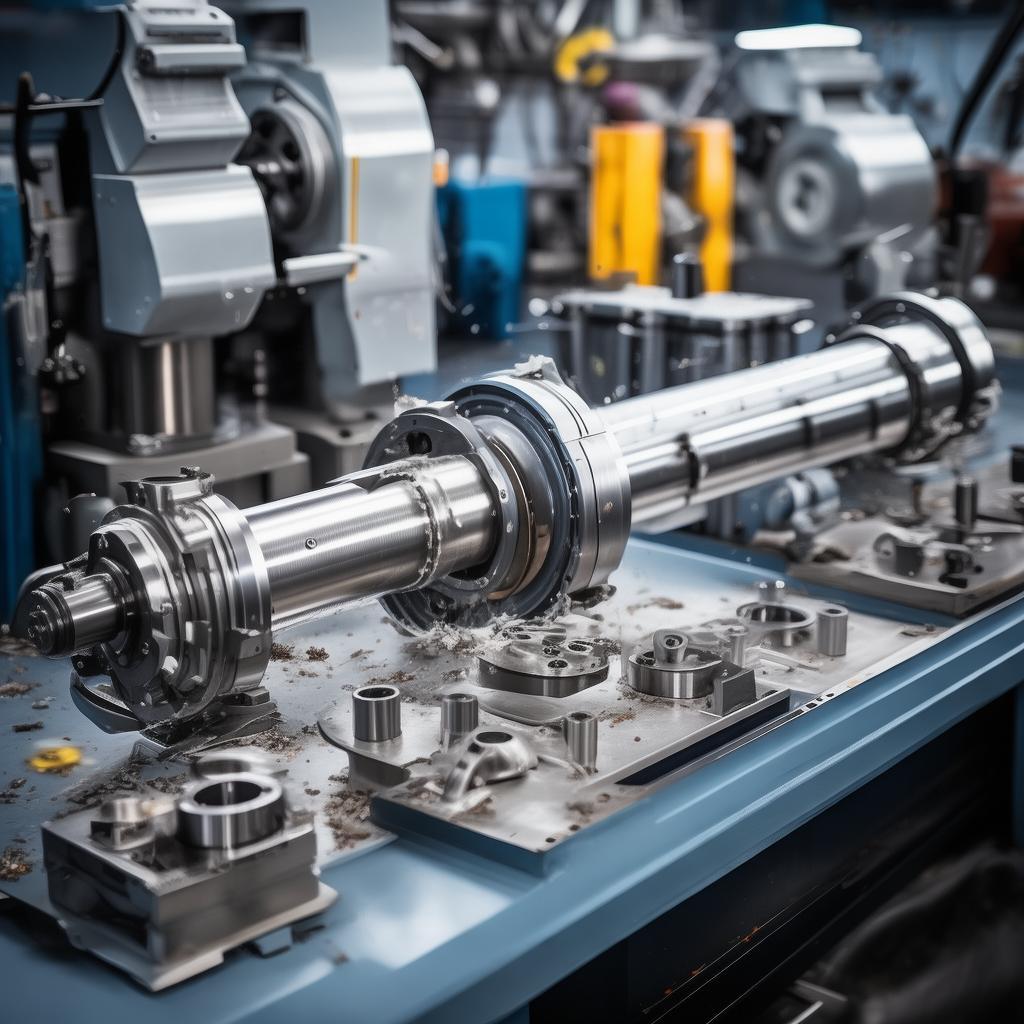
CNC tooling for die machining
Product Overview
CNC tooling for die machining is engineered for precision cutting, shaping, and finishing of industrial dies used in high-volume forming and shaping processes. In die and mold manufacturing, tooling is not just a consumable—it’s a key driver of dimensional accuracy, surface quality, and repeatable cycle times across runs. Our tooling solutions support robust machining of die cavities, inserts, and wear surfaces by enabling controlled material removal, stable performance under load, and consistent results on both manual and automated CNC platforms.
Designed for procurement-friendly reliability and shop-floor practicality, CNC tooling for die machining helps manufacturers reduce rework, minimize tool changes, and maintain predictable machining behavior as part geometries and material demands evolve.
Key Features
- Process-stable cutting geometry to support consistent engagement in die cavity roughing through finishing passes.
- Improved surface finish control for tooling paths that help reduce polishing and secondary operations.
- Wear-resistance for demanding die materials to better withstand abrasive or hardened workpieces.
- Repeatability for production scheduling—optimized tool behavior supports predictable machining outcomes batch to batch.
- Compatibility with common die machining workflows for roughing, semi-finishing, and finishing strategies.
- Reduced downtime through reliable performance that helps lower unplanned tool changes during job-critical production windows.
- Supplier support for right-first-time selection to align tooling choice with cutter size, material, and tolerance targets.
Technical Specifications
Specifications vary by tooling type and application. Use the table below as a baseline reference for quoting and configuration.
| Parameter | Specification |
|---|---|
| Intended process coverage | Die cavity roughing, semi-finishing, and finishing toolpaths |
| Workpiece material compatibility | Tool steels and hardened die materials (application-dependent) |
| Machine interface | Conventional CNC spindles and tooling holders (confirm fitment) |
| Geometry focus | Optimized chip control and cutting engagement for stable load |
| Quality approach | Dimensional consistency for repeat machining setups |
| Typical outcome goals | Reduced rework, better finish consistency, predictable tool behavior |
| Selection inputs for quotation | Die material grade, cavity geometry, tolerance target, holder type, spindle speed range |
Application Scenarios
- Progressive and stamping die cavities: controlled roughing and finishing strategies to support stable dimensional output in production.
- Injection mold inserts: machining of complex surfaces where finish quality directly impacts downstream polishing time.
- Cold-forming and extrusion dies: tooling selection for abrasive/harder die materials to help maintain performance across repeated cycles.
- Repair and reconditioning jobs: reliable cutter behavior to support predictable machining of worn or damaged die sections.
- Multi-part batch production: consistent cutting response to reduce variation between setups and operators.
Advantages
Choosing this die machining tooling approach gives you stronger control than generic cutters that may be optimized for general-purpose milling. Because CNC tooling for die machining is built around die-specific cutting engagement and surface integrity needs, it helps:
- Maintain machining stability during variable cavity geometry and toolpath transitions.
- Improve finish consistency to reduce polishing and acceptance risk.
- Support a more predictable tool change plan, protecting job schedules and delivery timelines.
- Reduce “trial-and-error” run time by aligning tooling choice with common die shop requirements.
In procurement terms, that translates to better cost control per part—not just per tool—by minimizing rework, scrap risk, and downtime during the most critical machining steps.
Why Choose Us
You get a supply partner built for international trade and manufacturing realities: dependable fulfillment, practical technical guidance, and transparent communication across quoting and ordering.
- Application-focused support: we help you select the right cutter strategy for your die material and target surface requirements.
- Order-ready documentation: clear packaging and shipment readiness for distributor and plant receiving workflows.
- Consistent supply planning: we aim to support ongoing production demand rather than one-off purchases.
- Communication you can schedule around: prompt responses to technical questions that affect qualification timelines.
- Quality mindset: emphasis on repeatable output suitable for serious die work environments.
If you share your die material, drawing, and machine/tooling holder details, we can propose a configuration for your die machining program and keep CNC tooling for die machining selection aligned to your process.
FAQ
1) What types of tooling are included under die machining for CNC?
Typically, this covers end milling and finishing strategies used for die cavities and inserts, with selection guided by material grade, geometry, and tolerance/surface goals.
2) How do I choose the right configuration for my die material?
Provide the die steel/material grade (or hardness range), the roughing vs finishing ratio, and the cavity complexity. We’ll recommend a cutter approach designed for stable engagement and finish control.
3) Can this be used for both new die machining and reconditioning?
Yes. Tool selection can be tailored for greenfield machining and repair cycles where stock removal patterns and tool access differ.
4) What information should distributors or job shops send to quote accurately?
Share required diameters/lengths (if known), holder type, target surface requirements, and part drawing notes. This speeds up correct recommendations and reduces qualification time.
5) Will I need to redesign my CNC toolpaths to get better results?
Not necessarily. Many customers improve outcomes by matching tool choice and engagement approach to existing strategies; we can also advise on practical adjustments if you’re seeing inconsistent finish or tool wear.
Ready to tighten machining consistency and reduce rework on your die programs? Share your die material, cavity geometry, and machine/tool holder details and we’ll respond with a quotation-ready recommendation for your next run of CNC tooling for die machining.