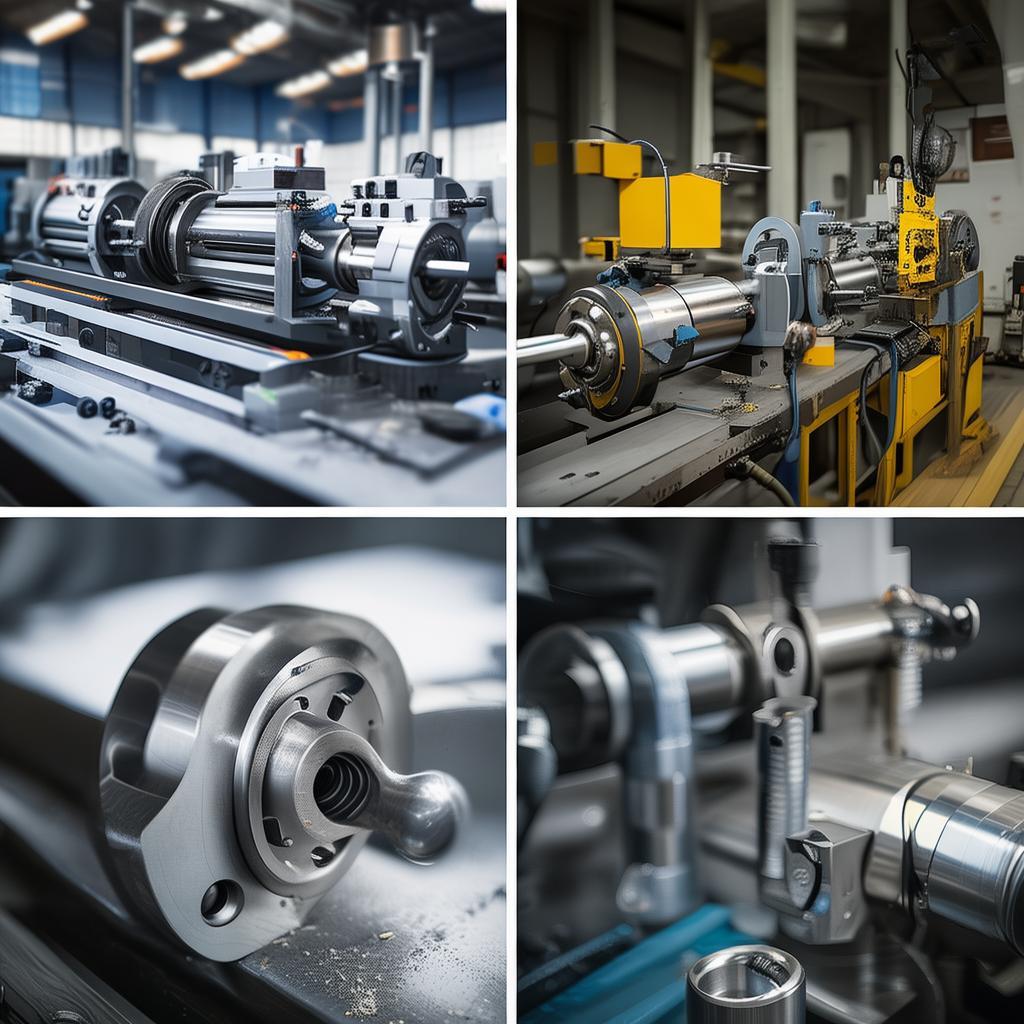
high precision tooling
Product Overview
High precision tooling for industrial manufacturing is engineered to help machining and forming processes deliver repeatable accuracy, stable tolerances, and clean surface outcomes. Used in metalworking, mold and die production, aerospace and medical component fabrication, and other demanding production environments, it supports the entire workflow—from rough material removal planning to final finishing passes—by maintaining geometry under load and minimizing unwanted variation. For procurement teams and process engineers, this means fewer rework cycles, more consistent part conformance, and higher confidence in downstream inspection results.
Key Features
- Process stability under load: engineered for dimensional consistency during cutting, forming, and finishing operations where tool wear can quickly degrade tolerance.
- Sharper results with controlled contact: tighter control of engagement and cutting behavior helps improve surface finish quality without relying on excessive compensations.
- Repeatability across production lots: consistent performance supports predictable setup-to-setup behavior—critical for high-volume manufacturing and multi-shift plants.
- Optimized for inspection-driven workflows: tooling designed for measurable outcomes so that CMM checks, gauge comparisons, and tolerance reporting align with production targets.
- Built for long cycle planning: robust design choices help reduce sudden performance drops, supporting scheduled maintenance rather than reactive stops.
- Integration-friendly: available to match common toolholding and process interfaces, simplifying adoption into existing machining cells and tooling libraries.
- Manufacturable quality: process control and QA documentation help suppliers and end users maintain traceability across incoming inspections.
Technical Specifications
Below table shows typical configurable parameters. Exact values depend on the tool type and material/process requirements.
| Parameter | Specification |
|---|---|
| Tooling type | Cutting insert / end mill / reamer / form tool / mold & die tooling (project-dependent) |
| Material compatibility | Metals, alloys, and tooling-rated materials based on application |
| Dimensional tolerance capability | Configured to customer tolerance requirements for critical features |
| Surface finish targeting | Finishing-oriented geometry and process controls for improved surface outcomes |
| Toolholding / interface | Compatible with standard workholding and machining interfaces (configured per quote) |
| Application temperature range | Selected by tooling material and coating strategy for the intended machining envelope |
| Quality documentation | Available inspection records and batch traceability on request |
Application Scenarios
- Mold cavity finishing: helps maintain contour fidelity in precision injection and forming molds where surface texture impacts part quality.
- High-tolerance machining: supports production of shaft, bore, and critical pocket features in aerospace and industrial motion components.
- Medical device components: promotes stable finishing results for parts that require consistent dimensional conformance and controlled surface finish.
- Gear and transmission parts: contributes to stable geometry retention across repeated cycles, supporting tighter inspection gates.
- Tool-and-die refurbishment: helps restore performance characteristics so production can resume with reduced scrap and downtime.
Advantages
When you move from generic cutting tools to purpose-built precision manufacturing tooling, the biggest difference is not only initial performance—it’s how reliably the tool maintains geometry as the job progresses.
- Less variation over time: reduces drift-related defects that appear after multiple tool life cycles.
- Better fit to inspection requirements: improves the probability of meeting tolerances without repeated trial cuts or excessive manual compensation.
- Lower total cost of ownership: fewer scrap parts, fewer adjustments, and more predictable maintenance planning.
- More consistent surface and feature definition: supports downstream processes such as coating, assembly, and sealing—where surface and dimensional integrity matter.
For buyers comparing options, this means your production line spends less time diagnosing process instability and more time producing conforming parts.
Why Choose Us
We support manufacturers and distributors with a supply approach focused on quality consistency, documentation, and responsive engineering communication.
- Project-focused quoting: we confirm your application requirements (material, geometry, tolerances, and process constraints) before you commit to procurement.
- Incoming inspection readiness: inspection records and traceability documentation are available based on your requirements.
- Reliable lead-time management: planning support to help keep production schedules steady.
- Technical support: guidance on tool selection and practical setup considerations to improve first-pass yield.
- Quality-minded production: controlled manufacturing processes designed to reduce variability across batches of engineered tooling.
If you have specific documentation needs for your customer audits, share them during inquiry and we will align our deliverables accordingly.
FAQ
Q1: What industry is best served by high precision tooling?
It’s commonly used in precision metalworking, mold and die production, aerospace and industrial components, and medical-grade manufacturing where tolerance control and surface quality are critical.
Q2: How do I choose the right tooling option for my part?
Provide your material, target dimensions/tolerances, feature geometry, and current cutting process (or a rough baseline). We’ll help map tooling geometry and workflow to your inspection requirements.
Q3: Can you support production quantities and repeat orders?
Yes—our process is geared toward consistent manufacturing and batch traceability so repeat supply stays aligned with the same requirements as prior runs.
Q4: What documentation can be included with the shipment?
Depending on your requirements, we can provide inspection records and traceability documentation for incoming verification and internal audit trails.
Q5: Is high precision tooling suitable for both prototyping and high-volume production?
Yes. For prototyping, it helps reduce trial iteration and time-to-conformance; for volume production, it supports consistent feature definition and stable tolerance outcomes over cycles.
Ready to improve first-pass yield and tighten tolerance control? Request a quotation and share your part drawing or feature details—we’ll recommend the most suitable precision tooling configuration for your manufacturing process.