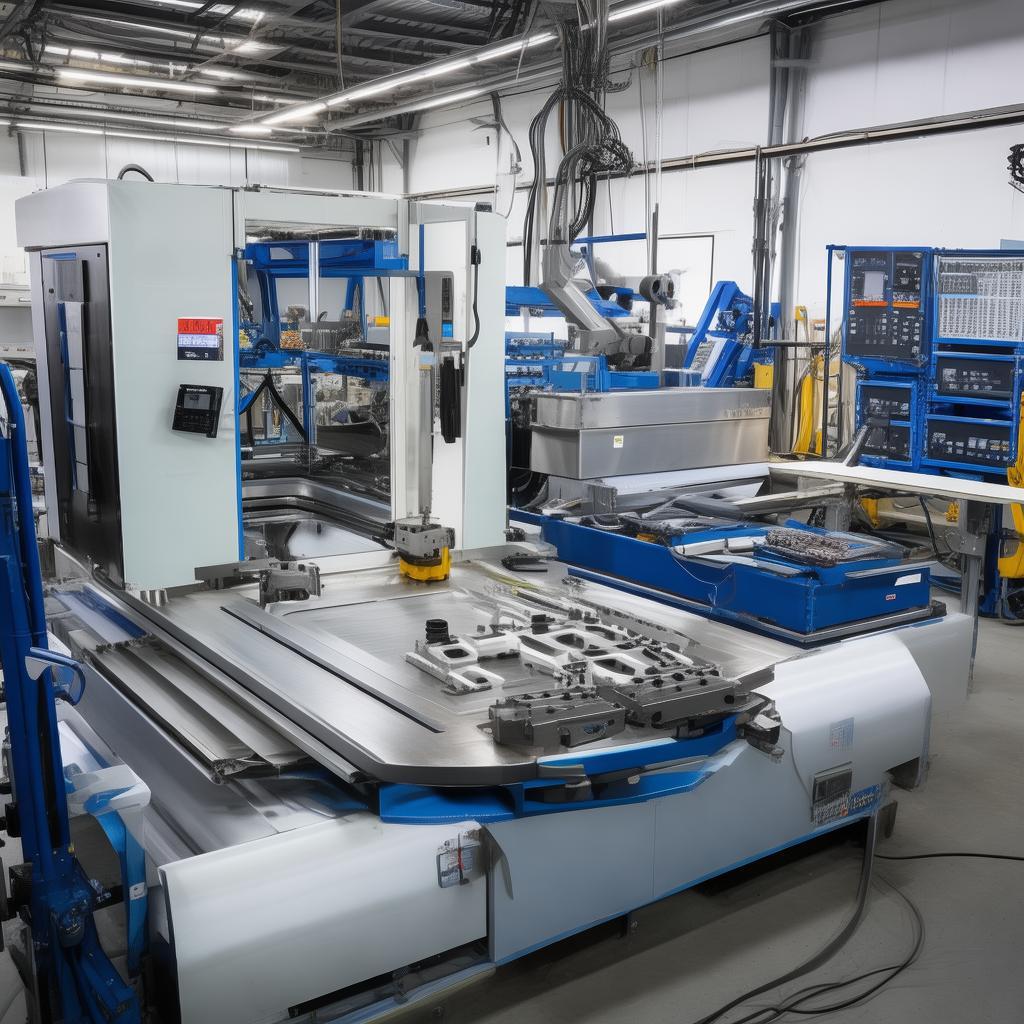
modular workholding system
Product Overview: Modular Workholding System for Flexible Manufacturing
Designed for industrial metalworking and machining centers, a modular workholding system streamlines how fixtures are built, adjusted, and reused across part families. Instead of relying on one-off jigs for every new job, this modular approach helps manufacturers maintain stable clamping performance while cutting setup time and engineering effort. Typical users include job shops, contract manufacturers, and production teams running mixed or frequently changing work orders in CNC milling, drilling, and turning operations.
Key Features
- Faster changeovers with repeatable components that reduce redesign and minimize downtime between batches.
- Higher reuse across variants—standard base elements and configurable modules support multiple part geometries and sizes.
- More consistent fixturing by using engineered reference surfaces and controlled alignment points for reliable positioning.
- Practical scalability for growth from prototype builds to stable production runs without throwing away previous tooling investment.
- Reduced engineering workload through a configurable fixture architecture that helps teams respond quickly to new drawings and updates.
- Improved shop-floor usability with clear modular assembly logic, making training and internal maintenance more straightforward.
- Compatibility-minded design intended to integrate with common machining center workflows and standard workpiece handling practices.
Technical Specifications
| Parameter | Specification |
|---|---|
| Fixture architecture | Modular, configurable workholding components for repeatable assembly |
| Primary industry application | Metal cutting and machining (CNC milling/drilling/turning workflows) |
| Workpiece locating approach | Configurable locating surfaces and reference features for consistent positioning |
| Clamping concept | Engineered clamping interfaces for secure holding during machining operations |
| Configuration capability | Designed for multi-part-family setups using shared base elements and interchangeable modules |
| Setup and changeover | Optimized modular assembly workflow to reduce redesign and shorten tool preparation |
| Maintenance and reconfiguration | Component-based upkeep and reconfiguration rather than full fixture replacement |
| Documentation support | Assembly guidance intended for repeatable internal use and engineering handover |
Application Scenarios
- Batch production of varied parts: quickly reconfigure the fixture layout as drawings and tolerances evolve between lots.
- High-mix CNC machining: use shared base modules to support multiple workpiece sizes without rebuilding full tooling.
- Program handoff for new jobs: standardize setup logic so engineering and operators follow consistent fixturing steps.
- Tooling cost control across product cycles: extend fixture life by swapping only the relevant modules when designs change.
- Distributor / integrator projects: present customers with a scalable fixture solution that can be tailored per part family.
Advantages
A purpose-built modular fixture architecture—often sold and deployed as a modular workholding system—outperforms generic alternatives because it’s designed for change. Rather than treating each machining job as a brand-new tooling project, this approach reduces duplication by sharing key locating and clamping interfaces across applications.
- Lower total tooling ownership: fewer complete fixture replacements when part variants expand.
- More reliable setup repeatability: repeatable reference features help minimize operator-to-operator variance.
- Engineering agility: quicker iterations by updating only the required modules.
- Operational efficiency: streamlined assembly reduces pre-production preparation and supports smoother production planning.
Why Choose Us
We support international customers with procurement-ready service and practical fixture guidance. Our process focuses on matching the workholding configuration to your machining workflow, part families, and internal assembly expectations—so you receive a solution that can be deployed quickly and maintained confidently.
- Clear communication from quote to delivery, with documentation aimed at reducing internal handover friction.
- Configurable approach that helps distributors and manufacturers standardize tooling offerings across customers.
- Supply coordination designed for global shipments and predictable purchasing cycles.
- Pragmatic support during deployment, including guidance on modular assembly and ongoing reconfiguration.
FAQ
1) What types of machining applications is this modular approach best for?
It’s intended for metalworking workflows where part families change over time—such as CNC milling and drilling—benefiting teams that need quick, repeatable fixturing.
2) Will this work with our existing fixture philosophy and shop procedures?
The system is designed around configurable modules and repeatable references, making it easier to align with established setup routines than one-off custom jigs.
3) How does a modular fixture reduce cost compared to generic alternatives?
Instead of rebuilding a full fixture every time a part changes, you can reconfigure the relevant elements and reuse the shared base components, improving total tooling ownership over multiple jobs.
4) Is the configuration process straightforward for operators?
Yes—because the architecture follows a modular logic with reference points, teams can follow consistent assembly steps, reducing training time and setup variance.
5) Can we scale from low-volume jobs to higher-volume production?
That’s one of the strengths of a modular workholding system concept: you can expand the module set as your part families grow, without restarting tooling from scratch.
If you’d like a quotation, share your part drawings and typical machining operations—our team can recommend a modular configuration strategy that fits your fixtures, changeover needs, and production schedule.